We built Backlit so
you can put it down.
Over a decade ago, when my daughter Emmeline was born, I became a stay-at-home dad. My wife Kathleen went back to her career. I took over the house, the baby, and the full invisible architecture of keeping a family running.
I'd spent years in tech — building software, managing complexity, shipping under pressure. I figured I could handle a household. What I discovered instead was an entirely different category of work. Not the physical labor of bottles and diapers, but the mental labor. The always-on awareness that runs beneath every visible task like an operating system you can never close.
The pediatrician appointment. The formula supply. The RSVP. The meal plan. The "did I remember to..." that loops at 2am. Not individually hard — but never, ever done.
Emmeline is thirteen now. That time at home was another life ago. But here's what stayed with me: that invisible weight doesn't belong to parenting. It belongs to modern life.
Every person I've had an honest conversation with carries some version of it. Friends without kids, navigating careers and health decisions and financial planning. Colleagues who seem to have everything together but feel one forgotten appointment away from falling apart. The mental burden of navigating our entire lives — professional, personal, family — is universal. And it's getting heavier.
The efficiency trap
AI promised to make us more efficient. It did. I've built with it, I've believed in it. But it left me with a nagging feeling — a feeling that every friend and colleague I've talked to also carries.
I'm getting more done and I still feel overwhelmed.
Because efficiency was never the real problem. The real problem is the mental burden. The weight of holding everything in your head — every deadline and every grocery list and every relationship and every decision — all running simultaneously, all competing for the same finite space in your brain.
No tool that makes you faster at the grind fixes that. You just grind faster.
Backlit's opinion
Here's our opinionated view of the world: I could care less about automating pipeline generation for a small company. That's worthy work. It matters. But it's not what keeps people up at night.
What keeps people up is the nagging uncertainty. Is that thing handled? Can I actually stop thinking about it? Can it wait until tomorrow without my brain staging a midnight review?
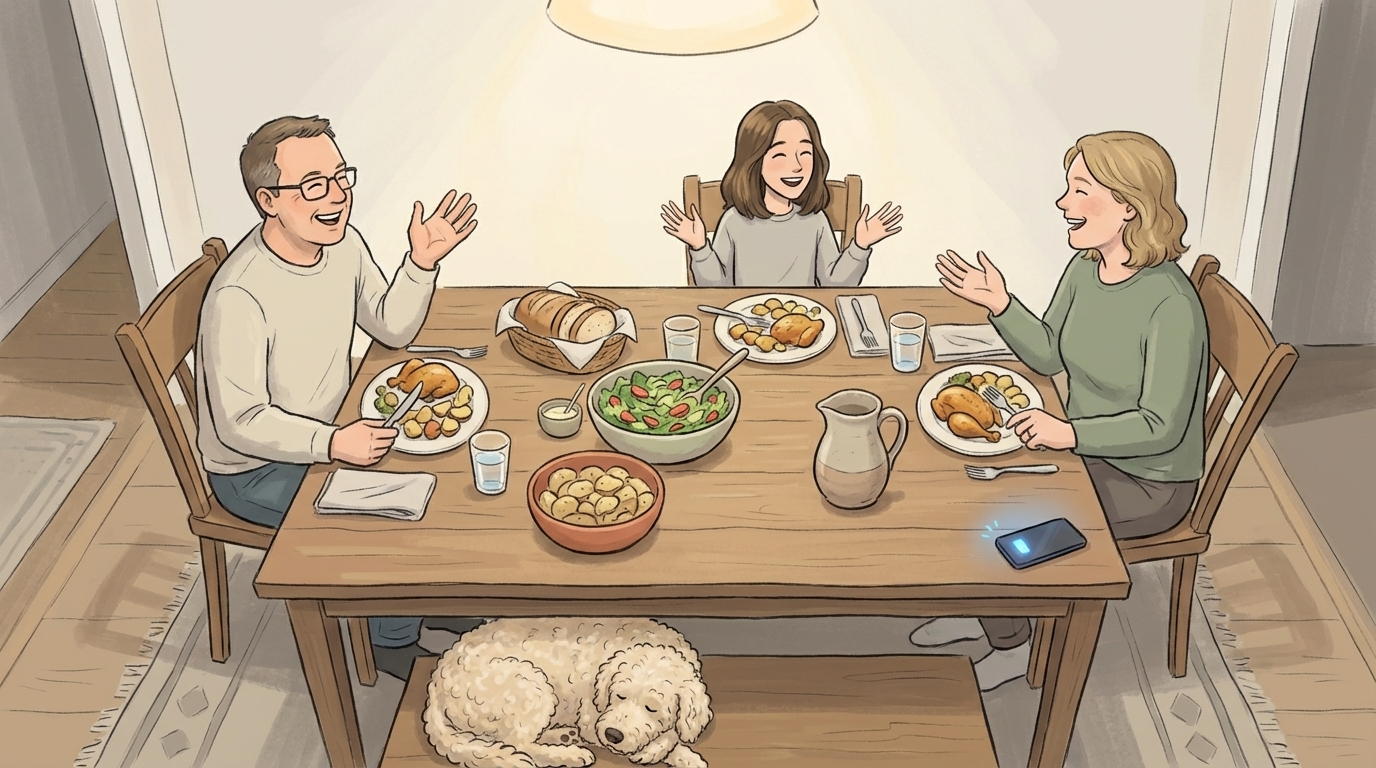
Backlit exists so you can feel genuinely comfortable that things are running. That you've truly delegated — not just assigned. That something can wait. So you can have dinner with your teenager, walk your labradoodle, sit with your partner and actually be there. Not half-present with your mind cycling through everything you might be forgetting.
We need the digital equivalent of touching grass. A way to step away from the relentless hum of managing everything and trust — really trust — that nothing important is falling through the cracks. Not another productivity tool. A system that lets you put it down.
Why it matters now
As AI handles more of the perfunctory stuff — the rote emails, the scheduling, the mechanical knowledge work — what remains is the irreducibly human stuff. The noticing. The anticipating. The being present for the people who need you. The work behind being a parent, a partner, a person navigating this world — that's one of the most impactful jobs that exists.
Aligning with and embracing our humanity is more important than ever. That's not a burden to optimize away. That's what makes the whole thing worth it.
We named it Backlit because we want to take what's invisible and gently illuminate it. Not with a spotlight. Not with blame. Just enough light to see it, carry it with confidence, and then go be human.
With gratitude,
Nicholas Goodman
Founder, Backlit