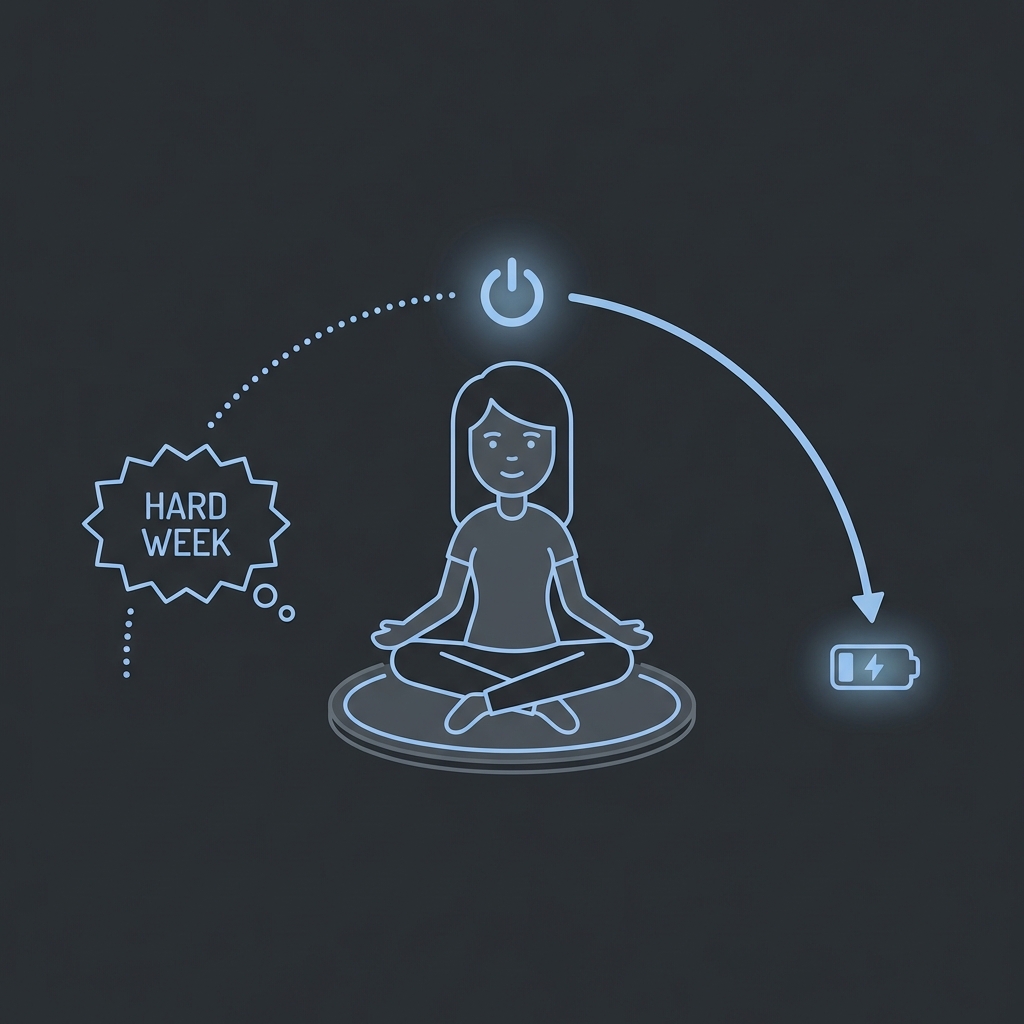
The week derailed on Tuesday. Or maybe it was Monday—honestly, the days blurred together after your kid got sick, the project deadline moved up, and that thing you thought you had handled came back demanding attention. By Friday, you’re looking at a pile of undone tasks, unanswered messages, and the growing suspicion that you’ve somehow failed at the basic act of being a functional adult.
Here’s what productivity culture wants you to do: analyze what went wrong, optimize your systems, and commit to doing better next week. Create a color-coded schedule. Batch your tasks. Time-block your calendar. Essentially, punish yourself back into performance.
But punishment isn’t what you need after a hard week. You need a gentle reset—a way back into your life that doesn’t require an apology tour or a complete overhaul of who you are.
The Truth About Hard Weeks
Hard weeks aren’t personal failures. They’re what happens when life exceeds your current capacity, and that’s not a character flaw—it’s just math. You had X amount of bandwidth, and life demanded X+47. The shortfall isn’t because you’re lazy, disorganized, or fundamentally broken. It’s because you’re human, and humans have limits.
The shame spiral that follows a derailed week often does more damage than the original chaos. You spend mental energy cataloging everything that went wrong, promising yourself you’ll never let it happen again, and creating elaborate systems to prevent future disasters. Meanwhile, the actual work of re-entering your life—figuring out what matters right now and taking one stabilizing step forward—gets buried under self-improvement projects.
The goal isn’t to emerge from a hard week optimized. It’s to emerge with your dignity intact and one foot in front of the other.
This reset isn’t about bouncing back stronger or learning valuable lessons. It’s about gentle re-entry into your own life without the performance pressure that probably contributed to the overwhelm in the first place.
Step 1: Rebuild Your Context
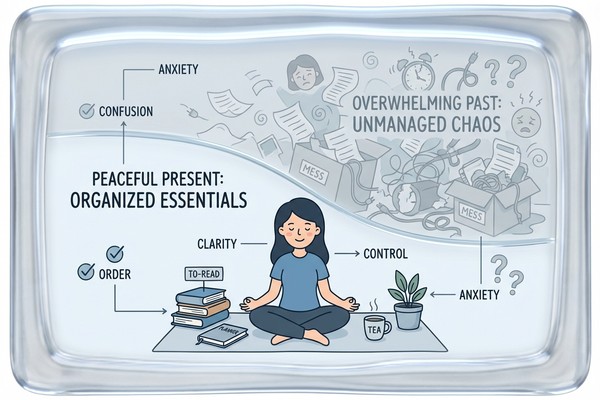
Before you can move forward, you need to know where you actually are. Not where you should be, not where you planned to be, but where you are right now. This isn’t about judgment—it’s about gathering information.
Take fifteen minutes to do a gentle inventory. What got done this week, even if it wasn’t what you planned? What’s actually urgent versus what feels urgent because it’s been sitting in your mental queue? What external factors contributed to the chaos—sick family members, unexpected work demands, or just the regular unpredictability of life?
Write this down somewhere, even if it’s just notes on your phone. The act of externalizing what happened helps your brain stop running the same loops of “how did this get so messy?” You’re not looking for solutions yet. You’re just acknowledging reality without editorial commentary.
Most people skip this step because it feels indulgent or obvious. But rebuilding context is crucial work. Your brain has been in crisis mode, making decisions based on incomplete information and emotional overwhelm. Taking stock helps you shift from reactive mode to responsive mode.
Step 2: The Three-and-Three Practice
Now comes the gentle triage. Look at everything swirling in your mental space and separate the actual necessities from the accumulated “shoulds” that have been weighing you down.
Pick three things that genuinely must happen in the next 48 hours. Not the things that would be nice to accomplish, not the things you promised yourself you’d do, but the actual non-negotiables. These might be work deadlines, medical appointments, or basic family logistics. Keep this list ruthlessly short.
Then identify three “shoulds” you can release for now. These are the tasks that feel urgent because they’ve been undone for a while, but won’t cause actual problems if they wait another week. The email that needs a thoughtful response but isn’t time-sensitive. The organizing project that’s been nagging at you. The social obligation you don’t actually want to fulfill.
Releasing a “should” isn’t giving up. It’s making space for what actually matters.
This practice isn’t about permanent decisions. You’re not swearing off these tasks forever. You’re just giving yourself permission to not carry them for the next two days while you stabilize. Most of the time, when you come back to these items later, you’ll realize they weren’t as important as they felt in the moment.
Step 3: Restore One Default
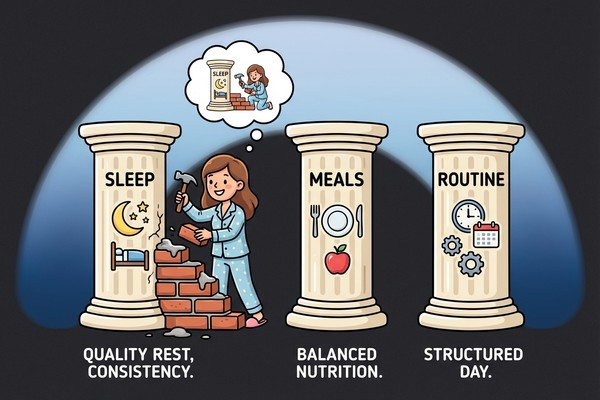
When life gets chaotic, our basic routines often go first. Sleep schedules shift, meals become grab-what’s-convenient affairs, and the small rhythms that usually anchor our days disappear. You don’t need to restore everything at once, but picking one default to rebuild can create surprising stability.
Choose something simple and foundational. Maybe it’s going to bed at a reasonable time for the next three nights. Maybe it’s eating actual meals instead of surviving on coffee and whatever’s convenient. Maybe it’s blocking out your usual morning routine or protecting one hour of weekend downtime.
The key is to pick something you can realistically maintain without heroic effort. This isn’t about perfect execution—it’s about creating one reliable touchpoint in your day. When everything else feels uncertain, having one thing you can count on provides an anchor.
Don’t underestimate how much this matters. Productivity culture teaches us that small changes are somehow insufficient, that real improvement requires dramatic overhauls. But after a hard week, dramatic change is often what got you into trouble in the first place. One restored default can be the foundation for everything else.
Step 4: Ask for One Thing
Here’s where most reset advice falls apart: it assumes you should handle recovery entirely on your own. But if you’re dealing with the aftermath of an overwhelming week, chances are you need some form of support, even if it’s small.
Think about one specific thing someone else could do to make your next few days easier. This might be practical help—someone picking up groceries or handling a carpool run. It might be emotional support—a friend who can listen without offering solutions. It might be professional assistance—delegating a task at work or hiring help for something you usually handle yourself.
The resistance to asking for help often comes from shame about needing it in the first place. We tell ourselves that capable people should be able to handle their own lives, that asking for help is admitting failure. But the people who navigate life most smoothly aren’t the ones who never need help—they’re the ones who ask for it before they’re drowning.
Keep your ask specific and time-bound. Instead of “I need help with everything,” try “Could you handle dinner on Tuesday so I can catch up on work?” or “Can I call you for twenty minutes this weekend when I’m feeling overwhelmed?” Specific requests are easier for people to say yes to, and they’re more likely to actually help.
The 5% Question
As you move into the weekend or the start of a new week, ask yourself: what would make tomorrow 5% easier? Not dramatically better, not completely transformed, just 5% easier to navigate.
Maybe it’s laying out clothes the night before so you don’t have to think about it in the morning. Maybe it’s ordering groceries for pickup instead of shopping in-store. Maybe it’s sending a quick message to reschedule something that’s adding pressure to your Monday.
The 5% question works because it bypasses the perfectionist thinking that often keeps us stuck. When we aim for dramatic improvement, we either don’t start at all or we create new pressure that adds to our stress. But 5% easier? That’s doable, and it often creates momentum for the next small improvement.
Recovery isn’t about bouncing back to peak performance. It’s about gentle forward motion.
Making It Stick
The most important part of any reset is capturing what you learn about yourself in the process. What were the early warning signs that the week was going sideways? What support would have helped earlier? What defaults matter most when everything else is chaos?
This isn’t about creating a perfect system to prevent future hard weeks—they’re going to happen regardless. It’s about building your capacity to recognize when you need a reset and having a gentle process to return to stability.
Consider keeping notes about your reset process somewhere you can reference them later. When the next hard week hits (and it will), you won’t have to reinvent the wheel. You’ll have a template for gentle re-entry that honors where you are instead of demanding where you should be.
The goal isn’t to emerge from difficult periods optimized and improved. It’s to emerge with your sense of self intact and the knowledge that you can handle whatever comes next, not because you’re invulnerable, but because you know how to take care of yourself when things get hard.
This article was created with collaboration between humans and AI—we hope you ❤️ it.