I should book a dentist appointment.
It’s such a simple sentence, isn’t it? Five words that sound reasonable, straightforward, adult. The kind of thing you might add to your to-do list between “buy groceries” and “call mom” without thinking twice about it.
But here’s what actually happens when those five words enter your life.
First, you need to find a dentist. Your old one was covered under your previous insurance plan, but that was two jobs ago. So you open your insurance website, which requires you to remember a password you created eighteen months ago under duress. After three failed attempts and a password reset that takes twelve minutes to arrive in your inbox, you’re finally in.
The provider directory loads like it’s 2003. You search for dentists within ten miles, then filter by “accepting new patients,” then cross-reference with the star ratings on Google Reviews. Dr. Martinez has great reviews but isn’t taking new patients until March. Dr. Chen is available but has a one-star review that simply says “RUN.” Dr. Patel looks promising until you realize their office is thirty-seven minutes away in traffic.
Twenty-three minutes later, you’ve found three potential candidates. But now you need to call them—because of course their online booking systems don’t work with your insurance, or don’t exist at all, or require you to create yet another account with yet another password.
The Phone Call Gauntlet
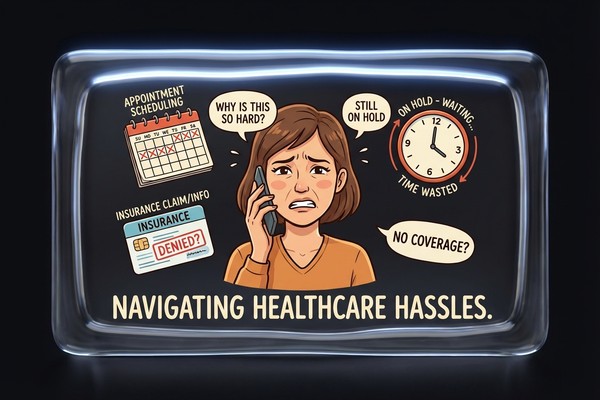
You call the first office. The phone rings six times before connecting to a voicemail system with four menu options, none of which are “schedule an appointment.” You press 0 hoping to reach a human. The hold music is a tinny version of “Girl from Ipanema” interrupted every thirty seconds by a recording reminding you that your call is important to them.
After eight minutes, someone picks up. You explain you need to schedule a cleaning. They ask for your insurance information, which you don’t have memorized, so you put them on hold while you dig through your wallet, then your email, then that folder where you definitely put all the important documents.
“I’m sorry, we’re not accepting that insurance anymore,” they say. This information was not on their website, which you checked fifteen minutes ago.
You hang up and immediately forget which office that was. Was it Dr. Martinez or Dr. Patel? You’ll have to start a spreadsheet to keep track, which means opening Excel, which means waiting for it to load, which means you’ve now been working on booking a dentist appointment for thirty-four minutes and haven’t actually booked anything.
The second office can see you, but not until November. It’s currently June. The third office has an opening next week, but only at 2:30 PM on a Tuesday, which conflicts with the meeting you have every Tuesday at 2:30 PM that you can’t reschedule because it’s with your biggest client.
You settle for the November appointment because at least it’s progress. They need your insurance card number, your date of birth, your address, and whether you’ve ever had any reactions to anesthesia. They’ll email you forms to fill out beforehand.
The Paperwork Avalanche
Three days later, the forms arrive. Seven pages of medical history questions that require you to remember things like “Have you ever had rheumatic fever?” and “List all medications you’ve taken in the past five years.” There’s a section about emergency contacts that makes you realize you should probably update your emergency contacts everywhere else too, but that’s a different rabbit hole for a different day.
The forms have to be completed and returned at least 48 hours before your appointment. You print them out, realize your printer is out of ink, add “buy printer ink” to your mental list, then decide to fill them out digitally instead. But the PDF isn’t fillable, so you download a PDF editor, which requires creating an account, which requires another password.
You finally complete the forms and email them back. Two days later, they email you to say they can’t open your attachment. Could you please fax them instead? It’s 2024 and they want you to fax something. You don’t own a fax machine. You’re not sure anyone owns a fax machine. You Google “fax services near me” and discover you can fax things at the UPS store for $2 per page.
The proof is in what didn’t happen: all the other things you didn’t do while you were doing this.
Meanwhile, your November appointment is still four months away, which means it will definitely slip out of your memory. You add it to your calendar, but you also know you should set a reminder to confirm the appointment a few days beforehand, and another reminder to actually show up, and maybe one more reminder to not eat anything beforehand because you vaguely remember something about not eating before dental work.
But wait—do you not eat before a cleaning, or is that just for procedures? Now you need to Google that too, which leads you down a rabbit hole about proper dental hygiene, which makes you feel guilty about your flossing habits, which reminds you that you’re out of floss, which goes on the grocery list that’s written on three different pieces of paper in three different locations.
The Emotional Undertow
This is where the real weight lives—not in the individual tasks, but in the emotional undertow that comes with them. The low-grade dread that settles in every time you see “book dentist appointment” on your list. The friction that makes you scroll past it to easier items. The procrastination that compounds the problem because now it’s been six months since your last cleaning and you’re probably going to get lectured about your gums.
There’s something almost absurd about how much administrative labor gets wrapped around what should be a simple transaction. You want clean teeth. They clean teeth. But between those two facts lies a bureaucratic obstacle course that would make Kafka proud.
We’ve been trained to think of this as normal. “That’s just how things work,” we tell ourselves. “Everyone has to deal with this stuff.” But do they? And more importantly, should they?
Reframing the Real Work
What if we stopped pretending that “book a dentist appointment” is a simple task and started calling it what it actually is: bureaucratic labor. Research work. Project management. Data entry. Customer service navigation. File organization. Calendar coordination.
When you break it down like that, you realize you’ve basically been doing the administrative work for multiple businesses—the insurance company, the dental office, the appointment scheduling system—all so you can pay someone to clean your teeth.
The productivity culture loves to tell us we should optimize this somehow. Batch all our appointment booking into one power session. Create systems and templates. Time-block our admin work. But that’s just rearranging the deck chairs on the Titanic of bureaucracy. It’s still work. It’s still taking up mental space. It’s still interrupting your actual life.
You’re not bad at productivity. The system is bad at being human.
What’s particularly insidious is how this kind of work multiplies. It’s not just the dentist. It’s the eye doctor, the annual physical, the oil change, the insurance renewal, the credit card that expires next month, the subscription you forgot to cancel, the warranty registration for the appliance you bought six months ago.
Each one seems small in isolation, but together they form what researchers call “cognitive load”—the background processing power your brain dedicates to keeping track of things that aren’t actually important to you but still need to be done.
The Handoff Opportunity
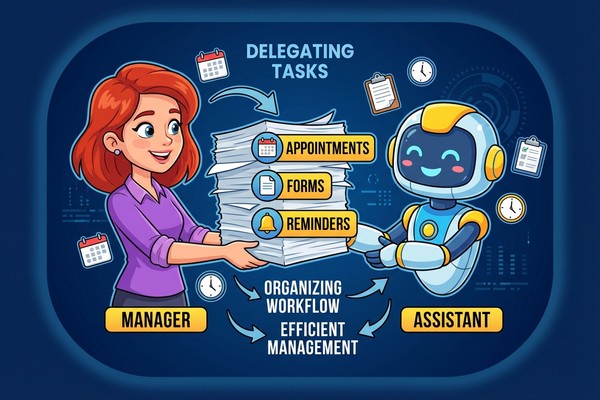
So what could actually be handed off here? More than you might think.
The provider research could be automated—cross-referencing your insurance, location preferences, availability, and reviews to generate a ranked list of actual options. The phone calls could be made by someone else who has all your information and preferences already. The forms could be pre-filled with your medical history and updated as needed.
The appointment could be scheduled around your existing commitments without you having to play calendar Tetris. The reminders could be intelligent—not just “you have an appointment tomorrow” but “your appointment is tomorrow at 2:30, you shouldn’t eat beforehand, and you’ll need to leave by 2:00 to account for parking.”
The follow-up could happen automatically. If they recommend a follow-up in six months, that appointment gets scheduled without you having to remember to schedule it. If they refer you to a specialist, the research and booking process starts immediately instead of sitting on your to-do list for three months.
This isn’t about making you more productive. It’s about making you less burdened. There’s a difference.
The goal isn’t to help you book appointments faster so you can book more appointments. It’s to remove appointment-booking from your mental space entirely so you can think about things that actually matter to you.
Because here’s the thing: you don’t want to be good at navigating dental office bureaucracy. You don’t want to optimize your insurance provider research process. You don’t want to become an expert at medical form completion.
You just want clean teeth.
And maybe, just maybe, there’s a world where getting them doesn’t require you to become a part-time administrative assistant for the healthcare system. A world where “I should book a dentist appointment” actually means what it sounds like it means.
That world starts with recognizing that the work you’re doing isn’t your job. It’s theirs. And it’s time to give it back.
This article was created with collaboration between humans and AI—we hope you ❤️ it.