We’ve turned exhaustion into a competition. Somewhere along the way, being “crazy busy” became the socially acceptable way to say “I matter.” We wear our packed calendars like designer handbags, our sleep deprivation like war paint. The busier we appear, the more valuable we must be—or so the logic goes.
But what happens when the performance of busyness becomes more important than the actual work? When signaling overwhelm takes precedence over managing it? We’ve created a culture where admitting you have bandwidth feels like confessing to laziness, where saying “I have time” sounds suspiciously like “I’m not important enough to be needed.”
The strangest part? Most of us know this dance is exhausting, yet we keep performing it anyway.
When Busy Became Beautiful
The elevation of busyness to status symbol didn’t happen overnight. It’s the natural evolution of a culture that equates worth with output, where being needed constantly feels safer than risking irrelevance. In a world where job security is fragile and economic anxiety runs high, being busy feels like insurance against being dispensable.
Think about the last time someone asked how you were doing. Did you respond with “good” or “fine”? Probably not. More likely, you launched into a catalog of commitments: the project deadlines, the kids’ activities, the weekend plans that somehow became obligations. We’ve learned to translate “How are you?” into “How busy are you?” because busyness has become our primary metric for a life well-lived.
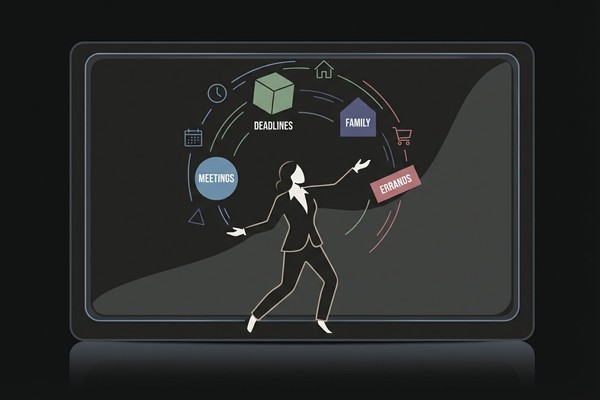
This isn’t just about individual choices—it’s about social conditioning. We’ve collectively decided that a full calendar signals success, that being in demand proves our value. The person who says they’re “slammed” gets nods of understanding and respect. The person who says they have free time gets suspicious looks and unsolicited advice about finding more challenging work.
But here’s what we’re really signaling when we perform busyness: we’re important enough that people need us, dedicated enough to sacrifice our comfort, and valuable enough that our time is constantly claimed. It’s a way of saying “I matter” without having to prove it through accomplishments alone.
The Language of Overwhelm
Listen to how we talk about our schedules. “I’m drowning.” “I’m buried.” “I’m swamped.” We use the vocabulary of disaster to describe our daily lives, as if we’re victims of some natural catastrophe rather than architects of our own commitments.
We’ve made exhaustion our elevator pitch.
The performance has its own script. “Sorry I haven’t gotten back to you—things have been absolutely insane.” “I wish I could help, but I’m completely slammed.” “I’d love to catch up, but this week is crazy.” These phrases roll off our tongues so easily that we barely notice we’re speaking them. They’ve become social lubricant, a way to deflect without seeming selfish, to decline without appearing unambitious.
But what are we really communicating? That we’re so essential, so in-demand, that we can barely keep up with our own importance. That our lives are so full of meaningful work and vital relationships that we’re practically bursting with purpose. The subtext is clear: busy people are important people.
The problem is that this performance requires constant maintenance. You can’t occasionally be busy and occasionally be available—that would break the illusion. You have to be consistently overwhelmed, perpetually behind, always catching up. The moment you admit to having space in your schedule, you risk being seen as less valuable, less needed, less important.
The Hidden Costs of Chronic Performance
What happens when you spend years performing exhaustion? You start to believe your own performance. The line between being busy and feeling busy blurs until you can’t tell the difference between actual overwhelm and the habit of overwhelm. Your nervous system learns to live in a state of constant activation, treating every email like an emergency and every request like a crisis.
This chronic performance of busyness creates real psychological costs. When overwhelm becomes your default mode, you lose the ability to recognize when you actually need help. You normalize the feeling of being behind, of having too much to do, of never quite catching up. The very thing that was supposed to signal your competence starts undermining it.
Worse, the performance prevents you from asking for support when you actually need it. If you’ve spent months telling everyone how busy you are, how do you suddenly admit that you’re not just busy—you’re drowning? How do you ask for help when you’ve been using your overwhelm as proof of your value?
The busy performance also isolates us from genuine connection. When every interaction becomes an opportunity to demonstrate how in-demand you are, you miss the chance for real conversation. People stop asking how you are because they know they’ll get a recitation of your schedule instead of insight into your actual experience.
The Uncomfortable Truth About Having Space
Here’s what happens when you stop performing busyness: people notice. Not necessarily in a good way. When you respond to “How are you?” with “I’m doing well, thanks,” instead of launching into your litany of commitments, you might get a confused look. When you say you have time to help with something, people wonder what’s wrong with your career.
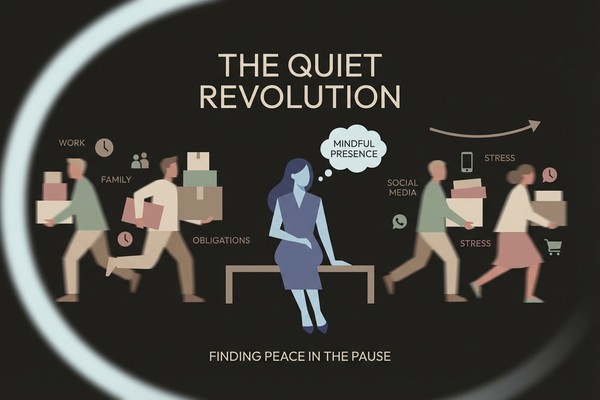
We’ve created a culture where having bandwidth feels like admitting failure. Where saying “I have space in my schedule” sounds like “I’m not important enough to be fully booked.” Where admitting that you finished your work early feels like confessing to not having enough work in the first place.
But what if having space isn’t a sign of inadequacy—it’s a sign of competence? What if being available doesn’t mean you’re not in demand—it means you’re organized enough to create availability? What if the ability to say yes to unexpected opportunities is actually more valuable than the ability to recite a packed schedule?
The people who seem most genuinely successful, most genuinely content, aren’t the ones performing exhaustion. They’re the ones who’ve learned to create and protect space in their lives. They’re available for the conversations that matter, present for the moments that count, and responsive when real opportunities arise.
Redefining What Success Looks Like
Real competence isn’t about how much you can juggle—it’s about knowing what deserves your attention. True success isn’t measured by how busy you can appear, but by how intentional you can be with your time and energy. The most impressive people aren’t the ones who are constantly overwhelmed; they’re the ones who seem to have figured out how to live without constant crisis.
Presence is the ultimate luxury in a distracted world.
What if we started measuring success by our ability to be fully present rather than constantly busy? What if we valued the person who can give their full attention to a conversation over the person who’s checking their phone every thirty seconds? What if we admired the ability to create space over the ability to fill it?
This isn’t about being less ambitious or working less hard. It’s about recognizing that sustainable high performance requires recovery, that genuine productivity needs space to breathe, and that real leadership means being available when it matters most.
The goal isn’t to eliminate busyness—sometimes life genuinely is overwhelming, and sometimes we do need to work intensively toward important goals. The goal is to stop using busyness as a proxy for worth, to stop performing overwhelm as a way of signaling value.
Building Systems That Buy Back Your Time
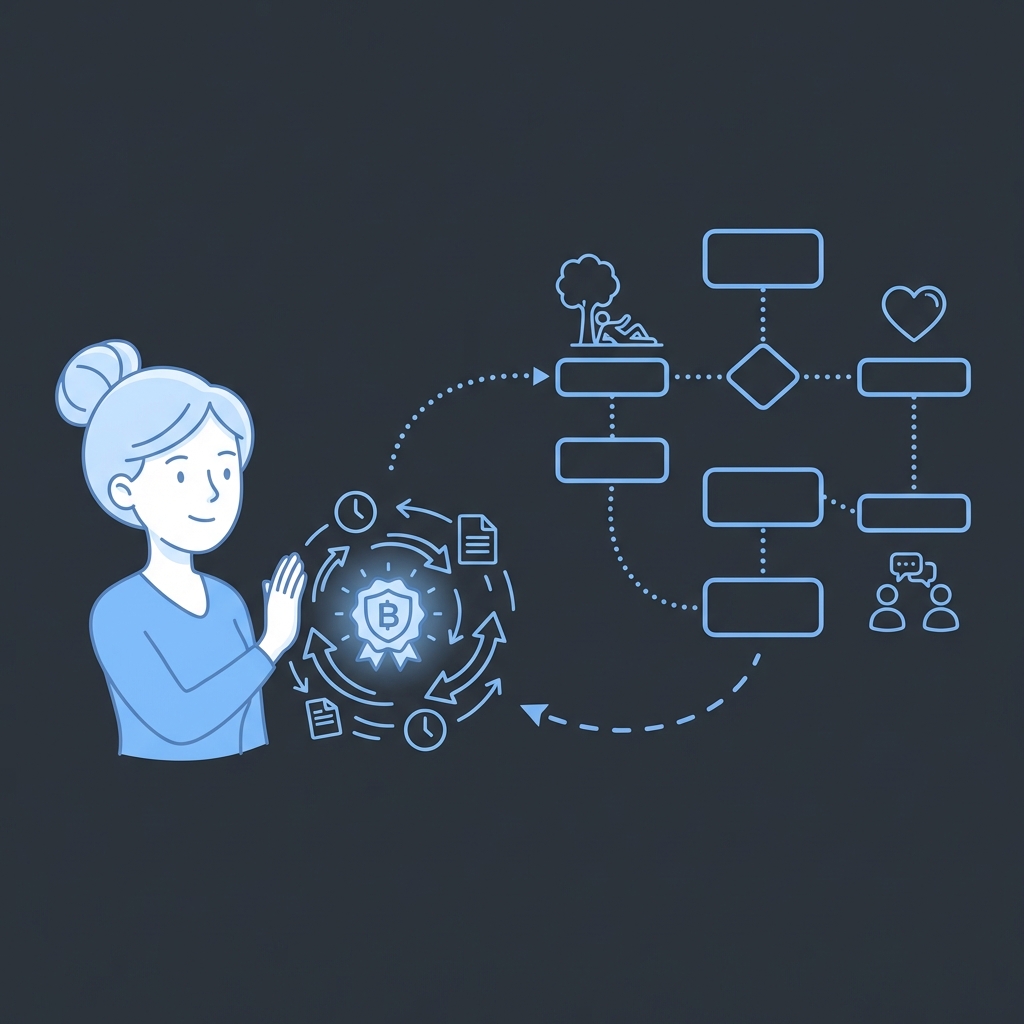
This is where the right tools become essential. Not productivity systems that help you do more, but systems that help you hold less. The difference is crucial: productivity tools often add mental overhead in the name of optimization. They require you to remember to use them, to maintain them, to trust them. They shift the work around without actually reducing it.
What we need are systems that genuinely take responsibility off our plates. Tools that don’t just organize our tasks but actually hold the mental load of remembering, tracking, and following up. Systems that work in the background, reducing the cognitive burden of keeping everything together rather than just making that burden more organized.
When you have systems that truly reduce mental load, you create genuine space in your life. Not just empty calendar slots, but actual cognitive bandwidth. The ability to be present in conversations because you’re not mentally reviewing your task list. The capacity to say yes to unexpected opportunities because you’re not already stretched thin by the overhead of managing everything you’re supposed to remember.
The real luxury isn’t having a packed schedule—it’s having the mental space to choose what deserves your attention. It’s being able to respond thoughtfully rather than reactively, to be genuinely available for the people and opportunities that matter most.
When we stop performing busyness and start creating real capacity, we discover something surprising: the people who matter most don’t need us to be overwhelmed to prove our worth. They need us to be present, responsive, and genuinely available. And that requires space—not just in our calendars, but in our minds.
This article was created with collaboration between humans and AI—we hope you ❤️ it.