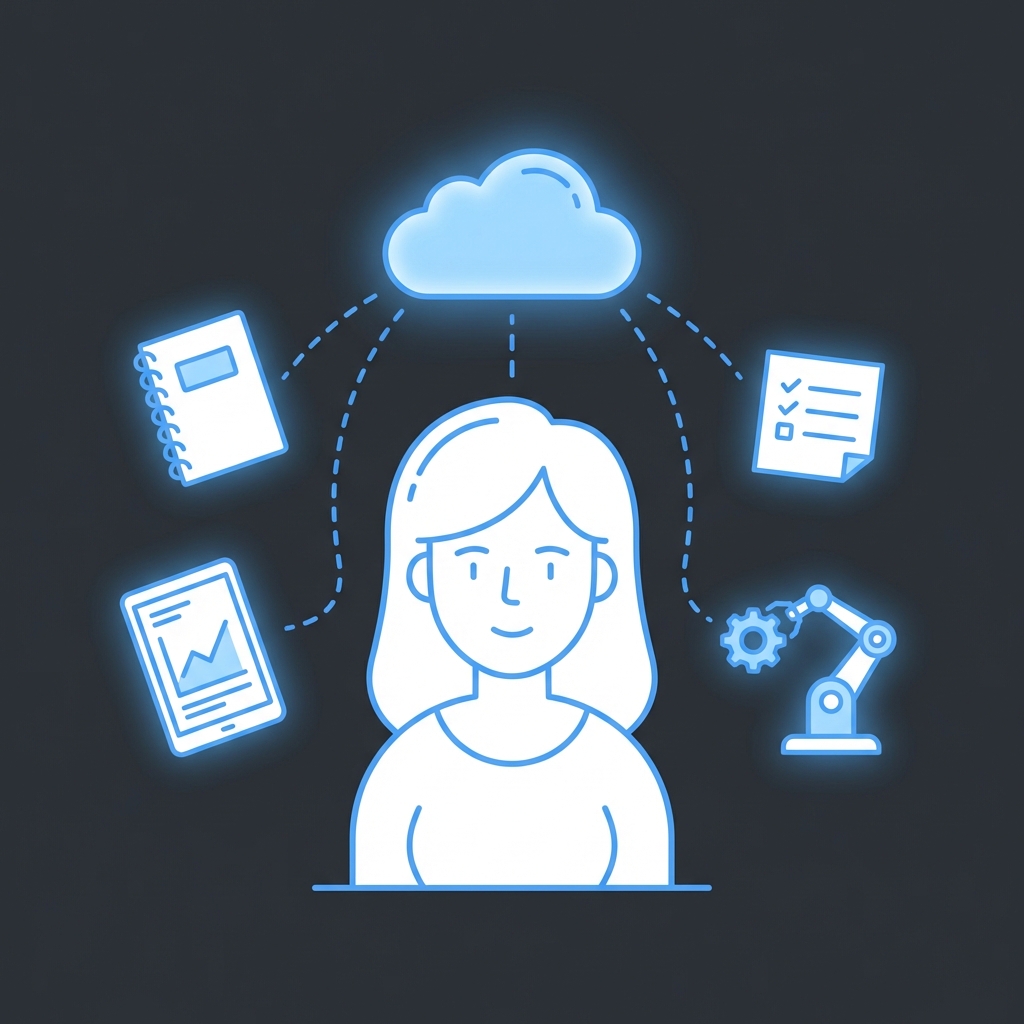
Your brain wasn’t designed to be a filing cabinet. Yet somewhere along the way, we started treating our minds like infinite storage units, cramming in grocery lists, work deadlines, family schedules, and the mental inventory of everyone else’s needs. We carry phone numbers we’ll never dial again, worry about appointments weeks away, and maintain running tallies of who owes what to whom.
This isn’t strength. It’s not being “on top of things.” It’s cognitive hoarding, and it’s exhausting your most precious mental resource.
The solution isn’t better memory techniques or more sophisticated to-do lists. It’s understanding something psychologists call externalized cognition—the practice of deliberately moving information outside your head so your brain can focus on what actually matters.
Your Working Memory Wasn’t Built for This
Working memory is where your brain holds information temporarily while you use it. Think of it as your mental workspace—the cognitive equivalent of your kitchen counter. You can chop vegetables, check a recipe, and keep track of what’s in the oven, but only because you’re not also trying to remember your grocery list, your mother’s birthday, and the appointment you need to schedule next week.
Research shows working memory can handle about seven pieces of information at once, and that’s under ideal conditions. In reality, most of us operate closer to four or five meaningful chunks before things start falling through the cracks. Every phone number you’re “temporarily” remembering, every mental note about calling the dentist, every promise you’re tracking in your head—all of it competes for the same limited cognitive real estate.
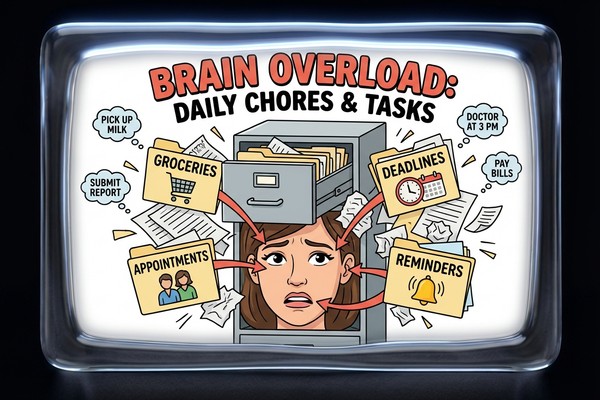
The cruel irony is that the more we try to hold in our heads, the less effective we become at everything else. You can’t think creatively about a work problem when part of your brain is occupied remembering to pick up milk. You can’t be fully present with your kids when you’re mentally rehearsing tomorrow’s presentation.
Your brain is for having ideas, not storing them.
This insight, popularized by productivity expert David Allen, points to a fundamental truth about human cognition. We evolved to think, solve problems, and connect with others. We didn’t evolve to be walking databases of logistics and obligations.
The Art of Cognitive Offloading
Externalized cognition isn’t about being lazy or forgetful. It’s about being strategic with your mental resources. When you write down your grocery list instead of memorizing it, you’re not admitting defeat—you’re freeing up cognitive capacity for more important work.
The key distinction here is between offloading and avoidance. Avoidance means pushing responsibilities away entirely, hoping someone else will handle them or they’ll somehow resolve themselves. Offloading means deliberately moving information to a trusted external system while maintaining ownership of the outcome.
When you set a calendar reminder for your annual physical, you’re offloading the job of remembering the appointment to your calendar app. You’re still responsible for showing up, but you’re no longer burning mental energy keeping that date in active memory. When you delegate a project to a colleague with clear expectations and follow-up, you’re offloading the execution while maintaining accountability for the result.
The difference matters because true offloading actually increases your sense of control and reduces anxiety. You’re not hoping someone else will remember—you’re ensuring the information lives somewhere reliable so you don’t have to.
Where Offloading Works Best
Not everything benefits equally from external storage. Some types of mental work are particularly well-suited to offloading, while others need to stay in your head.
Coordination tasks are prime candidates. Scheduling meetings, tracking who’s bringing what to the potluck, remembering which kid has soccer practice when—these are logistical puzzles that external systems handle beautifully. Your calendar app is infinitely better at remembering that you have a dentist appointment in three weeks than your working memory is.
Repetitive reminders also belong outside your head. The mental ping to water the plants, take vitamins, or follow up on that email you sent last week—these recurring nudges consume cognitive resources without adding value. A simple reminder system can handle them while you focus on more complex thinking.
Sequential processes benefit enormously from externalization. Packing lists for trips, onboarding checklists for new employees, or the steps involved in your monthly financial review—these workflows live better in documented form than in your memory. You can refine them over time, share them with others, and execute them without the mental overhead of remembering what comes next.
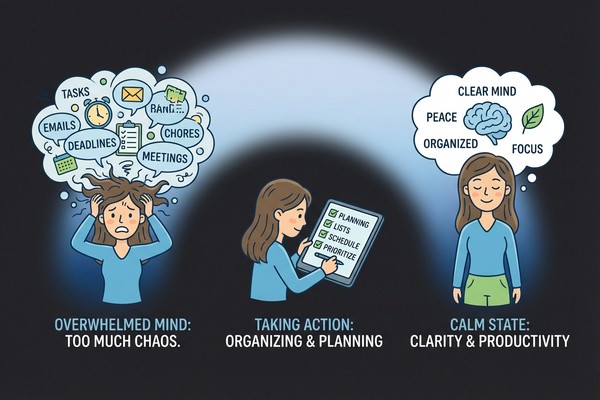
But not everything should be externalized. Creative insights, emotional intelligence, and contextual judgment need to stay internal. The ability to read a room, sense when a conversation is heading in the wrong direction, or make intuitive leaps between seemingly unrelated ideas—these are uniquely human capabilities that can’t be offloaded to external systems.
Three Things You Can Stop Holding
Right now, pause and identify three pieces of information currently taking up residence in your working memory that could live somewhere else. Maybe it’s the mental list of groceries you need to buy, the nagging reminder to schedule that oil change, or the running tally of who owes you money from last month’s group dinner.
For each item, ask yourself: What would it look like to move this outside my head while maintaining the same level of control? The grocery list goes in your phone’s notes app. The oil change reminder becomes a calendar event. The money tracking moves to a simple spreadsheet or even a note in your wallet.
The goal isn’t to create more systems to manage—it’s to create trusted places where information can live so your brain doesn’t have to hold it.
The best external memory is the one you actually trust.
This brings us to the crucial design principle underlying all effective externalized cognition: trust and retrieval. An external system only works if you genuinely believe it will surface the right information at the right time. If you don’t trust your calendar, you’ll keep rehearsing appointments in your head. If your task list feels like a black hole where things disappear, you’ll maintain mental backups of everything important.
Building Systems That Actually Work
The most effective external cognition systems share several characteristics. They’re accessible when you need them, reliable enough that you stop double-checking mentally, and simple enough that using them doesn’t create new cognitive overhead.
Your phone’s built-in reminder app might be more trustworthy than a sophisticated project management system if you actually look at your phone regularly but forget to check the other app. A physical notebook might serve you better than any digital tool if you’re someone who thinks better with pen and paper.
The medium matters less than the consistency and trust. The best system is the one that fades into the background, quietly holding information until you need it, without requiring constant mental maintenance.
This is where many productivity systems fail. They demand so much cognitive overhead—categorizing, prioritizing, reviewing, updating—that they become another thing to remember rather than a true extension of your mind. They shift the mental load rather than reducing it.
Effective externalized cognition feels more like ambient awareness than active management. Your calendar doesn’t just store appointments; it surfaces them at the right time without you having to remember to look. Your grocery list doesn’t just hold items; it’s accessible exactly when you’re walking through the store.
The future of externalized cognition lies in systems that understand context and timing, that can hold information and surface it intelligently without constant supervision. These aren’t just better tools—they’re cognitive prosthetics that extend our natural thinking abilities rather than replacing them.
When you stop using your brain as a storage device, something remarkable happens. The mental space that was occupied by logistics and reminders becomes available for deeper thinking, creative problem-solving, and genuine presence with the people and activities that matter most.
Your brain can finally breathe.
This article was created with collaboration between humans and AI—we hope you ❤️ it.