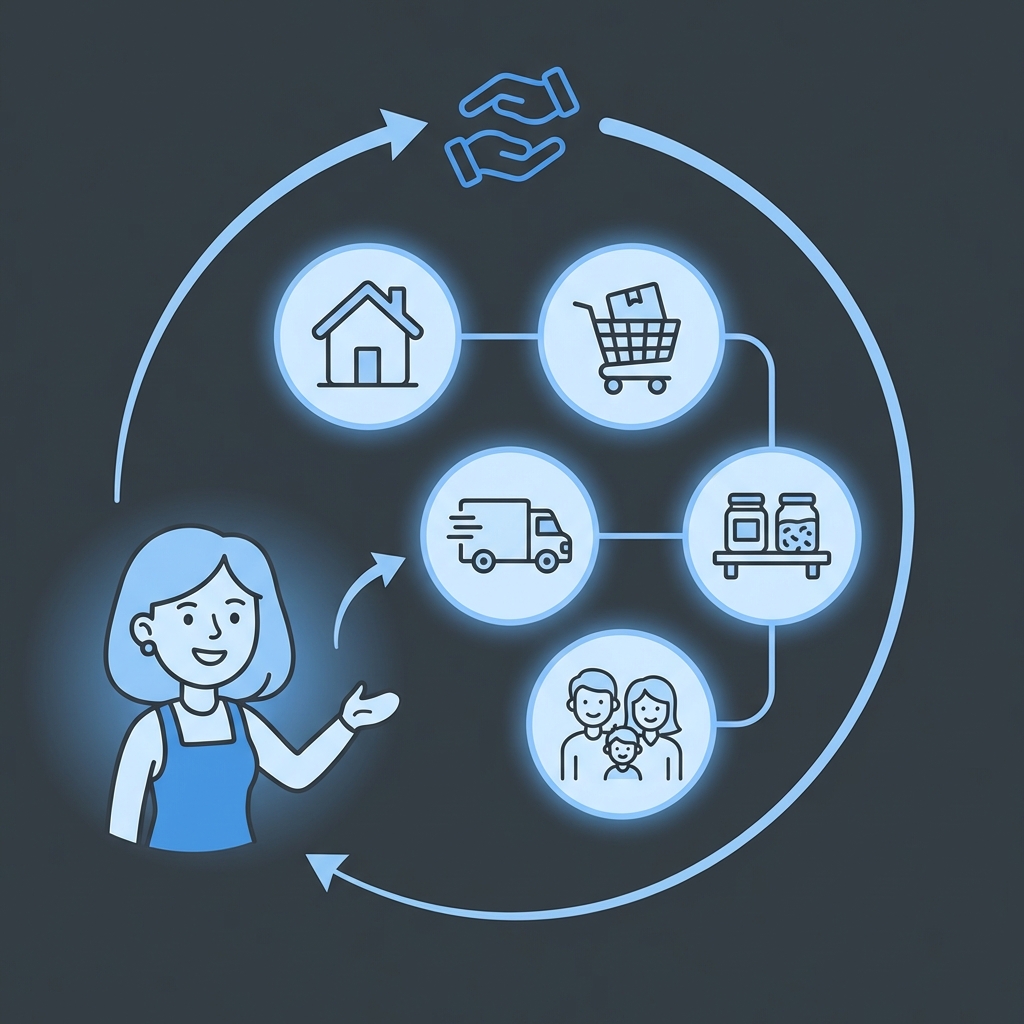
When someone says they’re “bad at meal planning,” they’re usually apologizing for failing at something that isn’t actually meal planning at all. What they’re really describing is their inability to single-handedly manage a complex household supply chain—one that involves demand forecasting, inventory management, procurement, quality control, and logistics coordination. Oh, and somehow doing all of this while maintaining everyone’s dietary preferences, nutritional needs, and budget constraints.
The fact that we call this “meal planning” reveals how deeply we’ve misunderstood what’s actually happening in households every day. We’ve taken what amounts to operations management and rebranded it as a simple lifestyle choice, then wondered why so many people feel overwhelmed by it.
The Real Work Behind “What’s for Dinner?”
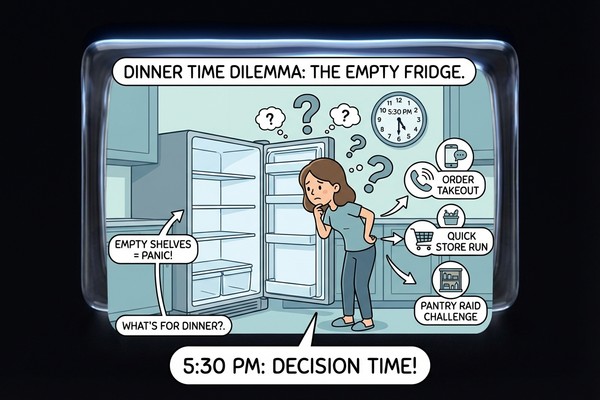
When you’re standing in your kitchen at 5:30 PM asking yourself what to make for dinner, you’re not just choosing a meal. You’re the endpoint of a supply chain that should have been running smoothly for days or weeks beforehand. The stress you feel in that moment isn’t about creativity or cooking skills—it’s about the failure of a system that was never properly designed in the first place.
Real meal planning starts with understanding consumption patterns. How much milk does your family actually go through in a week? When do you typically run out of bread? Which vegetables get forgotten in the crisper drawer, and which ones disappear immediately? This isn’t meal planning—it’s inventory analysis.
Then there’s demand forecasting. Tuesday night soccer practice means dinner needs to be ready by 5 PM or portable. Your partner’s late meetings on Thursdays shift the cooking window. The kids refuse leftovers on Fridays but love them on Sundays. School holidays change breakfast requirements entirely. You’re not just planning meals—you’re mapping them against a complex schedule of constraints and preferences.
The procurement piece is where most people get stuck. It’s not enough to know you need groceries; you need to know exactly what groceries, in what quantities, from which stores, and when. You need to cross-reference what’s already in your pantry, what’s on sale, what’s in season, and what you can realistically use before it spoils. You’re running purchasing operations for a small organization, except the organization happens to be your family.
The Invisible Infrastructure of Household Operations
Every household runs on what I call “invisible infrastructure”—the systems and knowledge that keep daily life running smoothly. Most of this infrastructure lives in someone’s head, usually the same someone who gets blamed when it fails.
Take the simple act of running out of something. When you open the dishwasher and there’s no detergent, or reach for coffee in the morning and find an empty bag, that’s not just an inconvenience. It’s a system failure. Someone was supposed to be monitoring inventory levels, anticipating usage patterns, and triggering reorders before the stockout happened.
The “we’re out” interruption isn’t a small inconvenience—it’s evidence of an entire supply chain breaking down.
In most households, this monitoring happens through a combination of mental tracking and periodic panic. Someone notices the milk is getting low, makes a mental note to buy more, forgets about it until they’re pouring the last drops into their coffee, then adds “milk” to a shopping list that may or may not make it to the store. It’s a system held together by hope and cognitive load.
The emergency grocery runs that result from these stockouts aren’t just inefficient—they’re expensive and stressful. You end up paying premium prices for basic items because you’re shopping reactively instead of strategically. You make multiple trips per week instead of one planned trip. You buy things you don’t need because you can’t remember what you already have at home.
What a Real Handoff Actually Looks Like
Most attempts at “sharing the mental load” around meal planning fail because they focus on the wrong level of the problem. Asking someone to “help with dinner” or “pick up groceries” isn’t actually sharing the load—it’s delegating tasks while keeping all the coordination work.
A real handoff means transferring ownership of outcomes, not just execution of tasks. Instead of “can you grab milk when you’re out,” it’s “you own keeping the house stocked with dairy products.” Instead of “what should we have for dinner,” it’s “you own ensuring we have satisfying meals Monday through Wednesday.”
This kind of handoff requires building systems that can operate independently. The person taking over needs access to the same information that was previously stored in someone else’s head. They need to know consumption patterns, preferences, constraints, and backup plans. They need purchasing authority and clear success metrics.
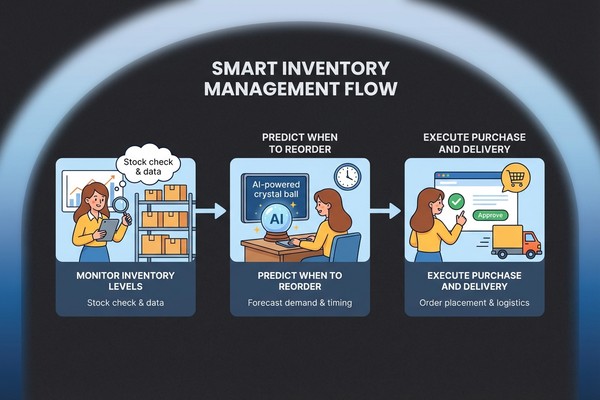
The most successful household supply chain handoffs I’ve seen involve creating default systems that reduce decision-making overhead. Standard grocery lists that get modified rather than created from scratch. Automatic reorder schedules for non-perishables. Meal rotation templates that account for everyone’s schedule and preferences.
But even with good systems, someone still needs to own the monitoring and adjustment. The goal isn’t to eliminate all thinking—it’s to eliminate the constant low-level anxiety that comes from trying to hold an entire household’s operational details in your head.
Identifying Your Supply Chain Pressure Points
Before you can build better systems, you need to understand where your current approach is breaking down. The places where you feel most stressed about household management are usually where your supply chain is most fragile.
Start by tracking your “we’re out” moments for a week. Every time you reach for something that isn’t there, make a note. Every time you make an unplanned store run, write down what triggered it. Every time you feel that spike of dinner-time panic, identify what information or preparation was missing.
Most households have five to ten recurring supply chain failures that create the majority of their stress. Maybe you’re constantly running out of school lunch supplies on Sunday nights. Maybe you never have the right ingredients for breakfast when you’re rushing in the morning. Maybe you repeatedly buy vegetables with good intentions, then watch them rot because you never planned how to use them.
These aren’t character flaws or failures of willpower. They’re predictable system failures that can be solved with better design.
The household items you’re constantly running out of aren’t random—they’re revealing the gaps in your supply chain.
Once you’ve identified your top pressure points, you can start building targeted solutions. The family that’s always out of lunch supplies needs a weekly lunch prep system, not better willpower. The household that wastes vegetables needs a meal planning approach that starts with produce, not recipes. The people making emergency pharmacy runs need automatic refill systems, not better memory.
Building Ambient Support Systems
The future of household supply chain management isn’t more apps or more planning—it’s ambient systems that handle the monitoring and coordination work without requiring constant attention. The best household systems feel like having a competent assistant who knows your preferences and handles the details.
This might mean setting up automatic deliveries for your most predictable consumption items. It might mean creating template shopping lists that you modify rather than build from scratch. It might mean establishing reorder triggers based on actual usage patterns rather than arbitrary schedules.
The goal is to move from reactive management to proactive systems. Instead of noticing you’re out of something, you want systems that ensure you never run out in the first place. Instead of weekly meal planning sessions, you want frameworks that make daily meal decisions obvious and stress-free.
The households that feel most calm and organized aren’t the ones with the most elaborate systems—they’re the ones where the essential supply chain work happens automatically, leaving mental space for everything else that matters.
When you stop spending cognitive energy on whether you have enough coffee for tomorrow morning, you create space for the conversations and connections that actually matter. When someone else owns keeping the household stocked with essentials, you can focus on the parts of family life that require your unique attention and care.
That’s what real meal planning looks like—not more organization, but less worry. Not better systems, but systems that work so well you can forget about them entirely.
This article was created with collaboration between humans and AI—we hope you ❤️ it.