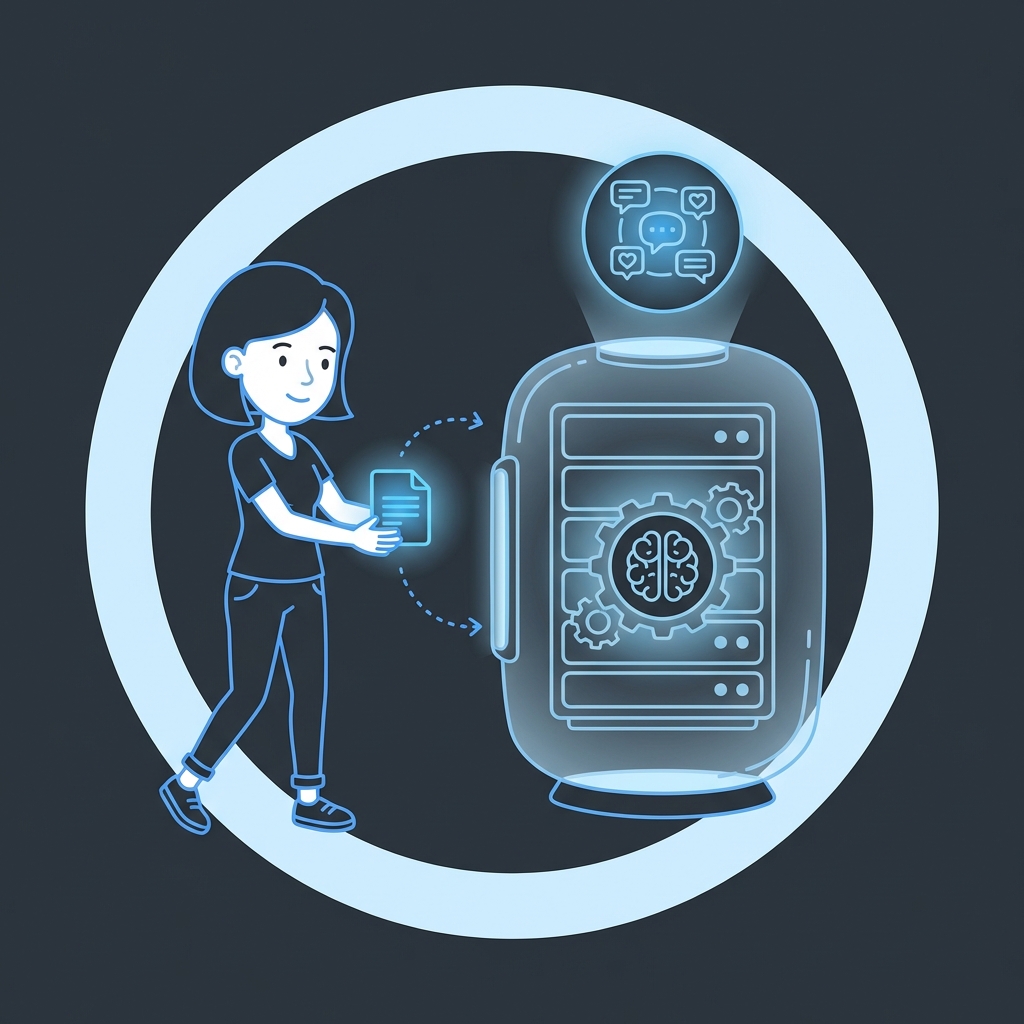
The notification pops up: “Sarah’s birthday is tomorrow.” Your heart sinks a little. Not because you don’t care about Sarah, but because you realize you’ve been carrying this information for weeks, letting it create a low-level hum of anxiety in the back of your mind. You care, so you remember. You remember, so you worry. You worry, so you plan. And somewhere in that cycle, the joy of connection gets buried under the weight of execution.
This is the social memory machine—the invisible infrastructure that keeps relationships alive, warm, and connected. It’s the birthday tracking, the follow-up texts, the “we should get together soon” that actually becomes a calendar invite. It’s noticing when someone’s been quiet, remembering their big presentation is this week, keeping track of who you owe a thank-you note.
Most productivity advice pretends this work doesn’t exist. It focuses on professional tasks, personal goals, maybe household management if you’re lucky. But the labor of maintaining relationships? That gets filed under “just be a good person,” as if caring automatically comes with the operational skills to express that care consistently.
The Invisible Architecture of Connection
Social maintenance work operates in a strange space where it’s simultaneously essential and completely overlooked. When it works, it’s invisible. When it fails, everyone notices. The friend who always remembers birthdays, the colleague who follows up on your job interview, the family member who organizes the holiday gathering—they’re running complex systems that no one else sees.
This work has patterns. There’s the birthday cycle: remember, research gift, buy gift, wrap gift, deliver gift, follow up to make sure they liked it. The social planning cycle: suggest getting together, coordinate schedules, pick location, confirm details, send reminders, actually show up. The maintenance cycle: notice someone’s been quiet, reach out, gauge their response, adjust frequency accordingly.
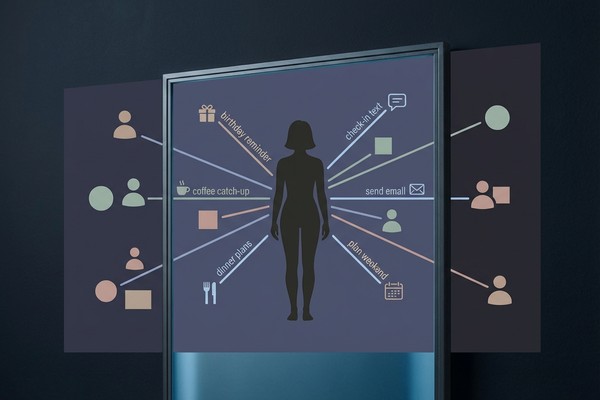
Each cycle requires not just remembering what to do, but when to do it, how often, and with what tone. Too frequent and you’re clingy. Too sparse and you’re distant. The calibration is constant and largely intuitive, which makes it nearly impossible to delegate or systematize in traditional ways.
The proof isn’t in what happened—it’s in what didn’t fall through the cracks.
What makes this particularly challenging is that social memory work often concentrates on one person in any given relationship network. Not because others don’t care, but because someone has to hold the overview. Someone needs to know that Jake’s going through a rough patch, that Maria just started a new job, that the group hasn’t gotten together in three months. This person becomes the social coordinator by default, and often by temperament—they’re the ones who notice patterns, who feel responsible for maintaining connection.
When Memory Becomes Burden
The guilt around social memory work is particularly sharp because it sits at the intersection of love and logistics. When you forget someone’s birthday, you’re not just missing a task—you’re potentially communicating that they don’t matter to you. When you lose touch with a friend, it’s not just about dropped communication—it’s about letting a relationship drift into neglect.
This creates a peculiar kind of pressure. Professional deadlines have clear consequences and clear stakeholders. Social deadlines feel both more important (because they’re about people you care about) and less legitimate (because no one’s paying you to remember). You can reschedule a work meeting without questioning your worth as a human being. Miss a birthday and you’re re-examining your entire approach to friendship.
The mental load shows up in unexpected ways. You find yourself mentally cataloging interactions: when did I last text Mom? How long since I’ve seen Alex? Did I ever respond to that message from college friend? The tracking happens automatically, creating a background anxiety that’s hard to name but impossible to ignore.
Some people try to solve this with rigid systems—birthday calendars, contact management apps, scheduled check-ins. But these often backfire because they make social connection feel transactional. There’s something deeply uncomfortable about getting a birthday message that feels like it came from someone’s CRM system, even if the sentiment behind it is genuine.
The Warmth Preservation Challenge
This is where most productivity solutions fail social memory work. They optimize for completion rather than connection. A reminder to “text Sarah” might help you remember the task, but it doesn’t help you craft a message that feels personal and timely. A birthday alert might prevent you from forgetting entirely, but it doesn’t help you choose a gift that shows you’ve been paying attention to what matters to her lately.
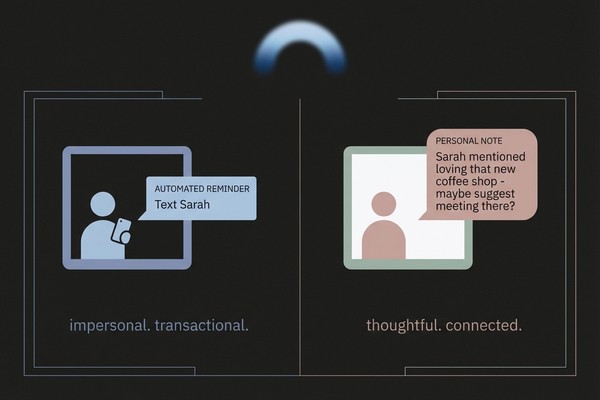
What’s needed isn’t more efficiency—it’s more support for the emotional and creative work that makes social connection meaningful. Instead of “remember to call Dad,” what if you had gentle prompts like “Dad mentioned his garden last time you talked” or “It’s been two weeks since your last conversation—he usually likes hearing from you around now.”
The goal isn’t to automate relationships but to reduce the cognitive overhead so you can focus on the actual connecting. Think of it like having a good assistant who keeps track of context and timing, leaving you free to bring presence and authenticity to the interaction itself.
Some approaches that preserve warmth while reducing load: gentle nudges rather than harsh reminders, context that helps you personalize your outreach, prep work that happens in advance so you’re not scrambling in the moment. Instead of “Sarah’s birthday tomorrow,” imagine “Sarah’s birthday tomorrow—she’s been excited about her new pottery class and mentioned wanting to try that Thai restaurant downtown.”
Tending Your Garden
Rather than trying to optimize all your social connections simultaneously, consider choosing three relationships to actively tend this month. Not because the others don’t matter, but because sustainable social memory work requires boundaries and focus.
Pick relationships where you genuinely want more connection, where your attention will be welcomed rather than overwhelming. Maybe it’s the friend you keep meaning to call, the family member you’ve been thinking about, the colleague you’d like to know better outside of work contexts.
Connection thrives on attention, not automation.
For each relationship, identify one small way to reduce the memory burden while increasing the connection. This might mean setting a loose rhythm for check-ins, creating a simple note system for remembering important details, or just being more intentional about noticing when someone comes to mind and acting on that impulse rather than filing it away for later.
The key is supporting your natural instincts rather than replacing them. You already know when relationships need attention—you can feel it in the guilt, the wondering, the mental notes you make and then lose track of. What you need isn’t better tracking of social obligations but better support for social intuition.
Systems That Support Without Replacing
The best social memory support feels less like task management and more like having a thoughtful friend who helps you stay connected to the people you care about. It remembers context so you don’t have to. It notices patterns so you can focus on the person in front of you. It handles the logistics so you can bring your full presence to the actual interaction.
This isn’t about optimizing relationships for efficiency—it’s about creating space for relationships to be messy, spontaneous, and human while still maintaining the consistency that deep connection requires. It’s about reducing the mental load of social maintenance so that more of your emotional energy can go toward actual social connection.
The social memory machine will always exist because relationships require tending. The question is whether that machine supports your capacity for connection or slowly grinds it down under the weight of invisible labor. The goal isn’t to remember everything perfectly—it’s to remember what matters most, when it matters most, so you can show up as the friend, family member, and human you actually want to be.
This article was created with collaboration between humans and AI—we hope you ❤️ it.