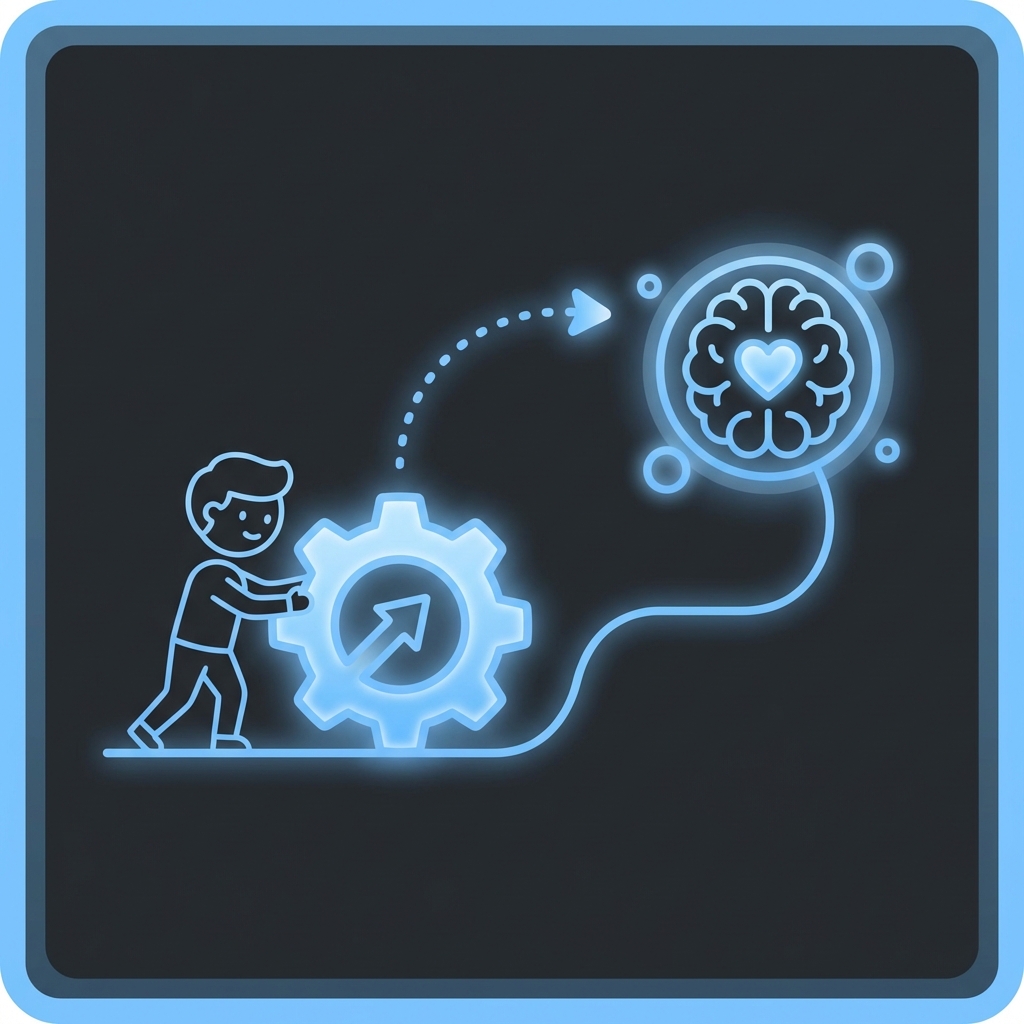
I used to wear my exhaustion like a badge of honor. The later I stayed up answering emails, the more virtuous I felt. The more activities I packed into my weekend, the more accomplished I seemed. Rest felt selfish, like I was letting someone down—myself, my family, my future.
It took me years to realize that somewhere along the way, I’d confused being busy with being worthy.
This isn’t just about working too hard. Hustle culture has infected every corner of our lives, turning rest into a luxury we have to earn and presence into something we can’t afford. We’ve been trained to believe that our value as humans is directly proportional to our output, and many of us are paying for this belief with our health, our relationships, and our sanity.
The Everywhere Hustle
Hustle culture doesn’t just live at the office. It shows up when we turn parenting into a performance, cramming our kids’ schedules with activities because idle time feels like wasted potential. It appears in our approach to self-improvement, where we can’t just enjoy a walk—it has to be optimized with a podcast and step counter. It infiltrates our weekends, making us feel guilty for sleeping in or sitting still.
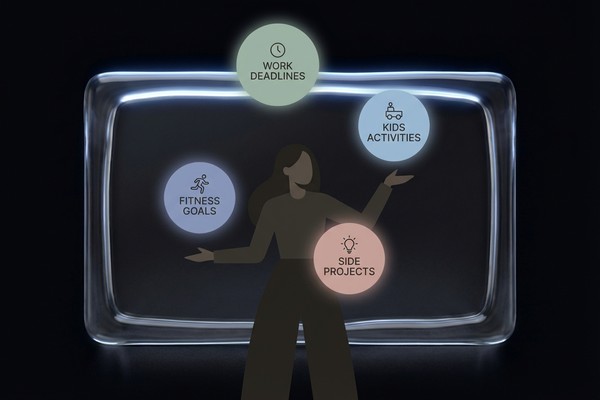
We’ve created a culture where being overwhelmed is normalized, where saying “I’m so busy” has become a humble brag, and where the question “What did you accomplish today?” carries more weight than “How do you feel?”
The insidious part is how hustle culture masquerades as empowerment. It tells us we’re taking control of our lives, maximizing our potential, refusing to settle. But control built on the foundation of never stopping isn’t control at all—it’s a prison with motivational quotes on the walls.
The Emotional Engines of Overwork
Understanding why we hustle requires looking beneath the surface behaviors to the emotional drivers that fuel them. Fear sits at the center of most overwork—fear that we’re not enough, that we’ll be left behind, that relaxing means giving up.
Scarcity thinking convinces us that opportunities are limited and rest is a luxury we can’t afford. We operate from a place of “not enough”—not enough time, money, recognition, or security. This scarcity lens makes every moment feel precious and every pause feel wasteful.
Identity becomes entangled with output when we derive our sense of self from what we produce rather than who we are. The parent who defines themselves by their children’s achievements, the employee whose worth fluctuates with their performance reviews, the entrepreneur who can’t separate their business success from their personal value—all are trapped in the hustle-worth equation.
Your worth isn’t something you earn through exhaustion—it’s something you already possess.
Praise becomes addictive when it’s tied to our productivity. We learn that being busy gets us attention, sympathy, and admiration. “I don’t know how you do it all” becomes the compliment we chase, even when “doing it all” is slowly killing us.
These emotional drivers create a feedback loop where rest feels dangerous and busyness feels safe, even when the opposite is true.
The Hidden Costs of Never Stopping
The real tragedy of hustle culture isn’t just that we’re tired—it’s what we lose in the process. Presence becomes impossible when your mind is always three tasks ahead. You sit with your child, but you’re mentally drafting tomorrow’s presentation. You’re physically at dinner with friends, but emotionally you’re reviewing your to-do list.
Relationships suffer when we treat them like another item to optimize. Conversations become transactional. Quality time gets scheduled and measured. We love people in the margins of our productivity, giving them whatever energy remains after we’ve spent ourselves on everything else.
Our bodies pay the price through chronic stress, disrupted sleep, and the constant flood of cortisol that comes from treating every day like an emergency. We’ve normalized being tired, achy, and overwhelmed as the price of being responsible adults.
Perhaps most damaging is how hustle culture erodes our ability to trust ourselves. We become so dependent on external validation through productivity that we lose touch with our internal compass. We don’t know what we want because we’re too busy doing what we think we should want.
Rest as Readiness, Not Indulgence
The antidote to hustle culture isn’t laziness—it’s a fundamental reframe of what rest actually is. Rest isn’t the absence of work; it’s the presence of restoration. It’s not something you earn after being productive enough; it’s what makes meaningful productivity possible.
When we view rest as readiness, everything changes. Sleep becomes preparation, not procrastination. Saying no becomes protection, not selfishness. Boundaries become strength, not weakness.
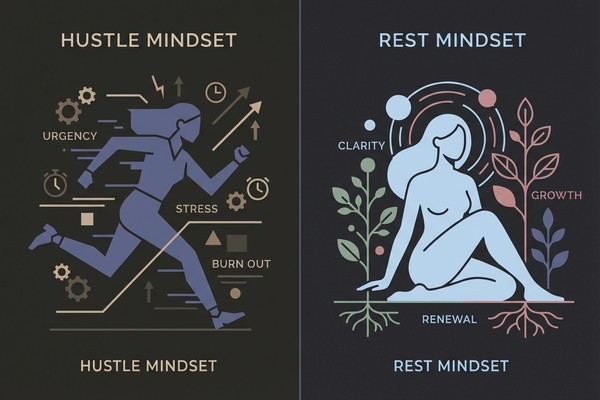
This reframe requires us to challenge some deeply held beliefs about worthiness. It means accepting that your value doesn’t fluctuate based on your output. It means recognizing that sustainable impact requires sustainable practices. It means understanding that you can’t pour from an empty cup, no matter how motivational the quote on the side.
Rest as readiness also changes how we think about time. Instead of seeing downtime as lost opportunity, we start to see it as investment. The afternoon nap that helps you be present with your family. The morning walk that clears your head for better decisions. The evening without plans that lets you actually enjoy your life instead of just managing it.
What Are You Really Afraid Of?
The question that cuts through all the productivity advice and time management techniques is this: What do you fear would happen if you slowed down?
Really sit with this question. Don’t rush to the practical concerns—dig into the emotional ones. Are you afraid people will think you’re lazy? That opportunities will pass you by? That you’ll discover you’re not as important as your busyness makes you feel?
Many of us are afraid that if we stop moving, we’ll realize how much of our lives we’ve been missing. We’re afraid that rest will reveal the emptiness that constant motion has been covering up. We’re afraid that without the armor of productivity, we’ll be exposed as ordinary.
But here’s what actually happens when you slow down: You remember who you are beneath all the doing. You rediscover what you actually enjoy, not just what you’re good at. You start to notice the world around you instead of just moving through it.
The fears that keep us hustling are usually bigger in our imagination than in reality. Most of the catastrophes we’re working so hard to prevent either won’t happen or aren’t as devastating as we think they’ll be.
Starting Small: One Boundary This Week
Changing your relationship with hustle doesn’t require a complete life overhaul. It starts with one small boundary, one tiny act of choosing yourself over the endless demands of productivity culture.
Maybe it’s turning off work notifications after 7 PM. Maybe it’s saying no to one social obligation that feels more like work than pleasure. Maybe it’s taking a real lunch break instead of eating at your desk. Maybe it’s letting your house be messy for one evening while you read a book.
The specific boundary matters less than the practice of setting it. You’re training yourself to believe that your wellbeing is worth protecting, that your energy is finite and valuable, that you have the right to exist without constantly proving your worth through output.
Start by noticing where hustle shows up in your life. Where do you feel guilty for resting? When do you catch yourself equating busyness with virtue? What activities do you do out of obligation rather than genuine desire or necessity?
Then pick one small area where you can practice saying no to the hustle mindset. Don’t try to revolutionize your entire life in a week—just practice choosing rest over performance in one tiny way.
You don’t have to earn the right to take care of yourself.
Beyond Individual Solutions
While personal boundaries are crucial, it’s important to acknowledge that hustle culture isn’t just a personal failing—it’s a systemic issue. We live in a society that profits from our exhaustion, that equates human worth with economic output, that makes rest a privilege rather than a right.
This is where thoughtful systems and tools become valuable—not to help us do more, but to help us hold less. The goal isn’t to optimize our hustle but to reduce the mental load that makes hustle feel necessary in the first place.
When we have systems that actually remember for us, track what matters without our constant supervision, and handle the cognitive work of follow-up and planning, we create space for the kind of presence that hustle culture steals from us.
The most radical act in a culture obsessed with productivity might be choosing to be fully present in your own life. To value your inner state as much as your output. To measure success by how you feel, not just what you’ve accomplished.
Your worth was never dependent on your productivity. It’s time to stop living like it is.
The exhaustion you feel isn’t a sign that you need better time management—it’s a signal that you need a different relationship with your own value. You don’t have to hustle for your worth. You already have it.
What would change in your life if you really believed that?
This article was created with collaboration between humans and AI—we hope you ❤️ it.