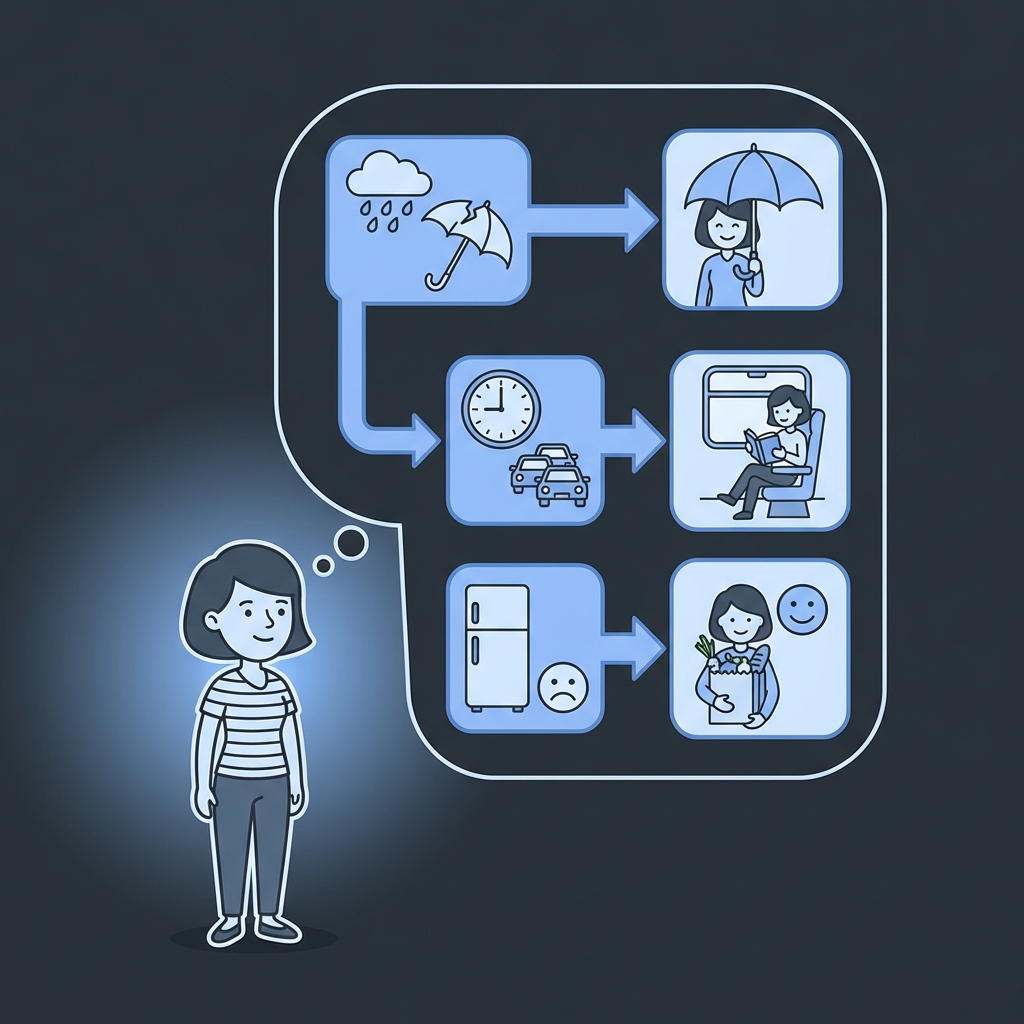
You know that moment when you’re standing in your kitchen at 6 PM, staring into the fridge, and your brain just… stops? The kids are asking what’s for dinner, you have three meetings tomorrow you haven’t prepped for, and somewhere in the back of your mind, you’re pretty sure you forgot to reschedule that dentist appointment. Again.
This is decision fatigue in real time. Your brain has been making choices all day—what to prioritize, how to respond to that email, whether to push back on that unrealistic deadline—and now it’s tapped out. The simplest decisions feel impossible because you’ve already spent your cognitive budget on a thousand micro-choices.
If-then planning isn’t another productivity hack to optimize your life. It’s a way to be kinder to your future self by making fewer decisions when you’re already overwhelmed.
The Simple Logic of If-Then
An if-then plan is exactly what it sounds like: “If X happens, then I will do Y.” That’s it. No complicated frameworks or color-coded systems. Just a pre-made decision for a situation you know you’ll face again.
The magic isn’t in the planning—it’s in the not-deciding. When you’ve already determined that “If it’s Tuesday and I haven’t meal-planned, then I order from the Thai place and don’t feel guilty about it,” you’ve removed one decision from Tuesday evening’s cognitive load. Your brain doesn’t have to negotiate with itself about what constitutes a reasonable dinner solution.
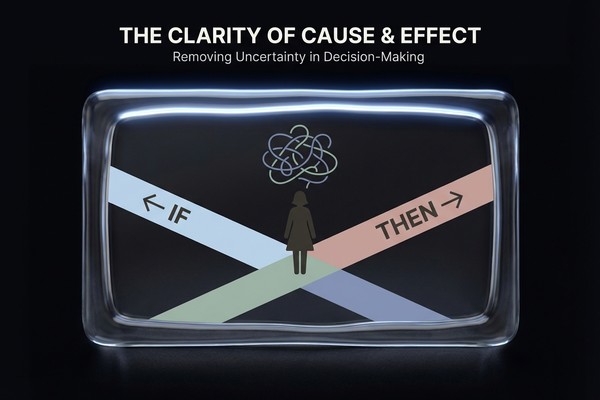
Research calls these “implementation intentions,” but that clinical term misses the point. This isn’t about optimizing your implementation of intentions. It’s about reducing the number of times per day you have to figure out what to do next.
The goal isn’t perfect execution—it’s having one less decision to make when you’re already running on empty.
Most productivity advice assumes you have unlimited decision-making capacity. If-then planning acknowledges that you don’t, and works with that reality instead of against it.
When Your Brain Is Already Full
The beauty of if-then plans reveals itself in high-friction moments—those times when doing the “right” thing feels impossibly hard. These aren’t character flaws or willpower failures. They’re predictable points where your cognitive resources are low and the path of least resistance wins.
Take exercise. You know you feel better when you move your body, but after a day of back-to-back calls and managing everyone else’s needs, the couch feels like the only reasonable choice. An if-then plan doesn’t judge this moment—it prepares for it.
“If I get home and feel too tired for my planned workout, then I put on my sneakers and walk to the mailbox and back.” Not because walking to the mailbox is optimal exercise, but because it maintains the pattern without requiring heroic effort. Some days you’ll keep walking. Some days you’ll stop at the mailbox. Both outcomes honor the plan.
The same logic applies to parenting moments when you’re touched out and overstimulated. “If my kid asks for help with homework and I feel overwhelmed, then I say ‘Let me finish this one thing and I’ll be right there’ instead of snapping or ignoring them.” This gives you thirty seconds to breathe and transition, rather than operating from pure reaction.
For work boundaries, try: “If someone emails me after 7 PM with a non-emergency, then I respond the next morning with ‘Thanks for this—I’ll take a look first thing tomorrow.’” No explanation needed about work-life balance. No guilt about not being constantly available. Just a pre-decided response that protects your evening without drama.
The Art of Gentle Planning
Here’s where most if-then planning goes wrong: it becomes another way to be harsh with yourself. The plans get too rigid, too ambitious, too focused on the person you think you should be rather than the person you actually are.
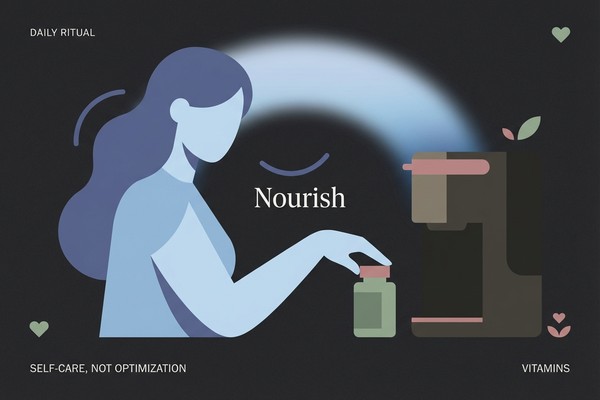
Humane if-then planning starts with radical honesty about your patterns. Not the patterns you wish you had, but the ones that actually show up in your life. If you consistently forget to take your vitamins, don’t create a plan that requires remembering them. Create a plan that works with your forgetfulness: “If I’m making my morning coffee, then I take my vitamins from the container I keep next to the coffee maker.”
The trigger (making coffee) is something you already do reliably. The action (taking vitamins) piggybacks on that existing habit rather than requiring you to remember something new. This isn’t settling for less—it’s designing for success.
Good if-then plans also include escape hatches. “If I planned to prep lunches on Sunday but Sunday turns chaotic, then I buy lunch ingredients Monday morning and don’t spiral about it.” The plan acknowledges that life happens and builds in flexibility rather than treating deviation as failure.
Your Three Most Common Derailers
Think about the last three times you felt frustrated with yourself for not following through on something important. Not the dramatic failures—the small, recurring moments where you knew what you wanted to do but somehow didn’t do it.
Maybe it’s checking your phone first thing in the morning instead of easing into the day. Maybe it’s saying yes to requests when you’re already overcommitted. Maybe it’s staying up too late scrolling when you know you’ll regret it tomorrow.
For each of these patterns, write one if-then plan that meets you where you are, not where you think you should be. If your derailer is morning phone-checking, don’t create a plan that requires monk-like discipline. Try: “If I wake up and reach for my phone, then I check the time and weather, then put it in the kitchen before I brush my teeth.”
This plan doesn’t eliminate phone use—it creates a small pause and physically separates you from the device before you’re fully awake. It’s a gentle redirect, not a rigid restriction.
The best if-then plans feel like relief, not pressure.
If you find yourself writing plans that make you feel anxious or inadequate, start over. The goal is to reduce mental load, not add another way to judge yourself.
Where If-Then Plans Break Down
Not every situation is if-then-able, and that’s important to recognize. If-then planning works best for recurring scenarios with clear triggers and concrete actions. It struggles with complex decisions that require real-time judgment or situations that are genuinely unpredictable.
You can’t if-then your way through a difficult conversation with your teenager or a major work crisis. These moments require presence, not pre-planning. The value of if-then plans is that they handle the routine decisions automatically, freeing up your cognitive resources for the situations that actually need your full attention.
If-then plans also fail when the trigger is too vague or the action is too ambitious. “If I feel stressed, then I’ll meditate” sounds reasonable, but “feeling stressed” isn’t specific enough to reliably trigger the behavior, and meditation might not be accessible in the moment you need it most.
Better: “If I notice my shoulders are tense during my 2 PM meeting, then I take three deep breaths and roll my shoulders back.” The trigger is physical and specific. The action takes thirty seconds and requires no special equipment or environment.
Beyond Personal Planning
The most interesting applications of if-then thinking happen at the intersection of personal patterns and external support. Instead of creating more plans for yourself to remember and execute, what if your environment noticed the triggers and suggested the responses?
This is where technology could actually reduce mental load instead of adding to it. Imagine a system that learns your patterns and offers gentle if-then suggestions: “You usually feel overwhelmed on Wednesday afternoons. Would you like me to remind you to take a five-minute walk when your 3 PM meeting ends?”
The system isn’t managing your life—it’s noticing patterns you might not see and offering support exactly when you need it. The if-then structure remains, but the cognitive work of remembering and implementing shifts from you to a tool designed to carry that load.
This represents a fundamentally different relationship with productivity technology. Instead of asking you to optimize yourself, it adapts to your reality and offers help at the moments when help would actually be helpful.
The goal isn’t to automate your humanity, but to automate the routine decisions that drain your energy for being human in the moments that matter most. If-then planning, done gently, is practice for holding less while living more.
This article was created with collaboration between humans and AI—we hope you ❤️ it.