
When your week looks like a game of Tetris where all the pieces are falling at once, the usual advice feels insulting. “Just prioritize!” they say, as if you haven’t been doing exactly that for months. “Time block everything!” As if the problem is your system, not the simple mathematical reality that 24 hours can’t stretch to hold 30 hours of obligations.
The truth is, some weeks are just overloaded. Not because you’re bad at boundaries or terrible at planning, but because life happened. The project deadline moved up, your kid got sick, your partner traveled for work, and suddenly you’re holding everything while pretending it’s all manageable.
Most productivity advice treats this like a personal failing. It suggests you should have seen it coming, planned better, said no more often. But what if instead of optimizing your way out of an impossible week, you approached it like a medic in triage? What if you got really honest about what can stay, what needs to go, and what you can hand off without the world ending?
The Math of Overwhelm
Here’s what nobody wants to admit: when you’re genuinely overloaded, something has to give. The question isn’t whether you’ll drop something—it’s whether you’ll choose what to drop or let exhaustion choose for you.
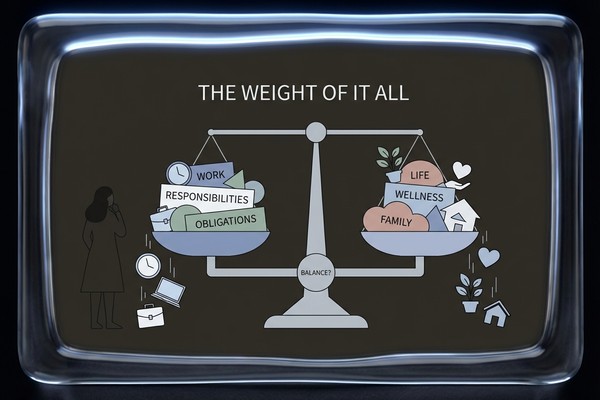
Most of us operate under the fantasy that we can keep all the plates spinning if we just try harder. We’ll sleep less, multitask more, be more efficient. But efficiency can’t create time that doesn’t exist. It can’t clone you to be in two places at once. And it definitely can’t make you feel good about running on empty for weeks on end.
The weekly triage isn’t about becoming more productive. It’s about making conscious choices instead of unconscious sacrifices. It’s about deciding what matters most when you can’t have it all—which, let’s be honest, is most weeks for most of us.
Step One: Get Everything Out of Your Head
Start by writing down everything you’re trying to hold this week. Not just the big obvious things, but all of it. The work deadlines and the birthday party planning. The grocery shopping and the performance review prep. The oil change that’s three months overdue and the friend who needs a call back.
Include the maintenance stuff too—the laundry that needs folding, the bills that need paying, the emails that need responses. These aren’t glamorous, but they’re taking up mental space. They’re part of the load you’re carrying.
Don’t organize or prioritize yet. Just get it all visible. Most people are shocked by how long this list gets. You’re not doing too little—you’re trying to do too much, and that’s not a character flaw.
The first step to holding less is seeing how much you’re actually holding.
Write it all down messily, frantically if needed. This isn’t about creating a perfect system. It’s about getting an honest accounting of what’s actually on your plate before you decide what stays there.
Step Two: The Brutal Honesty Round
Now comes the part that feels uncomfortable but changes everything. Go through your list and mark each item with one of three labels: Must, Nice, or Self-Imposed.
Must items are the ones with real external consequences. The work presentation that’s scheduled. The doctor’s appointment you’ve waited months for. The school pickup that can’t be rescheduled. These are non-negotiable this week, even if they’re negotiable in the bigger picture of your life.
Nice items are things you want to do, things that would make the week better, but won’t cause crisis if they slide. The perfectly organized playroom. The homemade dinner instead of takeout. The workout class you enjoy but aren’t training for anything specific.
Self-Imposed items are the trickiest category. These are things you think you should do, often based on standards you’ve set for yourself or inherited from somewhere else. The thank-you notes that could wait another week. The perfectly curated social media presence. The elaborate Halloween costume you’re making instead of buying.
Be honest about this last category. So much of our overwhelm comes from obligations we’ve created for ourselves, often without realizing it.
Step Three: The Conscious Choices
Here’s where the triage gets real. From your Nice and Self-Imposed lists, choose one thing to drop entirely this week. Not postpone—drop. Give yourself permission to let it go without guilt, without making up for it later.
Then choose one thing to delegate. This might mean asking for help, hiring someone, or accepting a less-than-perfect version done by someone else. Yes, it might cost money or require uncomfortable conversations. Yes, it might not be done exactly how you’d do it. That’s the point.
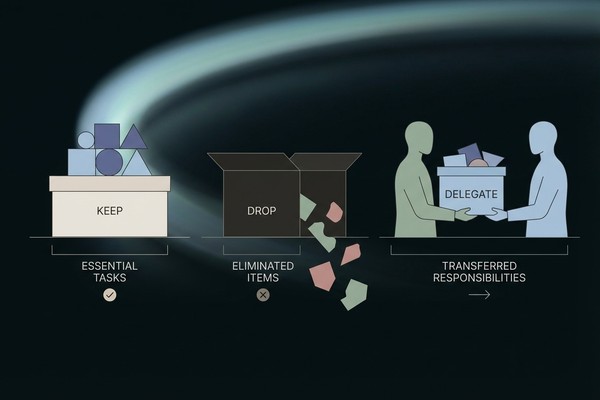
The goal isn’t to optimize your life forever. It’s to create breathing room in this specific week so you can function without running on fumes.
Step Four: Define Good Enough
For everything left on your Keep list, define what “good enough” looks like this week. Not your usual standards—your survival standards.
The work presentation needs to happen, but maybe it’s three slides instead of ten. The dinner needs to happen, but maybe it’s rotisserie chicken and bagged salad instead of the meal you planned. The laundry needs to happen, but maybe everything gets dumped in one basket instead of folded and organized.
This isn’t about lowering your standards permanently. It’s about acknowledging that when you’re at capacity, perfectionism becomes a luxury you can’t afford. Good enough keeps things moving without breaking you.
The Fear Question
Before you finalize your triage, ask yourself this: What am I doing out of fear rather than value?
Fear of disappointing people. Fear of being judged. Fear of not being seen as capable or caring or professional. Fear of admitting you can’t do it all.
These fears are valid, but they’re also expensive. They cost energy you don’t have and time you can’t spare. Sometimes the kindest thing you can do—for yourself and everyone around you—is to disappoint people in small ways rather than collapse in big ways.
You can’t pour from an empty cup, but you also can’t fill everyone else’s cup and expect yours to magically stay full.
Look at your Self-Imposed list again. How many of those items exist because of fear rather than genuine importance? What would happen if you let some of them go? Really—what would actually happen?
Making It Stick
The weekly triage works because it’s temporary and specific. You’re not reorganizing your entire life or committing to permanent changes. You’re making conscious choices about one week when you’re at capacity.
Some people find it helpful to track these decisions, either in a simple note or in an app that can remember what you’ve learned about your patterns. What do you consistently try to keep that could be dropped? What do you resist delegating that actually works fine when someone else does it? What “must do” items turn out to be more flexible than you thought?
But the tracking is optional. The consciousness is not. The difference between a week that breaks you and a week you survive often comes down to making intentional choices instead of trying to do everything and doing none of it well.
The Permission You Need
If you’re reading this and feeling guilty about the idea of dropping anything, that guilt is information. It’s telling you how deeply you’ve internalized the message that your worth depends on doing everything perfectly all the time.
But here’s the thing: the people who matter will understand. Your kids won’t remember if you served frozen pizza one night, but they will remember if you were too stressed to be present with them. Your boss won’t remember if you sent a shorter email, but they will remember if you burned out and couldn’t deliver when it really counted.
The weekly triage isn’t about giving up or giving in. It’s about being strategic with your finite resources so you can show up where it matters most. It’s about choosing your battles instead of letting every battle choose you.
Some weeks require everything you have. But most weeks don’t, even when they feel like they do. The triage helps you tell the difference and act accordingly. Because holding less isn’t about doing less—it’s about doing what matters when you can’t do it all.
This article was created with collaboration between humans and AI—we hope you ❤️ it.