
You know that fight you had last week about the dishwasher? The one where you ended up crying in the bathroom, feeling like your partner just doesn’t see how much you carry? Here’s the thing: you weren’t really fighting about dishes. You were fighting about operations.
Most relationship advice treats partnership like an emotional puzzle—all about communication styles and love languages. But after years of watching couples navigate the practical reality of building a life together, I’ve noticed something different. The fights that leave you feeling most unseen and unheard? They’re usually about unclear systems, mismatched expectations, and the invisible work of keeping two lives running as one.
The Real Fight Isn’t About the Dishes
When you’re frustrated that the dishwasher is still full of clean dishes at 8 PM, you’re not actually upset about plates. You’re upset because somewhere along the way, “emptying the dishwasher” became your responsibility by default, and now you’re the one who notices when it doesn’t happen. You’ve become the manager of this task without ever applying for the job.
Your partner might genuinely want to help. They might even empty it sometimes when you ask. But asking is management work. Noticing is management work. Caring about the timing is management work. And management work is still work, even when someone else does the actual task.
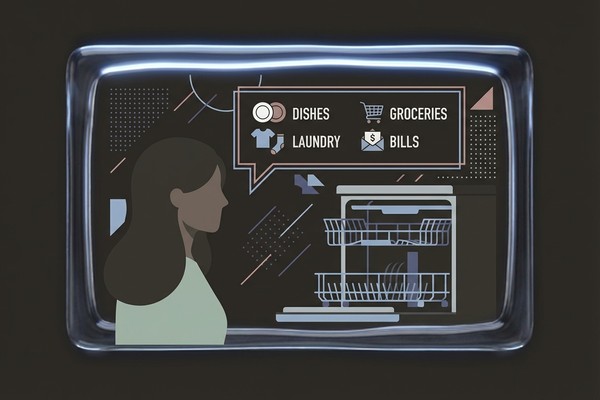
The dishwasher becomes a symbol for everything you’re tracking that your partner doesn’t seem to see. It’s not about the dishes—it’s about the fact that you’re running point on the operations of your shared life, and that invisible labor is exhausting you.
This is where most relationship advice falls short. It focuses on better communication without addressing the underlying systems problem. But you can’t communicate your way out of an operations failure.
Ownership Changes Everything
There’s a crucial difference between helping with something and owning it. When you help, you’re a supporting player. When you own something, you’re responsible for noticing when it needs to happen, making sure it gets done, and dealing with the consequences if it doesn’t.
Most couples accidentally drift into a pattern where one person owns most of the household operations by default. It’s rarely a conscious decision. It just happens gradually—someone notices the bills need paying, starts handling them, and suddenly they’re the one who remembers due dates and late fees. Someone cares about having food in the house, starts meal planning, and becomes the household food operations manager.
The problem isn’t that one person is more capable. It’s that ownership is invisible until something goes wrong. Your partner might not even realize you’ve become the default manager for grocery shopping until you’re out of town and they’re staring at an empty fridge, wondering how food usually appears.
Helping is a favor. Owning is a responsibility. Most relationship stress comes from the gap between what each person thinks they own.
This is why “just ask for help” doesn’t solve the problem. Asking for help still leaves you managing the task. You’re still the one who has to notice, prioritize, and delegate. You’re still carrying the mental load.
The Definition of Done Problem
Even when couples try to share ownership, they often run into what I call the “definition of done” problem. You think cleaning the kitchen means wiping down counters, doing dishes, and sweeping. Your partner thinks it means putting dishes in the dishwasher and calling it good. Neither of you is wrong, but you’re operating with different standards.
This isn’t about one person being a perfectionist and the other being lazy. It’s about unspoken assumptions. When standards don’t match, the person with higher standards usually ends up redoing the work or feeling frustrated that it wasn’t done “right.” Over time, they start doing it themselves to avoid the frustration, which reinforces the default manager dynamic.
The timing piece is just as important. Maybe you both agree that laundry needs to be folded, but you want it done the same day it comes out of the dryer, and your partner is fine leaving it in the basket for a few days. Again, neither approach is inherently better, but the mismatch creates friction.
Without clear agreements about standards and timing, you end up with one person constantly course-correcting the other’s work, which feels micromanaging to the person doing the task and inadequate to the person who cares about the outcome.
The Hidden Cost of Default Management
Being the default manager of your household’s operations isn’t just about having more tasks on your plate. It’s about carrying the cognitive load of remembering, anticipating, and coordinating everything that keeps your life running smoothly.
You’re the one who notices you’re running low on toilet paper before you’re completely out. You remember that your kid has a field trip next week and needs a permission slip signed. You know that your partner has a big presentation coming up and probably shouldn’t be the one dealing with the plumber that day.
This kind of anticipatory thinking and context-switching is mentally exhausting. It’s like running background processes on your brain’s operating system—even when you’re not actively thinking about these things, part of your mental capacity is always reserved for them.
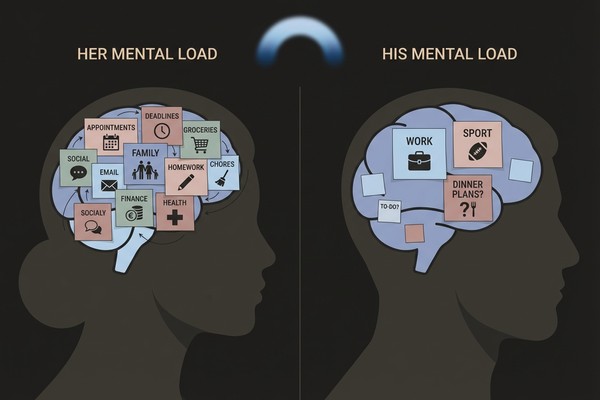
The person who isn’t the default manager gets to live more in the moment. They can focus on their current task without the background hum of everything else that needs attention. This isn’t because they’re selfish or clueless—it’s because the system has evolved so that someone else is handling the remembering and coordinating.
But here’s what makes this particularly insidious: the default manager role often goes to whoever cares most about things being done or notices problems first. It’s not assigned based on capacity or preference. It just falls to whoever can’t let things slide, which means the person carrying this load often feels like they have no choice but to keep carrying it.
Rethinking Partnership as Shared Operations
What if instead of thinking about partnership as two people helping each other, we thought about it as two people running a shared system? In any well-functioning system, there’s clear ownership, defined standards, and regular check-ins to make sure things are working.
This doesn’t mean turning your relationship into a corporate project. It means acknowledging that the practical work of life requires coordination, and coordination requires intention. Most couples handle the big decisions together—where to live, how to spend money, major parenting choices. But they leave the day-to-day operations to chance, and then wonder why there’s so much friction.
Partnership isn’t about splitting everything 50/50. It’s about each person fully owning their pieces so the other person can stop managing them.
The goal isn’t perfect equality in every task. It’s about each person having clear ownership of specific areas so that neither person has to manage everything. Maybe one person owns all meal-related decisions and execution—planning, shopping, cooking, cleanup. The other person owns all kid logistics—school communications, activities, appointments, gear. The specific division matters less than the clarity.
The 15-Minute Operations Check-In
Most couples only talk about household operations when something goes wrong or someone feels overwhelmed. But just like any other system, partnerships benefit from regular maintenance conversations.
Try a weekly 15-minute check-in focused purely on operations—not emotions, not relationship issues, just the practical coordination of your shared life. Pick a consistent time when you’re both relatively calm and focused.
Start by reviewing what worked and what didn’t work in the previous week. Maybe the morning routine felt chaotic because you were both trying to handle kid breakfast at the same time. Maybe the grocery pickup didn’t happen because each person thought the other was handling it. Look for patterns in the friction points.
Then look ahead to the coming week. What’s unusual or different? Who has extra work stress? Are there any scheduling conflicts or logistical challenges? This isn’t about solving every problem, but about making sure you’re both operating with the same information.
Finally, address any ownership questions that came up. If something fell through the cracks, whose responsibility should it be going forward? If someone feels overwhelmed by their current areas, what could be redistributed?
The key is keeping these conversations focused on systems, not blame. You’re not trying to figure out who messed up—you’re trying to figure out how to prevent the same friction from happening again.
Renegotiating Without Blame
When you realize that you’ve become the default manager for too many things, it can be tempting to dump everything on your partner with a side of resentment. But sudden ownership transfers rarely work. Your partner hasn’t been thinking about these things, so they don’t have the context or habits built up to take them on successfully.
Instead, try explicit handoffs. Pick one area where you’re ready to transfer ownership completely. Walk your partner through everything involved—not just the visible tasks, but the thinking and planning that happens behind them. If you’re handing off grocery management, that includes meal planning, checking what you have, making the list, shopping, and putting things away. It also includes knowing everyone’s preferences, dietary restrictions, and the household’s eating patterns.
Give them time to build their own systems. Your way of handling something isn’t the only right way, and micromanaging the transition defeats the purpose. The goal is for your partner to own the outcome, which means they need the freedom to approach it differently than you would.
Be prepared for a learning curve. Things might not happen exactly when or how you would do them. The groceries might get picked up Sunday evening instead of Saturday morning. The meal planning might happen day-by-day instead of weekly. As long as the outcome is achieved—food in the house, family fed—let them find their own rhythm.
Building Shared Context
One of the biggest challenges in partnership operations is that the default manager usually has much more context about how everything fits together. They know that soccer practice ends right when the grocery store gets busy, so shopping needs to happen earlier in the day. They remember that the kids hate it when dinner is late because it makes bedtime rushed.
This context doesn’t transfer automatically. When you hand off ownership of something, you need to also transfer the relevant context. But more importantly, you need to build systems that help both partners stay aware of what’s happening in areas they don’t directly own.
A shared calendar isn’t enough if only one person maintains it. Regular check-ins aren’t enough if they only happen when there’s a crisis. Building shared context requires ongoing attention to keeping both partners informed about the bigger picture.
This might mean brief daily updates about what’s coming up. It might mean shared notes about important details—like the fact that your kid’s teacher prefers email over the school app, or that the dog walker needs 24-hour notice for cancellations. The specific tools matter less than the commitment to keeping both partners operating with similar information.
The Goal Is Holding Less, Not Doing More
Here’s what’s different about approaching partnership as operations: the goal isn’t to optimize how much you can handle. It’s to reduce how much you have to hold in your head at any given time.
When ownership is clear and systems are working, you can actually relax about the things that aren’t yours. You don’t have to remember that the car needs an oil change if your partner owns vehicle maintenance. You don’t have to think about what’s for dinner if your partner owns meal planning. You can trust that these things will happen without your input or oversight.
This kind of trust is built gradually, through consistent follow-through and clear communication. But once it’s established, it creates space in your mind for the things that actually matter to you—whether that’s your work, your relationships, or just the ability to be present in the moment without a running to-do list in the background.
The best partnerships don’t optimize for productivity. They optimize for peace of mind.
The relief of not being the default manager for everything is profound. It’s not just about having fewer tasks—it’s about the freedom to engage with your life from choice rather than obligation. When you’re not constantly scanning for what needs attention next, you can actually pay attention to what’s happening right now.
Most productivity advice tries to help you manage more efficiently. But sometimes the most radical thing you can do is stop managing altogether—and trust your partner to own their pieces completely. That’s not giving up control. That’s building a system that works for both of you, so neither person has to hold everything alone.
This article was created with collaboration between humans and AI—we hope you ❤️ it.