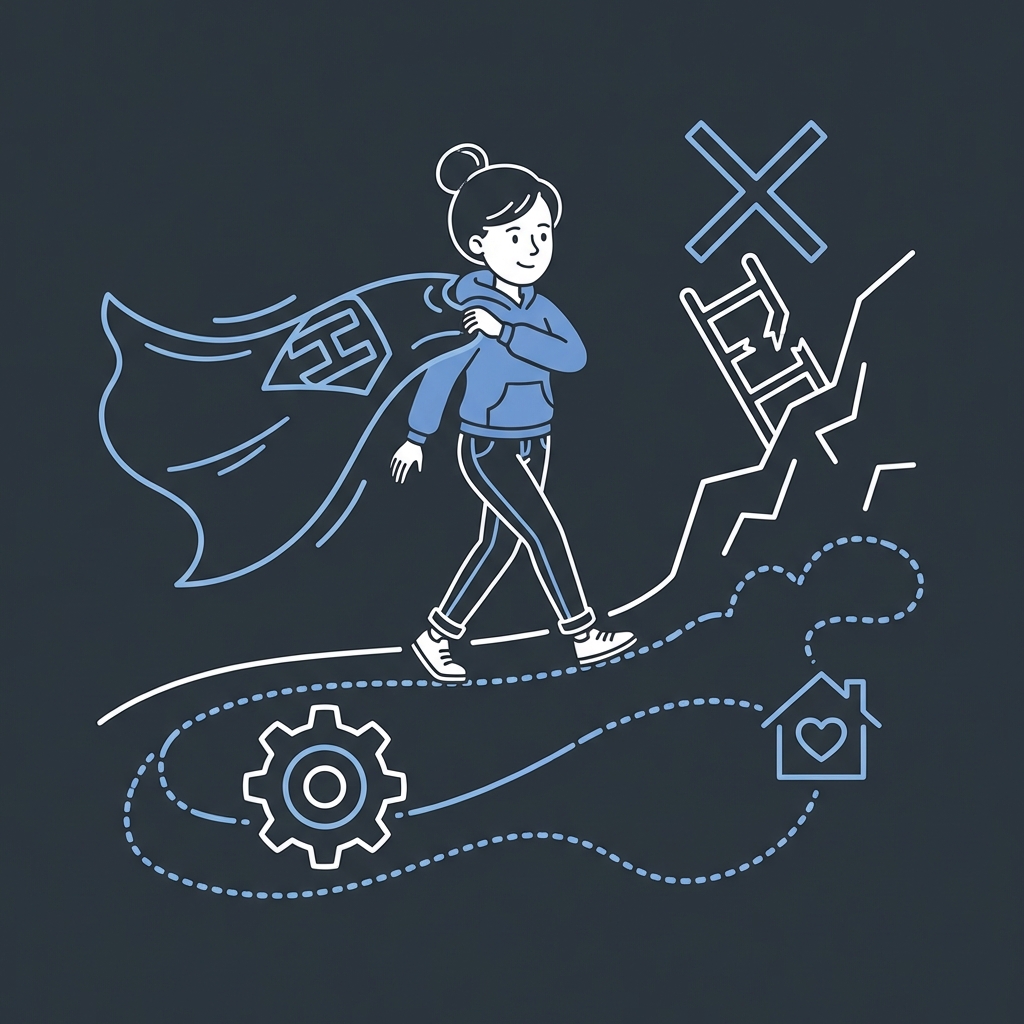
We’ve turned resilience into a performance. Somewhere between self-help books and corporate wellness programs, the concept got twisted from a natural human capacity into a demand for rapid recovery. Now it’s less about healing and more about bouncing back fast enough to keep everyone else comfortable.
The word itself has become weaponized. When someone struggles longer than we think they should, we prescribe resilience like it’s a vitamin deficiency. “You just need to be more resilient.” As if the problem isn’t the circumstances crushing them, but their failure to spring back with sufficient speed and grace.
This isn’t what resilience was supposed to mean. And the gap between what we demand and what we actually provide reveals something uncomfortable about how we treat human struggle.
What Resilience Actually Looks Like
Real resilience research tells a different story than the one we’ve been sold. Psychologists don’t define resilience as the ability to bounce back quickly from adversity. They define it as the capacity to adapt and maintain functioning in the face of significant challenges over time.
Notice what’s missing from that definition: speed. There’s no timeline for recovery, no expectation of returning to baseline within a socially acceptable window. Resilience isn’t about springing back like a rubber band. It’s about finding ways to keep going, even when you’re fundamentally changed by what you’ve experienced.
The research is clear on what actually builds this capacity. Resilient people aren’t tougher or grittier than everyone else. They have better support systems. They have resources to fall back on. They have communities that can absorb some of their load when they’re struggling. They have the luxury of time to process and recover without facing immediate consequences.
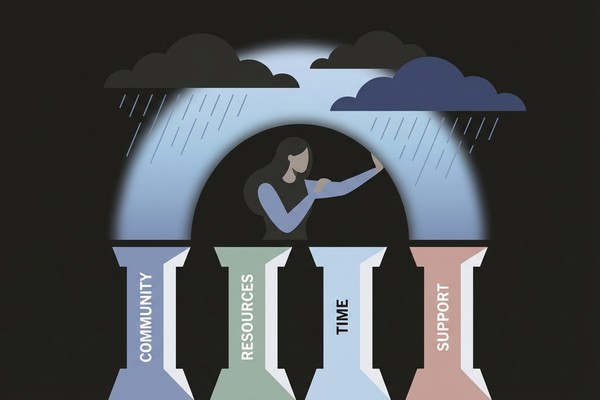
In other words, resilience is less about individual character and more about the conditions that surround a person. It’s infrastructure, not personality.
But we’ve flipped this completely. We’ve made resilience into a personal responsibility, a character trait you either possess or lack. This lets everyone else off the hook. If someone isn’t bouncing back fast enough, the problem must be their insufficient resilience, not our insufficient support.
The Grit Culture Hijacking
The transformation of resilience from a research concept into a cultural demand didn’t happen in a vacuum. It coincided with the rise of “grit culture” — the idea that success comes primarily from individual perseverance and mental toughness.
Grit culture loves resilience because it shifts responsibility entirely onto individuals. Can’t handle your workload? You need more resilience. Struggling with childcare while working full-time? Resilience deficit. Burned out from being the only one who remembers everything? Clearly a resilience problem.
This framing is convenient for systems that create unsustainable conditions. Instead of examining whether the demands we place on people are reasonable, we examine whether people are resilient enough to meet unreasonable demands. Instead of building better support structures, we tell people to build better coping mechanisms.
The language gives it away. We don’t talk about helping people recover — we talk about helping them “bounce back.” The metaphor reveals the expectation: return to your original shape as quickly as possible, preferably without anyone having to accommodate your recovery process.
The demand for resilience often comes from people who’ve never had to test their own.
But bounce-back resilience isn’t just unrealistic — it’s often impossible. Some experiences fundamentally change us. Some challenges require long-term adaptation, not quick recovery. Some struggles need sustained support, not individual toughness.
When we demand bounce-back performance, we’re not promoting resilience. We’re promoting the appearance of resilience, which is an entirely different thing.
The Quiet Violence of “Just Be Resilient”
There’s something particularly cruel about telling someone to be more resilient when they’re already using every resource they have just to survive. It’s like telling someone treading water in the middle of the ocean that they need to swim harder.
The “just be resilient” advice assumes access to things many people don’t have. It assumes you have a support network that can absorb some of your responsibilities when you’re struggling. It assumes you have financial resources that let you take time to recover without immediate consequences. It assumes you have the emotional and physical energy left over after meeting basic survival needs.
Most importantly, it assumes that your struggle is temporary and surmountable through individual effort alone. But what if it’s not? What if you’re dealing with systemic barriers, chronic illness, or circumstances genuinely beyond your control? What if the problem isn’t your resilience, but the conditions you’re trying to be resilient within?
The advice becomes not just unhelpful, but actively harmful. It suggests that continued struggle represents personal failure. It implies that if you were stronger, tougher, more resilient, you wouldn’t be in this situation. It transforms a reasonable response to unreasonable circumstances into evidence of individual inadequacy.
This is particularly insidious for people who are already carrying invisible loads. The parent managing everyone’s schedules while working full-time. The caregiver juggling medical appointments and insurance claims. The person trying to maintain professional performance while dealing with personal crisis.
These people aren’t lacking resilience. They’re lacking support. But the resilience narrative obscures this distinction, making it harder to identify what’s actually needed.
Who Gets to Be Resilient
Resilience isn’t equally accessible to everyone, despite how we talk about it. The capacity to adapt and maintain functioning depends heavily on resources that aren’t evenly distributed.
Financial stability provides a foundation for resilience that’s hard to replicate through individual effort alone. When you have savings, you can take time off to recover. When you have insurance, you can access professional help. When you have financial security, you don’t have to choose between healing and survival.
Social support networks function similarly. Strong relationships don’t just provide emotional comfort — they provide practical assistance. Someone to watch your kids when you’re overwhelmed. Someone to bring meals when you’re struggling. Someone to help with tasks when you can’t manage them alone.
Time is perhaps the most crucial resource for resilience. Recovery happens on its own timeline, not on schedules imposed by work, family, or social expectations. But time is a luxury many people can’t afford. Single parents can’t pause their responsibilities to process trauma. People in precarious employment can’t take extended time off to recover from burnout.
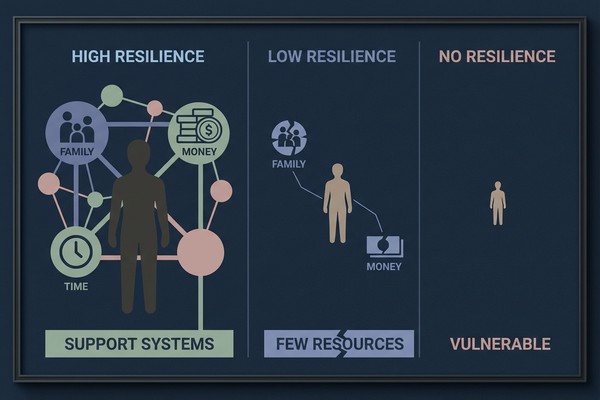
Even basic physical and mental health resources affect resilience capacity. Access to healthcare, therapy, medication, nutritious food, safe housing — these aren’t just nice-to-haves. They’re the foundation that makes resilience possible.
When we ignore these structural factors and focus only on individual resilience, we’re essentially telling people to build strength without providing building materials.
Resilience as Infrastructure, Not Character
What if we stopped thinking about resilience as a personal trait and started thinking about it as community infrastructure? What if instead of asking “How can this person be more resilient?” we asked “How can we create conditions that make resilience possible?”
This shift changes everything. Instead of focusing on individual capacity to bounce back, we focus on collective capacity to provide support. Instead of measuring how quickly someone recovers, we measure how well our systems help them through the recovery process.
Resilience infrastructure looks different than individual resilience coaching. It includes practical support systems that can absorb load when people are struggling. It includes policies that protect people’s jobs and income during recovery periods. It includes communities that normalize struggle and provide sustained assistance rather than quick fixes.
True resilience isn’t about bouncing back — it’s about being held steady while you heal.
It also includes recognition that some challenges require ongoing accommodation rather than complete recovery. Chronic illness, disability, trauma, caregiving responsibilities — these aren’t problems to be solved through individual resilience. They’re conditions that require structural support to manage sustainably.
When we build resilience infrastructure, individual resilience becomes less crucial because people aren’t carrying the full weight of recovery alone. They can focus their energy on healing rather than on maintaining the appearance of having bounced back.
Building Conditions for Real Recovery
The most resilient communities aren’t the ones that produce the toughest individuals. They’re the ones that make recovery possible for everyone, regardless of individual capacity.
This means creating systems that can function when people are struggling, not just when they’re performing at full capacity. Workplaces that can accommodate reduced productivity during difficult periods. Families that can redistribute responsibilities when one person is overwhelmed. Communities that provide sustained practical support, not just emotional encouragement.
It means normalizing recovery timelines that match human reality rather than social convenience. Some people bounce back quickly. Others need months or years to fully process and adapt to major challenges. Both responses are normal and valid.
Most importantly, it means recognizing that demanding resilience from people without providing the conditions that make resilience possible isn’t motivation — it’s cruelty disguised as empowerment.
Real resilience grows in the space between struggle and support. It emerges when people have permission to not be okay and resources to eventually be okay again. It develops when communities hold steady while individuals heal, rather than demanding individuals hold steady while communities ignore their needs.
The goal isn’t to make people tougher. It’s to make the world more supportive. Because resilience shouldn’t require heroics — it should require community.
This article was created with collaboration between humans and AI—we hope you ❤️ it.