
Sunday evening hits different when you’re carrying the weight of an unclear week ahead. That familiar knot in your stomach isn’t about laziness or poor planning—it’s your brain doing what it does best: trying to protect you from the unknown by spinning through every possible scenario, deadline, and obligation that might blindside you tomorrow.
The productivity world loves to sell Sunday as “prep day”—meal prep, outfit selection, calendar optimization. But what if the real work isn’t about doing more on Sunday, but about creating clarity that lets you hold less anxiety going into Monday?
Most Sunday anxiety isn’t actually about Monday’s tasks. It’s about the fog of uncertainty that makes everything feel urgent and overwhelming. When you can’t see clearly what’s coming, your brain defaults to worst-case scenario planning. It’s exhausting before the week even starts.
The Real Source of Monday Dread
Sunday anxiety lives in the space between “I know something’s coming” and “I don’t know exactly what.” Your mind fills that gap with catastrophic possibilities because uncertainty feels dangerous. This is normal human wiring, not a personal failing.
The traditional response is to plan harder—more detailed schedules, more comprehensive to-do lists, more systems. But often this just moves the anxiety around rather than reducing it. You end up with beautiful plans that feel overwhelming to maintain, which creates a different kind of Sunday stress.
Clarity isn’t about controlling the week—it’s about reducing the mental load of carrying vague worry.
What actually reduces Sunday anxiety is transforming unclear concerns into concrete, manageable realities. Not because you can control everything that happens, but because your brain can stop working so hard to fill in the blanks.
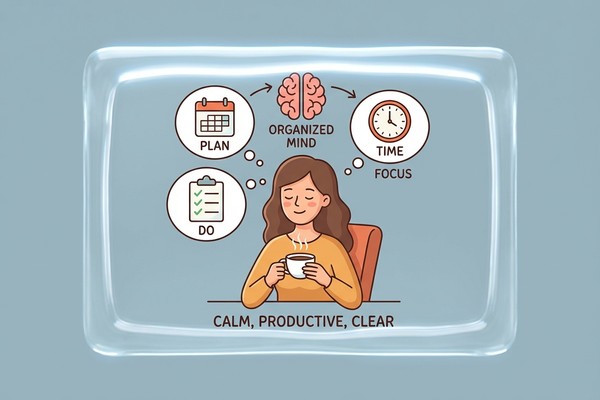
Six Questions That Clear the Fog
These aren’t productivity prompts designed to optimize your week. They’re clarity questions that help you see what you’re actually dealing with, so your brain can stop spinning through possibilities and start working with realities.
What feels unclear right now?
Start with the vague stuff—the “I think there’s something I’m forgetting” feeling, the “wasn’t there a deadline coming up?” uncertainty, the “I should probably follow up on that thing” nagging. Write these down exactly as they exist in your head, fuzzy edges and all.
This isn’t about solving everything immediately. It’s about getting the unclear things out of your mental background processing and onto something external where you can actually look at them. Half the time, the thing that’s been bothering you turns out to be smaller than it felt when it was floating around your subconscious.
What actually has a deadline this week?
Not everything that feels urgent actually is. This question helps you separate real time constraints from general busy-ness. Look at your calendar, check your email, scan your notes. What genuinely needs to happen by a specific date?
Often you’ll discover that the thing creating Sunday anxiety doesn’t even have a firm deadline—it just feels like it should be done soon. That’s valuable information. It means you have more flexibility than your stressed brain was telling you.
What could I avoid or delegate this week?
This question challenges the assumption that everything on your mental list actually belongs to you. What meetings could you skip? What tasks could wait another week? What responsibilities could someone else handle?
The goal isn’t to become irresponsible—it’s to recognize that you probably don’t need to carry as much as you think you do. Sometimes the best way to reduce Monday anxiety is to intentionally do less, not plan better.
What’s the first domino I need to push?
When everything feels equally important, nothing gets the focused attention it needs. This question helps you identify the one task that, once completed, will make other things easier or clearer.
Maybe it’s sending that email you’ve been avoiding, which will clarify whether the big project is still on track. Maybe it’s making that phone call that will determine if you need to prepare for the Tuesday meeting. The first domino isn’t necessarily the most important task—it’s the one that reduces uncertainty for everything else.
The first domino isn’t about productivity—it’s about momentum that reduces mental load.
What buffer do I want to protect this week?
Buffers aren’t luxuries—they’re necessities for anyone carrying mental load. This might be your morning coffee routine, your lunch break, your evening wind-down time, or the 15 minutes between meetings where you actually process what just happened.
Identify one buffer that matters to you and decide how you’ll protect it. Not because you’re being selfish, but because these spaces are where you recharge the mental energy needed to handle everything else.
Who could I ask for support, and what specifically do I need?
This question acknowledges that carrying mental load alone is neither necessary nor sustainable. But it goes beyond generic “ask for help” advice by getting specific about what kind of support would actually make a difference.
Maybe you need someone to handle pickup on Wednesday so you can focus on the presentation. Maybe you need a colleague to take the first pass at reviewing the proposal. Maybe you need your partner to manage dinner planning for the next few days. The more specific the ask, the easier it is for people to actually help.
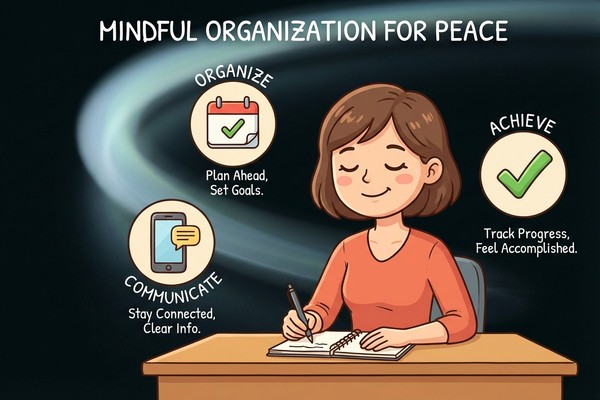
Making It Stick Without Making It Work
The beautiful thing about these questions is that they don’t require a system to maintain. You’re not committing to a new Sunday routine or adding another thing to optimize. You’re just creating clarity when you need it.
Some weeks you might work through all six questions. Other weeks you might only need one or two. Sometimes just asking “what feels unclear?” is enough to dissolve the anxiety entirely. The goal is clarity, not completion.
If you want to capture your answers somewhere you won’t lose them, that’s where a tool like Backlit becomes helpful. Not because you need another system to manage, but because having a place that remembers these insights means you don’t have to. The app can hold onto your first domino task, remind you about that support request, or follow up on the unclear thing that turned out to matter.
Beyond Sunday Planning
What makes these questions different from typical Sunday planning is that they’re designed to reduce what you’re carrying, not optimize what you’re doing. They acknowledge that mental load is real work and that clarity is a form of care—for yourself and for everyone who depends on you.
The proof isn’t in having a perfect week. It’s in starting Monday with less anxiety and more confidence that you can handle whatever actually comes up. Because when you’re not spending mental energy on vague worries, you have more capacity for the real things that matter.
Clarity as care, not control—that’s how Sunday questions become Monday confidence.
Sunday anxiety doesn’t have to be the price of being responsible. Sometimes the most responsible thing you can do is get clear about what you’re actually dealing with, so you can stop carrying the weight of everything you imagine might go wrong.
This article was created with collaboration between humans and AI—we hope you ❤️ it.