
Your shoulders are talking to you. They’ve been trying to get your attention for weeks now, creeping higher toward your ears with each passing deadline, each forgotten appointment, each mental note that gets filed away in the overcrowded cabinet of your mind. But you’ve been too busy listening to your to-do list to hear what your body is saying.
The connection between mental load and physical symptoms isn’t some mystical mind-body phenomenon—it’s basic biology. When your brain is constantly tracking, remembering, and anticipating, your nervous system doesn’t distinguish between a charging lion and a charging inbox. It just knows there’s threat, and it responds accordingly.
We’ve become so accustomed to treating stress as purely psychological that we miss how profoundly it reshapes our physical reality. The chronic cognitive load of modern life—that endless mental juggling of tasks, deadlines, and responsibilities—doesn’t just live in your head. It takes up residence in your tissues, your sleep patterns, your immune system, your digestion. Your body keeps a meticulous score of every unfinished task, every mental note, every promise you’ve made to yourself that you haven’t kept.
When Your Nervous System Goes to Work
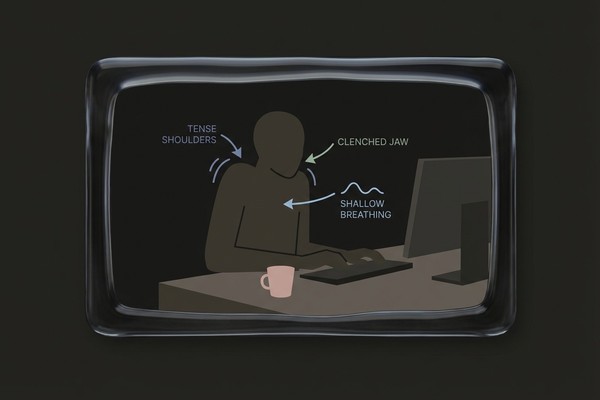
Here’s what’s actually happening when you tell people you’re “just stressed.” Your sympathetic nervous system—the part responsible for fight-or-flight responses—has been working overtime. It doesn’t clock out when the immediate crisis passes because, in the landscape of chronic mental load, the crisis never really passes. There’s always something else to remember, track, or follow up on.
Your nervous system is remarkably efficient at preparing your body for action. Heart rate increases to pump blood to major muscle groups. Breathing becomes shallow to maximize oxygen intake quickly. Digestive processes slow down because who needs to process lunch when there’s a predator to outrun? Except the predator is your never-ending mental checklist, and it’s not going anywhere.
This state of chronic activation rewires your default settings. Your baseline shifts from calm alertness to hypervigilance. Your body becomes so accustomed to operating in emergency mode that relaxation starts to feel foreign, even uncomfortable. You might notice you can’t sit still during movies anymore, or that you feel guilty when you’re not actively working on something.
The cruel irony is that this heightened state, designed to help you handle acute threats, actually impairs your ability to manage the chronic, complex challenges of modern life. When your nervous system is stuck in overdrive, your prefrontal cortex—the part of your brain responsible for planning, decision-making, and memory—doesn’t function optimally. You become more forgetful, more reactive, less able to prioritize effectively. The very system meant to protect you starts undermining your capacity to handle what’s overwhelming you.
The Physical Inventory
Your body has been keeping receipts, and the bill is coming due in ways you might not have connected to your mental load. That persistent tension in your neck and shoulders isn’t just from poor posture—it’s from the chronic bracing your muscles do when your mind is constantly “on.” Your jaw clenches not just when you’re concentrating, but when your brain is processing the background hum of unfinished business.
Sleep becomes elusive not because you’re not tired—you’re exhausted—but because your mind won’t stop inventorying tomorrow’s tasks the moment your head hits the pillow. Your digestive system, which requires a calm nervous system to function properly, starts rebelling. You might notice more bloating, irregular appetite, or that uncomfortable feeling that food is just sitting in your stomach.
The body doesn’t lie about what the mind is carrying.
Your immune system, constantly depleted by the stress response, becomes less effective at fighting off routine illnesses. You catch every cold that goes around the office. You take longer to recover from minor injuries. Your energy feels perpetually low, not because you’re doing too much physical activity, but because the mental activity is so energetically expensive.
These aren’t separate issues requiring separate solutions. They’re all expressions of the same underlying problem: a nervous system that’s been asked to maintain an unsustainable level of activation for too long.
How the Body Metabolizes Unfinished Business
Think of unresolved mental load like undigested food. When your digestive system is overwhelmed, food sits in your stomach, fermenting and creating discomfort. When your mental processing system is overwhelmed, unfinished tasks and unresolved decisions sit in your nervous system, creating a similar kind of fermentation.
Your body tries to metabolize this cognitive load through physical tension. Those tight shoulders are literally trying to carry the weight of everything you’re holding in your mind. Your clenched jaw is your body’s attempt to hold onto control when everything feels like it’s slipping through your fingers. Your disrupted sleep is your nervous system’s way of trying to process and file away the day’s accumulated mental debris.
But here’s the thing about this physical processing: it’s inefficient and unsustainable. Your body wasn’t designed to be the primary storage and processing center for cognitive load. It can handle acute stress beautifully—that’s what it’s built for. But chronic cognitive overload is like asking your emergency response system to become your primary operating system. Eventually, something breaks down.
The breakdown rarely happens all at once. It’s more like a slow leak that gradually becomes noticeable. You start needing more coffee to feel alert. You find yourself getting sick more often. You notice that small irritations feel disproportionately overwhelming. Your body is trying to tell you that the system is overloaded, but we’ve been trained to interpret these signals as personal failings rather than systemic problems.
The Radical Act of Physical Care
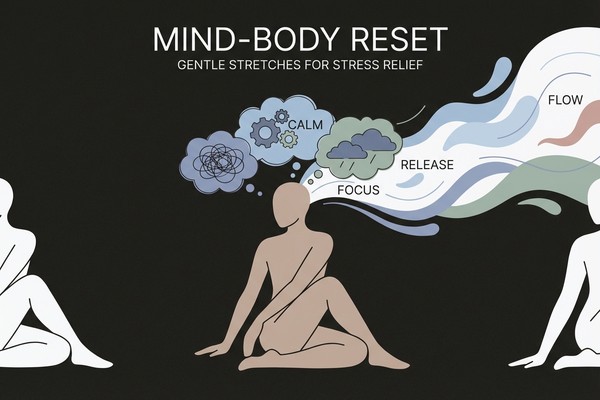
Caring for your physical self when you’re mentally overwhelmed isn’t self-indulgence—it’s systems maintenance. When you address the physical manifestations of mental load, you’re not just treating symptoms; you’re actually reducing the load itself.
This is where most productivity advice gets it backwards. It tells you to optimize your mental systems without acknowledging that your physical state directly impacts your cognitive capacity. A nervous system stuck in chronic activation can’t effectively prioritize, remember, or make decisions, no matter how many apps or techniques you throw at it.
Physical care becomes cognitive care when you understand that your body and mind are running the same operating system. When you release physical tension, you’re literally creating space for mental processing. When you regulate your breathing, you’re giving your nervous system permission to downshift from emergency mode. When you prioritize sleep, you’re allowing your brain to do the essential maintenance work that happens during rest.
Three Practices That Actually Matter
The most effective body-based load-reduction practices aren’t complicated, but they do require consistency. Think of them as regular maintenance rather than emergency interventions.
Progressive muscle release starts with simply noticing where you’re holding tension. Most of us carry stress in predictable places—shoulders, jaw, lower back—but we’ve become so accustomed to the tension that we don’t even register it anymore. Spend two minutes intentionally tensing and then releasing these areas. The contrast helps your nervous system remember what relaxation actually feels like.
Breathing reset sounds basic because it is basic—and that’s exactly why it works. Your breath is the most direct way to communicate with your nervous system. When you’re chronically overloaded, your breathing becomes shallow and restricted without you realizing it. Taking five deep breaths where your exhale is longer than your inhale signals to your nervous system that the immediate threat has passed.
Movement without agenda means moving your body for the simple purpose of moving, not to burn calories or achieve fitness goals. This could be stretching while watching TV, taking a walk without your phone, or dancing to one song in your kitchen. The goal is to remind your body that it exists for more than just carrying your brain around.
Recovery isn’t earned through productivity—it’s required for it.
These practices work not because they’re particularly sophisticated, but because they interrupt the cycle of chronic activation. They give your nervous system regular opportunities to practice downshifting, which gradually resets your baseline from hypervigilant to calm.
Systems That Protect Your Recovery
The most sustainable approach to managing the physical impact of mental load isn’t individual resilience—it’s systemic change. This means creating structures that protect your recovery time rather than constantly trying to recover from systems that deplete you.
Real load reduction happens when you have tools that take ownership of outcomes, not just organize your tasks. When something else is responsible for remembering, tracking, and following up, your nervous system can finally exhale. The difference between a system that helps you manage your mental load and one that reduces it is whether you still have to supervise the system itself.
Your body has been keeping score, but it doesn’t have to keep carrying the weight. The physical symptoms of chronic mental load aren’t character flaws or inevitable parts of adult life—they’re information. They’re your body’s way of telling you that the current system isn’t sustainable, and they’re also your most reliable guide for knowing when you’ve found something that actually works.
This article was created with collaboration between humans and AI—we hope you ❤️ it.