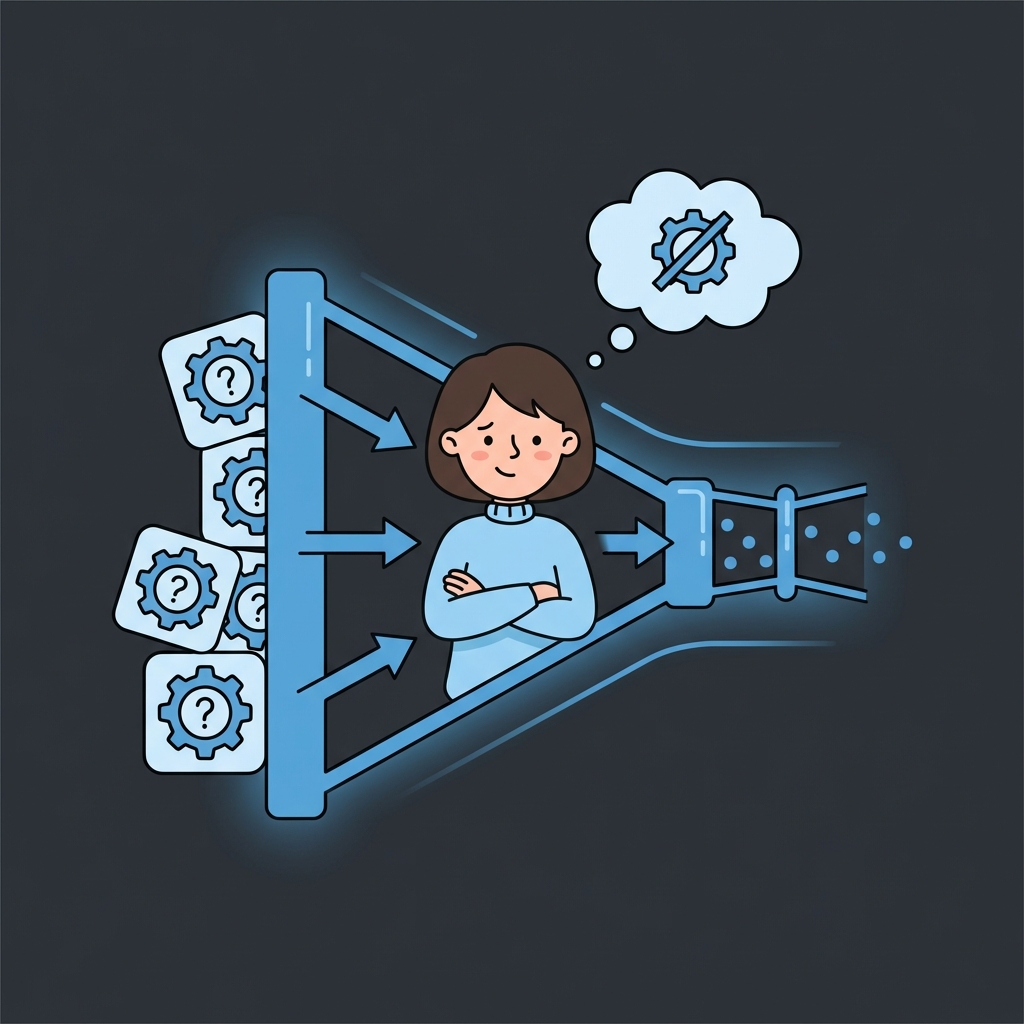
You didn’t ask to become the person everyone comes to for answers. You didn’t volunteer to be the one who remembers where everything is, who knows which vendor to call, or who can explain why that process works the way it does. Yet somehow, you’ve become the human equivalent of a traffic intersection—everything flows through you, and when you’re not there, everything stops.
In systems theory, this is called a bottleneck. And despite what productivity culture tells you about being “indispensable,” being a bottleneck isn’t actually a compliment. It’s a design flaw.
When You Are the System
A bottleneck in any system is the point where flow gets constrained. In manufacturing, it’s the slowest machine on the assembly line. In software, it’s the process that can’t keep up with demand. In your life, it’s you—holding all the context, making all the decisions, fielding all the questions.
You became this bottleneck gradually, probably without realizing it. Someone asked you a question, and you answered it completely. Someone needed help, and you didn’t just help—you took ownership. Someone dropped the ball, and you picked it up so smoothly that they never had to think about it again.
Each time you did this, you reinforced a pattern. You became the path of least resistance, the reliable source, the person who just handles things. The system learned to route everything through you because you always had the answer, always made it work, always figured it out.
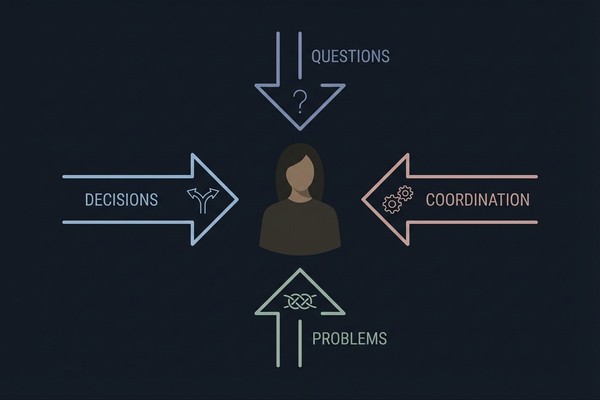
But here’s what systems theory teaches us: when everything flows through a single point, that point becomes both the most critical and the most fragile part of the entire system. You’re not just busy—you’re a single point of failure.
The Hidden Cost of Being Essential
The productivity world celebrates people like you. You’re “the go-to person,” “the one who gets things done,” “the glue that holds everything together.” These sound like compliments, but they’re actually symptoms of a poorly designed system.
When you’re the bottleneck, the cost isn’t just your time or energy—though those are significant. The real cost is that the entire system becomes fragile. Projects stall when you’re unavailable. Decisions wait for your input. Other people stop developing their own problem-solving capabilities because they know you’ll handle it.
The system isn’t working because you’re so good at your job. The system is broken, and you’re compensating so well that no one notices.
Meanwhile, you’re carrying what researchers call “cognitive load”—the mental effort of not just doing tasks, but remembering, coordinating, and anticipating everything that needs to happen. You’re not just answering emails; you’re tracking who hasn’t responded, remembering what they’re waiting for, and figuring out how to move things forward when they don’t.
This cognitive load is invisible to everyone else. They see you handling things smoothly, so they assume it’s easy for you. They don’t see the mental spreadsheet you’re maintaining, the constant background processing, the way you’re always thinking three steps ahead because someone has to.
Why Removing Yourself Isn’t Abandonment
The first instinct when you recognize you’re a bottleneck is often guilt. If you step back, won’t things fall apart? If you stop being the go-to person, won’t people struggle? If you don’t maintain all that context, won’t important things get lost?
This thinking comes from a fundamental misunderstanding of what it means to be helpful. You think you’re being responsible by being the person who handles everything. But actually, you’re enabling a system that can’t function without you—and that’s not sustainable for anyone.
Removing yourself as a bottleneck isn’t abandonment. It’s system design. It’s recognizing that a healthy system shouldn’t depend on any single person being available, informed, and capable at all times.
Think about it this way: if your organization or family truly can’t function without you being the central hub, what happens when you get sick? Go on vacation? Have a personal crisis? The system breaks down, and everyone scrambles. That’s not a sign of your importance—it’s a sign of poor design.
Distributing What Only You Know
The key to dissolving a bottleneck isn’t just doing less—it’s distributing the context that makes you essential. Right now, you probably hold dozens of pieces of information that exist nowhere else: which approach works with which client, why that process was set up that way, who to call when something specific goes wrong.
This information lives in your head because you’ve been the one dealing with these situations as they arose. You learned by doing, by trial and error, by being present for conversations and decisions that others missed. But knowledge that exists only in one person’s head makes that person a bottleneck by default.
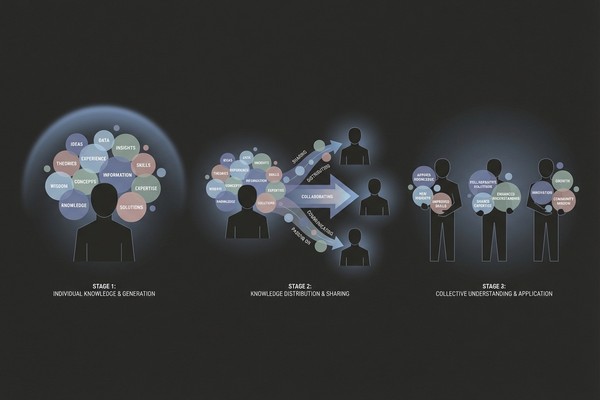
Distributing context means making your knowledge accessible to others. This isn’t about writing comprehensive manuals or creating elaborate documentation systems—though those can help. It’s about changing how information flows in the first place.
Instead of being the person who knows the answer, become the person who knows where the answer lives. Instead of making the decision, involve others in the decision-making process so they understand the reasoning. Instead of handling the problem yourself, walk someone else through handling it while you’re available to guide them.
Redesigning the System
The goal isn’t to make yourself unnecessary—it’s to make the system resilient. A well-designed system can handle variations, disruptions, and changes without breaking down. It has multiple pathways for information to flow, multiple people who can make decisions, and multiple ways to solve problems.
This requires intentional redesign, not just stepping back and hoping others will figure it out. You need to create new pathways for the flow that currently goes through you.
Sometimes this means establishing new processes: regular check-ins that don’t require your facilitation, shared documents that multiple people can update, clear decision-making frameworks that don’t depend on your judgment.
Sometimes it means developing other people’s capabilities: teaching someone else how to handle that difficult client relationship, showing a colleague how to troubleshoot that recurring problem, or training a family member to manage a household system you’ve been running solo.
A bottleneck isn’t formed by one person doing too much. It’s formed by one person being the only one who can do what they do.
The difference is crucial. The solution isn’t for you to do less of what you’re doing—it’s for the system to be designed so that what you do can be done by others, or doesn’t need to be done at all.
Building Bridges, Not Barriers
The most effective way to dissolve a bottleneck is to create what systems theorists call “parallel processing”—multiple pathways that can handle the same type of flow. Instead of being the single point through which everything must pass, you become one of several possible routes.
This doesn’t mean you become less valuable. It means your value shifts from being the person who handles everything to being the person who helps design systems that work well. Your expertise becomes distributed rather than hoarded, your problem-solving abilities become teachable rather than mysterious.
The transition isn’t always smooth. People will still try to route things through you because that’s the pattern they know. You’ll have to actively redirect them to new processes, new people, new ways of handling things. You’ll have to resist the urge to just handle it yourself when the new system feels slower or less efficient at first.
But here’s what happens when you successfully dissolve a bottleneck: the entire system becomes more robust. Projects can move forward without waiting for you. Decisions can be made without your input. Problems can be solved without your intervention. And you get something back that you probably haven’t had in a long time—the ability to focus on what only you can do, instead of everything that needs to be done.
The bottleneck was never really about you being too important to step back. It was about a system that hadn’t learned how to work without you. And the best thing you can do for everyone—including yourself—is to teach it how.
This article was created with collaboration between humans and AI—we hope you ❤️ it.