
I almost cancelled the call. It was Wednesday afternoon, and my energy felt like a phone battery at 3%—technically functional, but one notification away from complete shutdown. The meeting was scheduled as a quick check-in, fifteen minutes to sync on a project, the kind of efficient exchange that keeps the machine running.
But something about the way she asked “How are you?” made me pause. Not the reflexive “how are you” that’s really asking “are we ready to get started?” but the version that leaves actual space for an answer.
“I’m…” I started, then stopped. The automatic “good, busy, you know how it is” was right there, polished and ready. Instead, something else came out. “I’m really tired. Like, in my bones tired. And I can’t seem to get ahead of anything lately.”
When Honesty Slips Out
The shift happened so gradually I almost missed it. She didn’t immediately pivot to solutions or reassurances. She didn’t say “I know exactly what you mean” and launch into her own story. She just… stayed there with what I’d said.
“That sounds exhausting,” she said, and the way she said it made me realize how long it had been since someone reflected my experience back to me without trying to improve it.
I found myself talking about things I hadn’t planned to share. How I’d been waking up at 4 AM with my mind already racing through the day’s requirements. How I felt like I was constantly playing catch-up with my own life. How even small wins felt hollow because they just revealed the next layer of things I hadn’t thought of yet.
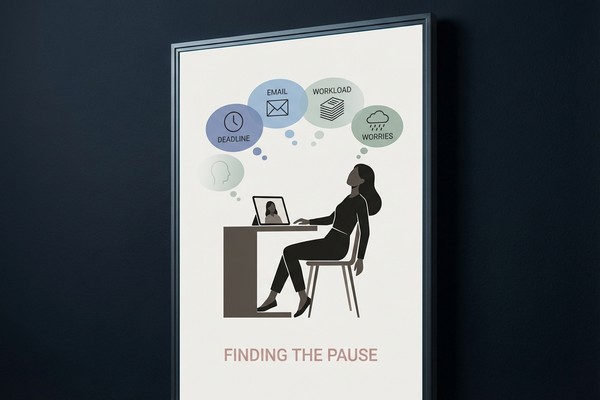
She listened in a way that felt different from the usual conversational tennis we’re all trained in. No quick returns, no matching volleys of “oh, I’ve been there too.” Just presence and the occasional question that helped me understand what I was actually feeling.
“It sounds like you’re carrying a lot right now,” she said at one point. Not “you should delegate more” or “have you tried time-blocking?” Just acknowledgment of the weight itself.
The Rarity of Being Witnessed
What struck me most was how unfamiliar this felt. When was the last time someone had listened to me without an agenda? Without trying to fix, advise, or redirect the conversation back to safer ground?
We’re so conditioned to treat emotional sharing as a problem to be solved that genuine witnessing feels almost foreign. Someone says they’re overwhelmed, and we immediately start generating solutions. Someone expresses doubt, and we rush in with reassurance. Someone admits to struggling, and we pivot to inspiration.
But she didn’t do any of that. She let me exist in the complexity of what I was feeling without trying to optimize me out of it.
The proof of being truly heard isn’t in what someone says back to you—it’s in what they don’t rush to fix.
The conversation meandered through territory I rarely explore out loud. The particular exhaustion of being the person who remembers everything. The way productivity advice feels like adding more items to an already impossible list. The strange guilt that comes with admitting you’re not thriving when everyone else seems to have figured it out.
She asked questions that helped me understand my own experience better. Not leading questions with obvious answers, but the kind that created space for discovery. “What would it feel like if you weren’t responsible for remembering that?” “When you say you’re behind, behind on what exactly?”
The Day After
Thursday morning felt different. Not because anything external had changed—the same deadlines, the same responsibilities, the same long list of things demanding attention. But something internal had shifted.
It took me most of the morning to identify what it was. That conversation had given me something I didn’t realize I’d been missing: permission to acknowledge the weight I was carrying without immediately having to figure out how to carry it better.
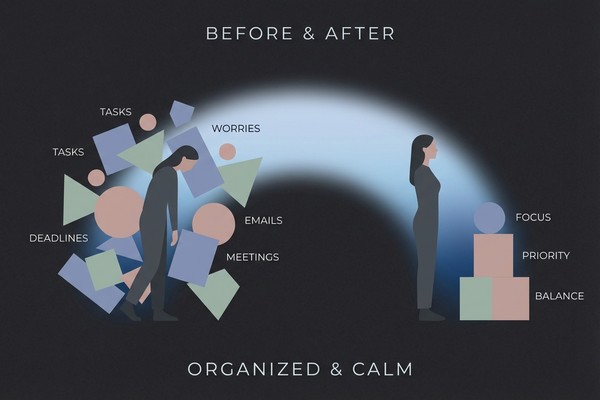
For weeks, I’d been treating my exhaustion like a productivity problem. I needed better systems, clearer priorities, more efficient workflows. But what I actually needed was simpler and somehow harder to find: someone to witness the reality of my experience without trying to improve it.
The relief wasn’t about getting solutions—it was about being seen clearly by another person and not found wanting. About having someone understand that the weight was real, not a failure of optimization.
What Listening Actually Looks Like
Real listening, I realized, is a radical act in our solution-obsessed culture. It requires resisting the urge to immediately make things better. It means sitting with someone’s discomfort without trying to minimize it or redirect it.
The friend who listened to me that Wednesday didn’t offer a single piece of advice. She didn’t share productivity hacks or suggest meditation apps. She didn’t even tell me that things would get better. Instead, she did something much more valuable: she confirmed that what I was experiencing was real and difficult, and that struggling with it didn’t make me broken.
This kind of listening is surprisingly rare. Most of us have been trained to treat conversations about difficulty as invitations to problem-solve. Someone shares a challenge, and we immediately start generating responses: “Have you tried…” “What if you…” “Maybe you should…”
But sometimes—often, actually—what people need isn’t solutions. They need witness. They need someone to confirm that their experience is valid, that their struggles make sense given their circumstances, that they’re not failing at life just because life feels hard right now.
The Space Between Problems and Solutions
There’s a particular kind of loneliness that comes from being constantly advised but rarely heard. When every expression of difficulty is met with suggestions for improvement, we start to feel like our actual experiences don’t matter—only our potential to optimize them away.
That Wednesday conversation reminded me that there’s valuable space between acknowledging a problem and solving it. Space to understand what we’re actually dealing with. Space to feel the full weight of our circumstances without immediately trying to engineer our way out of them.
Sometimes the most helpful thing someone can do is confirm that you’re not crazy for finding your life difficult.
This isn’t about wallowing or giving up on positive change. It’s about recognizing that sustainable solutions usually require first understanding the real scope and nature of what we’re facing. And that understanding often emerges through the process of being genuinely heard.
Protecting What’s Rare
Conversations like the one I had that Wednesday are precious partly because they’re uncommon. In a culture that treats every emotional expression as a productivity problem to be solved, the simple act of listening without agenda becomes almost revolutionary.
I’ve been thinking about how to create more space for this kind of exchange. How to resist my own trained impulse to immediately fix when someone shares something difficult. How to ask questions that create room for discovery rather than pushing toward predetermined solutions.
It starts with recognizing the difference between listening to understand and listening to respond. The first requires presence and patience. The second is just waiting for your turn to talk.
When someone tells you they’re overwhelmed, what if your first response wasn’t “what can you delegate?” but “that sounds really hard”? When someone admits they’re struggling, what if you sat with that reality for a moment before jumping to suggestions?
The conversation that changed my week wasn’t special because it solved anything. It was special because it created space for my actual experience to exist without immediately needing to be improved, optimized, or fixed.
In a world that constantly asks us to be better, faster, more efficient, sometimes the most radical gift we can offer each other is the simple confirmation: what you’re experiencing is real, it makes sense, and you don’t have to fix it right now.
When did you last feel genuinely heard—not advised, not fixed, just witnessed? And perhaps more importantly: when did you last offer that gift to someone else?
This article was created with collaboration between humans and AI—we hope you ❤️ it.