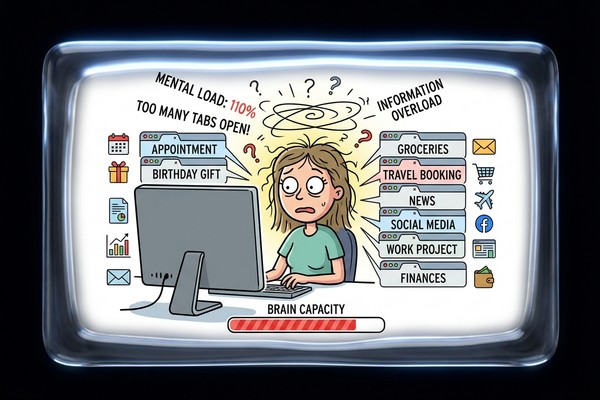
The moment came on a Tuesday afternoon, browser tabs multiplying like anxiety itself. Seventeen open windows, each one a promise you’d made to yourself or someone else. The school fundraiser deadline. The quarterly report that needed “just a quick review.” Your mom’s birthday gift that you’d been meaning to order for three weeks. The pediatrician appointment you hadn’t scheduled. The thank-you note for your neighbor’s kindness last month.
Each tab felt urgent and important, yet somehow impossible to close. Your chest tightened as you clicked between them, accomplishing nothing but adding to the mental inventory of everything undone. This wasn’t productivity paralysis—it was the weight of being the person who remembers everything, finally becoming too heavy to carry alone.
The Identity Prison of Self-Sufficiency
For years, asking for help felt like admitting defeat. Not because you couldn’t handle things—you’d proven over and over that you could. But because being the capable one had become so central to your identity that needing support felt like betraying who you were supposed to be.
The shame wasn’t rational, but it was real. In a culture that celebrates individual achievement and self-reliance, admitting you can’t manage everything alone feels like a moral failing. Especially when you’re a parent, a leader, or simply the person everyone turns to when things need handling.
You’d watch other people delegate effortlessly and wonder what was wrong with you. Why did asking your partner to handle the insurance call feel harder than just doing it yourself? Why did requesting help from a colleague seem more stressful than working late? The answer wasn’t weakness—it was the invisible labor of being responsible for outcomes, not just tasks.
The hardest part wasn’t doing everything yourself. It was believing you had to.
Most productivity advice misses this entirely. It treats delegation like a simple time management technique, ignoring the emotional complexity of releasing control. But when you’re the person who notices what needs doing, remembers the details that matter, and feels responsible when things fall through the cracks, handing over a task isn’t just about freeing up time. It’s about trusting someone else with the outcomes you’ll ultimately be held accountable for.
The Moment Everything Shifted
The breakthrough didn’t come from reading another article about boundaries or time management. It came from exhaustion so complete that the fear of asking became smaller than the fear of continuing as you were.
You looked at your partner, who was scrolling through their phone after dinner, and instead of the usual passive-aggressive hint about the dishes, you said something different: “I need you to own getting Mom’s birthday handled—researching the gift, ordering it, and making sure it arrives on time. I can’t have it on my mental list anymore.”
The specificity mattered. Not “can you help with Mom’s birthday” or “I’m overwhelmed with everything.” But a clear transfer of ownership, with boundaries around what success looked like. You weren’t asking them to help you manage the task—you were asking them to take it off your plate entirely.
Their response surprised you both. No defensiveness, no negotiation about who was busier. Just “okay, I’ve got it.” The relief was immediate and profound. Not because the task was gone, but because the mental weight of tracking it had lifted.
What Really Changed
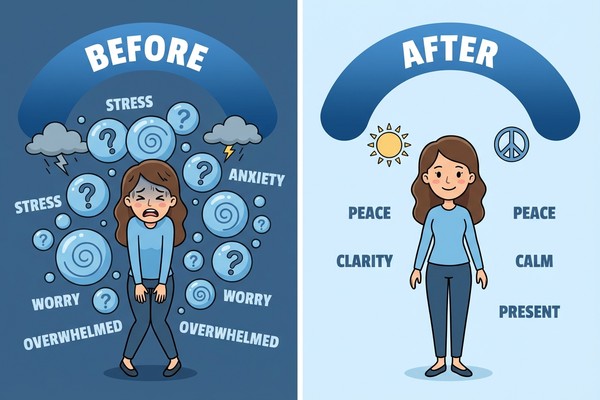
The gift arrived on time, beautifully wrapped, with a card your partner had thoughtfully chosen. But the real transformation wasn’t logistical—it was neurological. For the first time in months, you woke up without immediately running through your mental checklist. The background anxiety that had become so constant you’d stopped noticing it began to quiet.
This is what most discussions of delegation miss. When you’re truly responsible for outcomes, your nervous system doesn’t distinguish between tasks you’re doing and tasks you’re managing. Both create the same cognitive load, the same low-level stress response. Only when someone else genuinely owns the outcome—not just the execution—does your brain finally let go.
You started noticing how much energy you’d been spending on invisible work. Not just remembering what needed doing, but anticipating problems, tracking progress, and mentally rehearsing contingency plans. When your partner took true ownership of your mom’s birthday, all of that background processing stopped.
The Language That Works
The key wasn’t just asking for help—it was asking in a way that transferred ownership rather than creating another task for you to manage. Here’s the framework that made the difference:
“I need you to own [specific outcome] completely. That means [clear definition of success] by [specific timeframe]. I won’t check in or remind you—this needs to be entirely off my mental load.”
The word “own” is crucial. It’s different from “help with” or “take care of.” Ownership means they’re responsible for the outcome, not just the execution. They’ll remember the deadline, handle the complications, and solve the problems that arise.
The clarity around success metrics prevents the mental load from creeping back. Instead of wondering if they understand what you need, you’ve defined it upfront. Instead of worrying about their approach, you’ve focused on the outcome that matters.
The commitment not to check in is perhaps the hardest part, but it’s essential. Every reminder, every status check, every helpful suggestion keeps the cognitive burden on your plate. True delegation requires letting go of control over the process.
Help isn’t a personality trait you either have or lack. It’s a skill that requires practice and clear communication.
Beyond Individual Tasks
Once you experienced what genuine support felt like, you began seeing opportunities everywhere. Not just for task delegation, but for outcome ownership. Your teenager could own their school supply needs for the semester, not just pick up supplies when asked. Your colleague could own the client relationship, not just execute the deliverables you planned.
The shift from managing people to transferring ownership changed everything. Team meetings became shorter because people came prepared with solutions, not just problems. Family logistics ran smoother because everyone knew what they were responsible for delivering. The mental load that had felt impossibly heavy began distributing naturally.
But this approach revealed something uncomfortable: how much of your identity had been built around being indispensable. Learning to ask for help meant learning to let other people be capable too. It meant accepting that your way wasn’t the only right way, and that outcomes could be achieved through different processes than you would have chosen.
The Bigger Picture
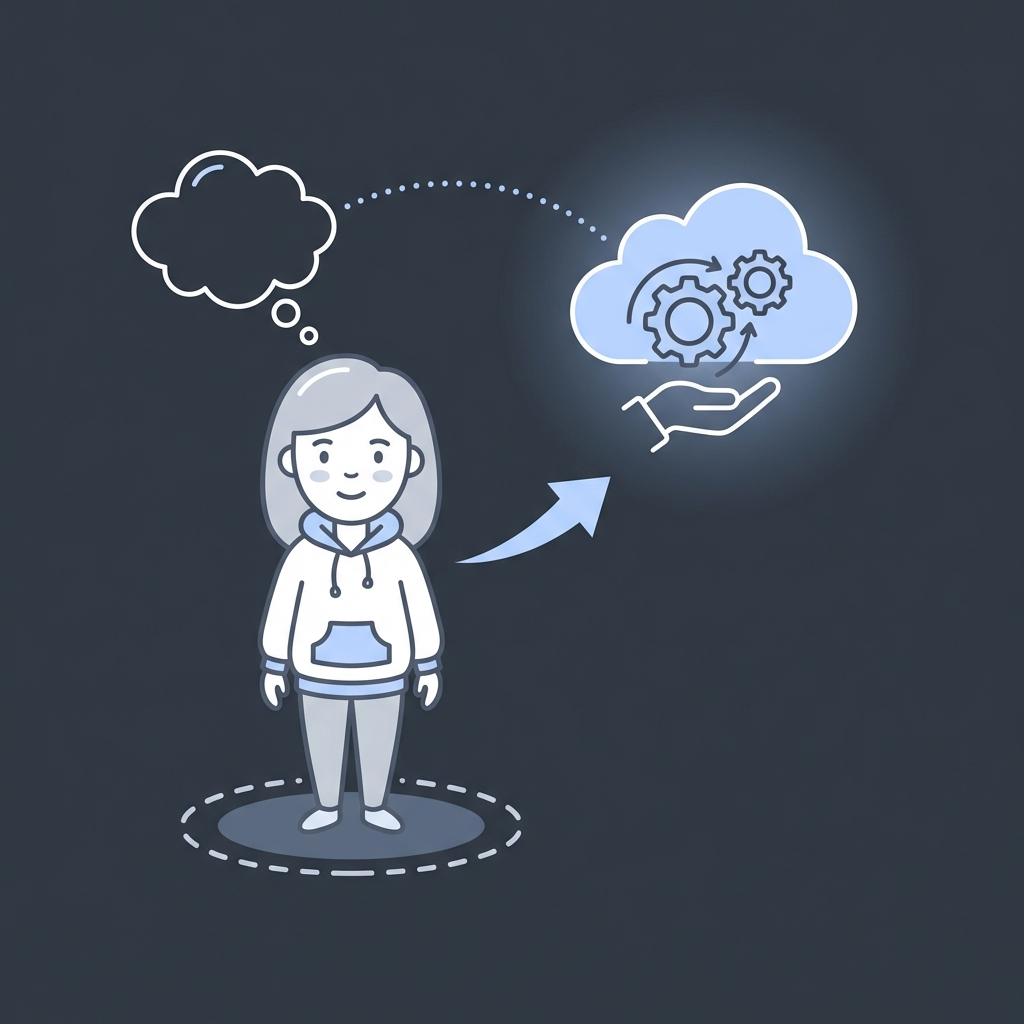
Individual requests for help are powerful, but they’re still just individual requests. The real transformation comes when systems exist that reduce the need to ask in the first place. When responsibilities are clearly defined, when information flows automatically, when follow-up happens without human intervention.
This is why the most helpful tools don’t just organize your tasks—they take ownership of outcomes. They remember what you’d otherwise have to remember, track what you’d otherwise have to track, and follow up on what you’d otherwise have to chase. They create the same nervous system relief as a trusted person taking something completely off your plate.
The day you finally asked for help wasn’t just about getting one task handled. It was about discovering that the weight you’d been carrying wasn’t yours alone to bear. That competence doesn’t require carrying everything yourself. That the people in your life want to contribute meaningfully, not just execute your endless to-do lists.
The relief you felt wasn’t just about having fewer things to do. It was about finally understanding the difference between being helpful and being responsible for everything. Between being capable and being the only one who’s allowed to be capable.
That Tuesday afternoon with seventeen browser tabs was the beginning of a different way of living. One where your mental space belongs to you again, where support is normal rather than emergency-only, and where asking for help feels like strength rather than failure.
This article was created with collaboration between humans and AI—we hope you ❤️ it.