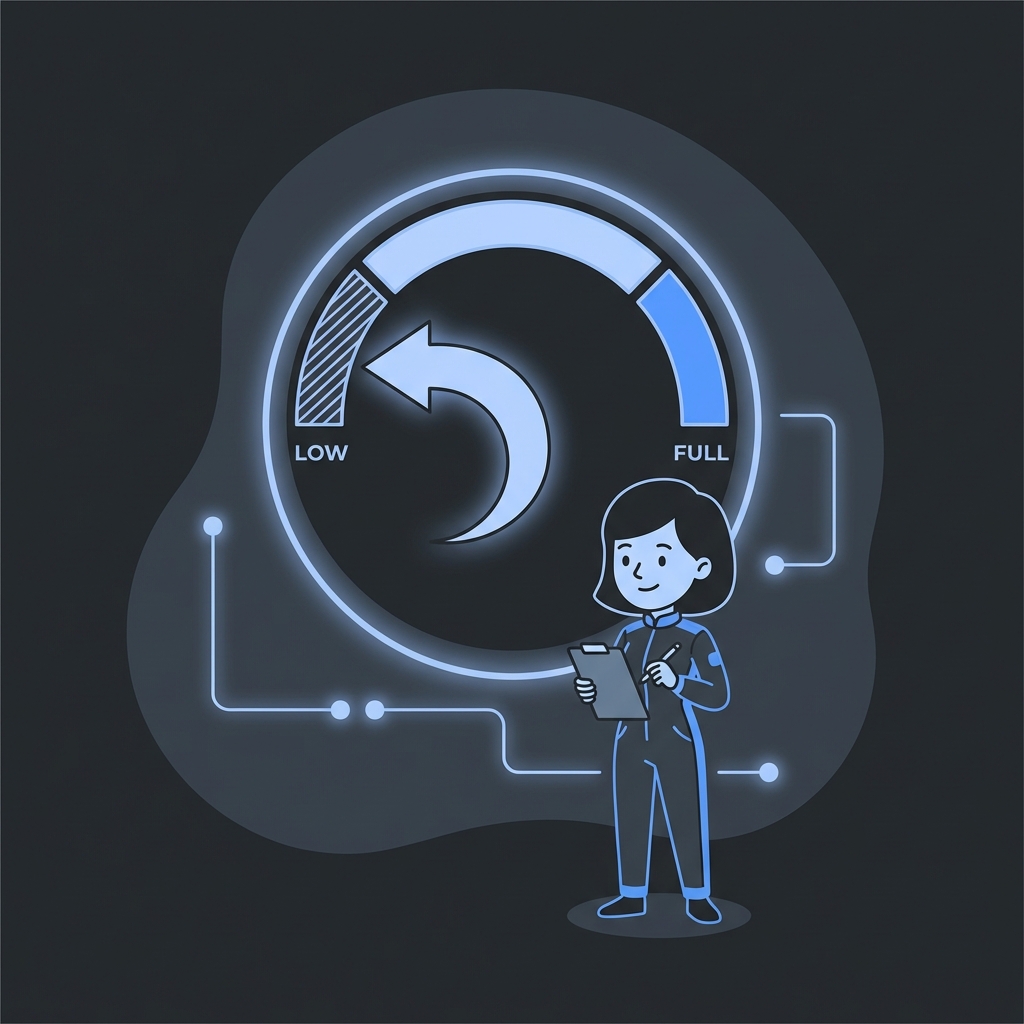
When someone tells you to “take better care of yourself,” what exactly are they asking you to do? Take a bath? Get more sleep? Exercise? The advice feels both urgent and impossibly vague, like being told to “fix your car” when you can’t even identify which part is broken.
Most self-care guidance treats depletion like it’s one uniform experience—a general emptiness that responds to generic solutions. But anyone who’s lived through sustained overwhelm knows better. The exhaustion you feel after a day of difficult conversations is different from the fog that settles in after weeks of decision-making. The depletion from managing everyone else’s emotions feels distinct from the drain of creative work or physical labor.
Without understanding where you’re actually running low, self-care becomes another task on your list instead of the targeted recovery you need. It’s like trying to refuel a car by washing the windshield—well-intentioned but missing the mark entirely.
The Anatomy of Empty
Depletion isn’t just one thing wearing different masks. It has distinct domains, each with its own signals and recovery requirements. Think of yourself as operating across five interconnected systems: cognitive, emotional, physical, relational, and creative. When one system runs low, it affects the others, but the root cause matters for how you respond.
Cognitive depletion shows up as decision fatigue, difficulty concentrating, or that feeling of mental static when someone asks you a simple question. It’s the exhaustion of holding too much information, making too many choices, or switching between contexts all day. Your brain literally runs out of glucose for executive function, which is why you can manage a complex work project but can’t decide what to make for dinner.
Emotional depletion feels different—it’s the heaviness that comes from absorbing others’ feelings, managing conflict, or suppressing your own needs. You might feel numb, irritable, or like you’re performing your own life instead of living it. This isn’t about having emotions; it’s about the work of processing, regulating, and responding to them constantly.
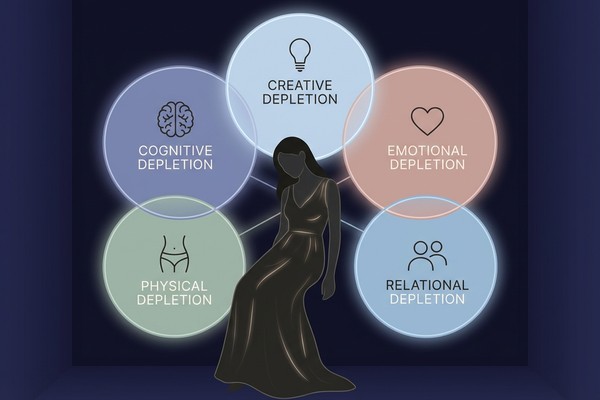
Physical depletion is the most obvious but often the most ignored. It’s not just tiredness—it’s the deep cellular fatigue that comes from poor sleep, inadequate nutrition, or chronic stress hormones. Your body feels heavy, your immune system flags, and small physical tasks feel disproportionately difficult.
Relational depletion happens when you’re giving more social energy than you’re receiving. It shows up as dreading social interactions, feeling invisible in relationships, or experiencing that hollow feeling after being around people who drain rather than energize you. Even introverts need positive social connection; they just need it in smaller, more intentional doses.
Creative depletion is perhaps the least recognized but equally important. It’s the loss of curiosity, the inability to see possibilities, or feeling stuck in repetitive patterns. This affects everyone, not just artists—creativity is how we problem-solve, innovate, and find meaning in our daily experiences.
Reading Your Internal Weather
The tricky thing about depletion is that it rarely announces itself clearly. Instead, it sends subtle signals that we often misinterpret or ignore until they become impossible to miss.
Depletion whispers before it screams, but we’re usually too busy to listen to the whispers.
Cognitive depletion often masquerades as laziness or lack of motivation. You might find yourself scrolling your phone instead of tackling important tasks, not because you don’t care, but because your brain genuinely doesn’t have the resources for complex thinking. You’ll notice increased procrastination, difficulty prioritizing, or that feeling of mental fog where thoughts feel sluggish and unclear.
Emotional depletion frequently shows up as numbness or disproportionate reactions. Small annoyances feel catastrophic, or alternatively, things that should matter feel distant and unimportant. You might find yourself going through the motions of care without feeling it, or struggling to access empathy for others when you normally would.
Physical depletion sends signals through your body’s systems. You get sick more often, crave sugar or caffeine constantly, feel cold or achy without clear cause, or notice that physical recovery takes longer than usual. Sleep becomes either elusive or the only thing you want to do.
Relational depletion makes social interactions feel like work rather than connection. You find yourself avoiding calls, feeling resentful of others’ needs, or experiencing that peculiar loneliness that can happen even when you’re surrounded by people. Conversations feel effortful, and you struggle to show up authentically in relationships.
Creative depletion manifests as a loss of wonder. Colors look duller, problems seem to have only obvious solutions, and you feel stuck in routines that once felt comfortable but now feel suffocating. You might notice yourself saying “I don’t know” more often, not from lack of information but from inability to generate new possibilities.
The Five-Minute Reality Check
Most of us move through depletion unconsciously, like trying to drive with a dirty windshield—we adapt to the decreased visibility without realizing how much we’re missing. A regular depletion check-in can help you catch these patterns before they compound.
Set aside five minutes when you won’t be interrupted. This isn’t meditation or deep reflection—it’s more like checking your internal dashboard. Start by taking three slow breaths, not to relax but to create enough space to actually notice what’s happening inside.
Ask yourself about each domain, not as judgment but as information gathering. For cognitive depletion: How clear is my thinking right now? Am I avoiding decisions or feeling overwhelmed by choices? For emotional depletion: How am I feeling, and how much energy does it take to feel it? Am I suppressing or amplifying emotions?
For physical depletion: What does my body actually need right now? How is my energy, sleep, and physical comfort? For relational depletion: How connected do I feel to the people in my life? Am I giving more than I’m receiving in my relationships?
For creative depletion: When did I last feel curious or excited about something? How much novelty and possibility do I see in my daily life?
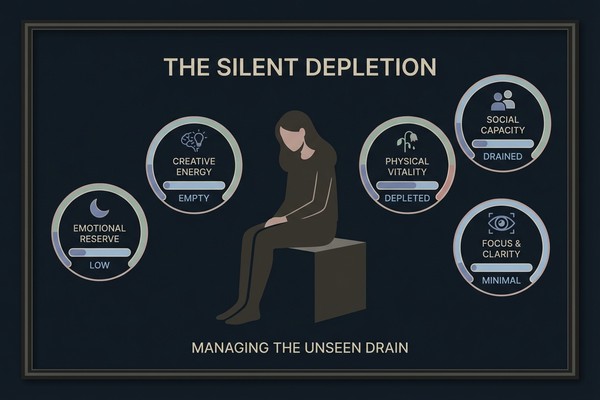
The goal isn’t to score yourself or create more self-criticism. It’s to develop the skill of internal awareness that most of us never learned. You’re looking for patterns, not perfection.
Targeted Recovery Over Generic Self-Care
Once you identify where you’re running lowest, recovery becomes more strategic. Instead of defaulting to a bath or a walk (though those might be exactly what you need), you can match your intervention to your actual depletion.
For cognitive depletion, your brain needs either rest or a different kind of stimulation. This might mean doing something completely mindless for a while, like organizing a drawer or doing a simple puzzle. Or it might mean engaging a different part of your brain through music, movement, or hands-on activities. The key is giving your executive function a break from decision-making and complex processing.
Emotional depletion requires both processing and protection. You might need to feel your feelings fully instead of managing them, which could mean crying, journaling, or talking to someone who can hold space without trying to fix you. Or you might need protection from others’ emotions for a while—saying no to being the family therapist or taking a break from emotionally demanding media.
Physical depletion needs actual physical care, which sounds obvious but is often the domain we neglect most. This might mean prioritizing sleep over productivity, eating nourishing food even if it’s inconvenient, or moving your body in ways that feel good rather than punitive. Sometimes it means medical care for issues you’ve been ignoring.
Relational depletion requires both boundaries and connection. You might need to step back from relationships that consistently drain you, or you might need to actively seek out people who energize you. This could mean saying no to social obligations that feel like work, or reaching out to friends who make you feel like yourself.
Creative depletion needs novelty and play. This might mean trying something new, changing your environment, or engaging with art, music, or ideas that spark curiosity. It’s not about being productive or creative in an output sense—it’s about feeding the part of you that sees possibilities and makes connections.
Recovery isn’t about returning to baseline—it’s about building reserves for what’s coming next.
The most effective recovery often addresses multiple domains simultaneously. A walk with a friend you enjoy might help with physical, relational, and creative depletion all at once. Cooking a meal you love could address physical and creative needs while giving your cognitive system a break from complex decisions.
Where Are You Running Low?
Right now, as you finish reading this, take a moment to check in with yourself. Which domain feels most depleted? Which one have you been ignoring or trying to push through?
The answer might surprise you. Often, the domain we’re most depleted in is the one we’re least likely to acknowledge, because we’ve gotten so good at compensating for it. The person who prides themselves on emotional intelligence might be running on empty emotionally. The creative professional might be creatively depleted. The caregiver might be relationally exhausted.
There’s no shame in any form of depletion—it’s information, not indictment. It’s your internal system telling you where attention is needed, like a dashboard light in your car. You can choose to ignore it, but it’s usually more expensive in the long run.
The goal isn’t to never be depleted. That’s impossible if you’re living a full life. The goal is to recognize depletion early, understand what kind it is, and respond with targeted care instead of generic busy-work disguised as self-care.
Your depletion is specific to you, your circumstances, and this moment in your life. The recovery that works is equally specific. Start there, with what’s actually empty, not with what you think should be.
This article was created with collaboration between humans and AI—we hope you ❤️ it.