
There’s a kind of work that doesn’t show up on any to-do list, yet it runs constantly in the background of your mind like a computer process you can’t quit. It’s the work of wondering if your teenager ate lunch, of mentally calculating whether you have enough in checking to cover the mortgage, of sensing that your partner seems distant and filing that observation away for later examination.
This is emotional load—the vigilance, anticipation, and worry work that keeps families and organizations functioning. Unlike task load, which involves concrete actions you can check off a list, emotional load lives in your nervous system. It’s the difference between “schedule the dentist appointment” and “notice that it’s been eight months since anyone went to the dentist and feel responsible for everyone’s oral health.”
Most productivity advice completely ignores this distinction. It treats all mental work as if it were task work—something that can be optimized, delegated, or systematized away. But you can’t delegate worry. You can’t batch process the feeling that something might be wrong.
The Weight of Watching
Emotional load shows up differently for everyone, but it often sounds like an internal monologue that never quite stops. Did they get home safely? Is that cough getting worse? Are we spending too much this month? Is my boss unhappy with my work? Are the kids getting enough attention? Is Mom lonely?
These aren’t just passing thoughts—they’re active monitoring systems. Your brain has appointed itself as the early warning system for everything that could go wrong in the lives of people you care about. It’s scanning for threats, gaps, and needs that others might miss.
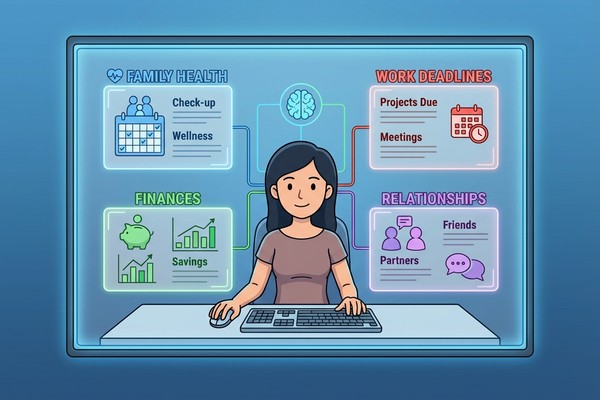
The exhausting part isn’t having these thoughts occasionally. It’s that they become background processes, running constantly whether you’re consciously attending to them or not. You’re at dinner with friends, but part of your mind is calculating whether you remembered to pay the electric bill. You’re in a work meeting, but you’re also tracking whether your partner seemed stressed this morning and what that might mean.
This kind of vigilance work often falls disproportionately on caregivers—parents, especially mothers, but also anyone who finds themselves in the role of “family operations manager.” It falls on team leaders who feel responsible for everyone’s wellbeing. It falls on the person in the friend group who remembers birthdays and checks in when someone goes quiet.
When Your Body Becomes the Control Room
Here’s what makes emotional load particularly insidious: it doesn’t just live in your thoughts. It lives in your body. Your nervous system treats these ongoing concerns as actual threats that require vigilance. The result is a kind of chronic, low-level activation that shows up in ways you might not immediately connect to worry work.
Maybe it’s the irritability that flares when someone asks you a simple question while you’re already tracking twelve other things. Maybe it’s lying awake at 2 AM, not because anything urgent is happening, but because your mind starts cycling through all the things you’re monitoring. Maybe it’s a kind of emotional numbness—not depression exactly, but a flattening that comes from having too many feelings to feel.
Some people describe it as feeling “touched out” even when no one is physically touching them. Others notice they’ve stopped enjoying things they used to love because there’s always something else they should be thinking about instead.
Your nervous system doesn’t distinguish between a tiger chasing you and the persistent worry that you’re forgetting something important.
The body keeps score of all this vigilance work. Tight shoulders from holding tension about whether everyone is okay. Digestive issues from chronic stress about money. Sleep disruption from a mind that won’t stop scanning for problems. These aren’t character flaws or signs of weakness—they’re occupational hazards of being the person who holds everything together.
The Operations Work of Caring
What if we stopped treating this vigilance as neurosis and started recognizing it as operations work? In any complex system—whether it’s a family, a team, or an organization—someone has to monitor the overall health of the system. Someone has to notice when things are off-track before they become crises.
The problem isn’t that you’re doing this work. The problem is that it’s invisible work that often goes unrecognized and unrewarded. You’re running a sophisticated monitoring system that prevents problems, anticipates needs, and maintains connection. But because the work is preventative, its value is hard to measure.
The proof is in what didn’t happen. The birthday that wasn’t forgotten. The appointment that was scheduled before the problem got worse. The difficult conversation that happened before resentment built up. The bill that was paid before the late fee kicked in.
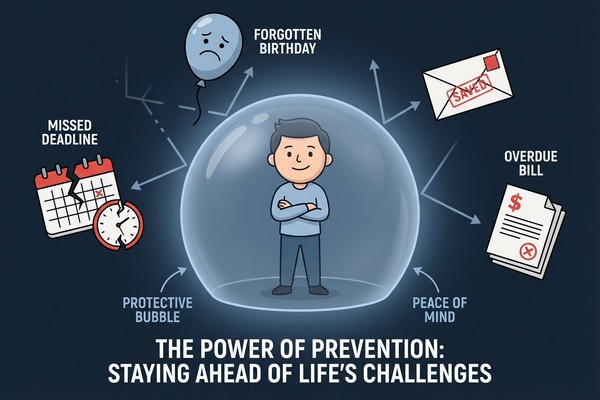
This reframing isn’t about glorifying worry or suggesting you should carry even more. It’s about recognizing that what you’re doing is real work that serves real purposes. It’s about understanding that the exhaustion you feel isn’t because you’re doing something wrong—it’s because you’re doing something difficult and important.
A Different Kind of To-Do List
Traditional productivity advice would tell you to write down your worries and turn them into actionable tasks. But that misses the point entirely. Many worries can’t be solved—they can only be held or released. The worry about whether your aging parent is really okay living alone doesn’t have a simple action item attached to it. The concern about whether you’re raising your kids right isn’t something you can check off a list.
What helps isn’t more task management. It’s developing a different relationship with the emotional load itself. One gentle practice that many people find helpful is what I call the “worry triage”: at the end of each day, name three things you’ve been carrying. Choose one that genuinely needs action and commit to addressing it. Then consciously release the other two—not because they don’t matter, but because holding them isn’t serving anyone.
This isn’t about becoming less caring or less responsible. It’s about recognizing that you can’t monitor everything all the time without burning out. Some worries deserve action. Some deserve acknowledgment and release. Some deserve to be shared with others instead of carried alone.
Systems That Actually Help
The most helpful tools aren’t the ones that make you more efficient at worrying. They’re the ones that reduce the need for vigilance in the first place. Instead of giving you better ways to track everything, they take some things off your mental radar entirely.
This is why a simple calendar reminder often works better than sophisticated task management systems. It’s not just scheduling the appointment—it’s knowing you don’t have to keep that appointment floating in your head anymore. The system is holding it for you.
The best tools don’t optimize your worry work—they eliminate the need for some of it entirely.
The same principle applies to emotional load. The most valuable systems are those that monitor things for you, that notice patterns you don’t have to track manually, that follow up on things so you don’t have to remember to follow up. They don’t make you better at holding everything—they help you hold less.
The Permission to Put Things Down
Maybe the most radical thing you can do is recognize that not everything needs to be monitored by you, all the time. Your nervous system has been running a 24/7 operations center, but operations centers have shifts. They have backup systems. They have protocols for what actually requires immediate attention versus what can wait.
You’ve been carrying an emotional load ledger, tracking debits and credits of worry across all the areas of your life. But ledgers need to be balanced, and balance sometimes means acknowledging that you can’t carry everything indefinitely.
The goal isn’t to stop caring. It’s to care in a way that’s sustainable, in a way that recognizes your own humanity and limitations. It’s to understand that being the person who remembers everything comes at a cost—and that cost is worth examining.
Your vigilance has served important purposes. It’s prevented problems, maintained connections, and kept important things from falling through the cracks. But it’s also exhausted you in ways that productivity culture rarely acknowledges. The work you’ve been doing in your nervous system is real work. It deserves recognition, rest, and ultimately, some relief.
This article was created with collaboration between humans and AI—we hope you ❤️ it.