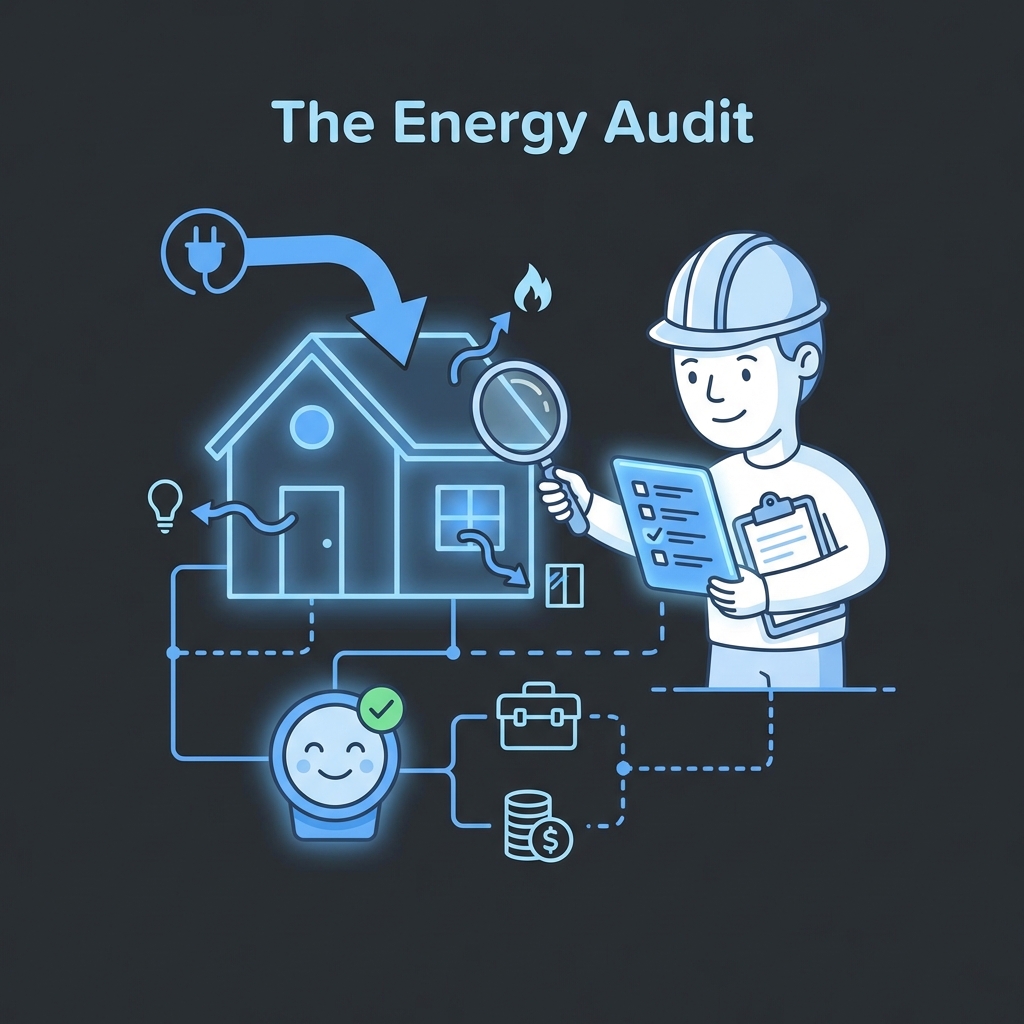
You know that feeling when you’ve checked every box on your to-do list but still feel completely drained? When you’ve optimized your calendar down to the minute but can barely drag yourself through the day? That’s because most of us have been taught to manage time when what we really need to manage is energy.
The productivity industrial complex has convinced us that energy is just a byproduct of good habits. Get enough sleep, exercise regularly, eat your vegetables, and voilà—you’ll have boundless energy to tackle your perfectly organized schedule. But anyone who’s ever felt exhausted after a “productive” day knows this isn’t the whole story.
Energy isn’t just about physical stamina. It’s about the complex interplay between what fills you up and what drains you dry—and most of us have never actually mapped this terrain.
The Invisible Energy Exchange
Every interaction, every task, every environment is part of an energy exchange. Some deposits energy into your system. Others withdraw it. The problem is that we rarely track these transactions with the same attention we give to our bank accounts.
Take Sarah, a marketing director I know who spent months wondering why she felt burned out despite loving her job. When she finally started paying attention to her energy patterns, she realized something surprising: the weekly team meetings that everyone praised as “collaborative” and “energizing” left her feeling completely drained. As an introvert, she needed processing time between ideas and decisions, but the rapid-fire brainstorming format demanded immediate responses. Meanwhile, the quiet strategy work that others found tedious was where she came alive.
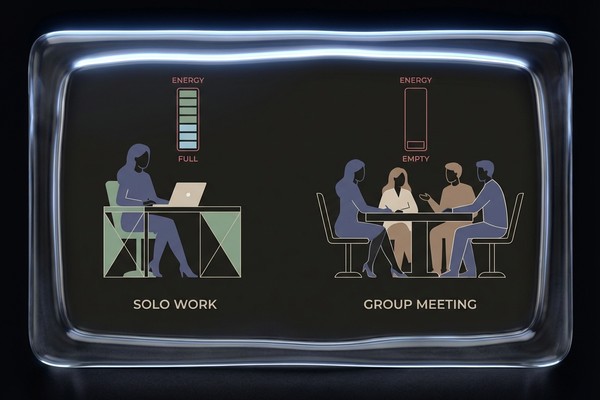
The revelation wasn’t that meetings were bad or that she was antisocial. It was that she’d been spending her highest energy on activities that depleted her, while treating her energy-giving work as secondary.
Energy management isn’t about having more energy—it’s about spending the energy you have more intentionally.
This is where energy management diverges completely from time management. Time is finite and equal—we all get the same 24 hours. But energy is renewable, variable, and deeply personal. What energizes me might exhaust you. What drains you might invigorate your colleague.
Mapping Your Real Energy Sources
The first step in any energy audit is honest inventory. Not what should energize you according to wellness blogs, but what actually does. This requires paying attention to your internal state before, during, and after different activities.
Some people discover they’re energized by solving complex problems, while others find energy in connecting with people. Some need physical movement to feel alive; others need stillness. Some thrive on variety and novelty; others find energy in routine and predictability.
The key is noticing the difference between activities that feel good in the moment and activities that leave you with more energy afterward. Scrolling social media might feel relaxing in the moment, but it rarely leaves you feeling restored. Conversely, that difficult conversation you’ve been avoiding might feel draining in anticipation, but actually energize you once it’s done.
Consider also the less obvious energy sources. Maybe it’s the first cup of coffee in complete silence. Maybe it’s organizing your workspace. Maybe it’s listening to a specific playlist during your commute. These micro-moments of energy gain often get overlooked because they seem too small to matter, but they compound throughout the day.
The Hidden Energy Drains
Energy drains are often more obvious than energy sources, but we tend to categorize them wrong. We blame the obvious culprits—difficult people, overwhelming workloads, stressful situations—while missing the subtler patterns that slowly leak energy throughout the day.
Decision fatigue is one of the biggest hidden drains. Every choice, no matter how small, requires mental energy. What to wear, what to eat for lunch, which email to answer first, whether to attend that optional meeting. These micro-decisions accumulate like interest, and by afternoon, you’re running on fumes.
Then there are the emotional drains that masquerade as neutral activities. The colleague who always needs “just a quick question” but never respects boundaries. The project that technically fits your job description but misaligns with your strengths. The environment that requires constant code-switching between different versions of yourself.
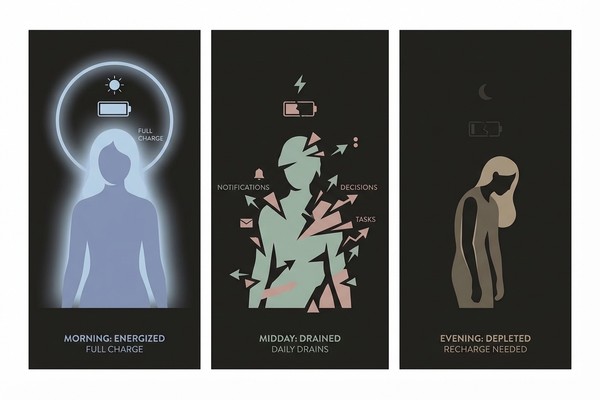
Context switching is another major drain that’s often invisible. It’s not just about multitasking—it’s about the mental energy required to shift between different types of thinking, different relationships, different roles. Going from a strategic planning session to a detailed budget review to a team check-in isn’t just a schedule change; it’s three different cognitive modes, each requiring its own mental startup cost.
Physical environments play a bigger role than most people realize. Fluorescent lighting, constant noise, cluttered spaces, uncomfortable temperatures—these aren’t just minor annoyances. They’re ongoing energy drains that your nervous system is constantly working to manage, even when you’re not consciously aware of them.
The Great Energy Mismatch
Here’s where most people discover the problem: there’s often a massive mismatch between where they spend their energy and where they get it. They’re using their peak energy hours on draining activities and trying to do their most energizing work when they’re already depleted.
This mismatch isn’t usually intentional. It’s the result of designing our lives around external expectations rather than internal reality. We schedule the “important” meetings during prime morning hours because that’s when everyone else is available. We save the work we enjoy for the end of the day because it feels indulgent. We say yes to energy-draining commitments because they seem like good opportunities.
The result is a life that looks successful from the outside but feels exhausting from the inside. You’re hitting your goals but losing yourself in the process.
The most productive thing you can do is protect your energy sources and minimize your energy drains.
This isn’t about being selfish or avoiding all difficult tasks. It’s about being strategic. When you’re energized, you can handle more challenges, be more creative, show up better for the people who matter to you. When you’re drained, even simple tasks feel overwhelming.
Designing for Energy
Once you understand your energy patterns, you can start designing your life around them. This doesn’t mean completely restructuring everything—small changes can have outsized impacts.
Peak time protection is crucial. If you’re a morning person, guard those early hours fiercely. Don’t give them away to email or meetings that could happen later. If you’re energized by afternoon sunlight, don’t schedule your most draining tasks for 2 PM.
Drain reduction is equally important. This might mean batching similar tasks to minimize context switching. It might mean setting boundaries with energy vampires. It might mean changing your physical environment or finding ways to automate recurring decisions.
Consider the transitions between activities. How do you move from an energizing task to a draining one? How do you recover after something depleting? These in-between moments are where you can build energy buffers that help you navigate the inevitable drains with more resilience.
Environmental design matters more than most people think. Small changes—better lighting, noise-canceling headphones, a plant on your desk, a different route to work—can shift your baseline energy level throughout the day.
Your Energy Audit
Take a moment to map your own patterns. Think about yesterday or a typical day from last week. What were your top three energy sources? Not what should have energized you, but what actually did. Maybe it was that focused work session before anyone else was awake. Maybe it was the impromptu conversation with a colleague you admire. Maybe it was simply eating lunch away from your desk.
Now consider your top three energy drains. Again, be honest rather than diplomatic. Maybe it was the meeting that could have been an email. Maybe it was trying to make a decision without enough information. Maybe it was the cluttered space you keep meaning to organize but never do.
Look for patterns. Are your energy sources getting protected or squeezed out? Are your energy drains necessary or habitual? Where’s the biggest mismatch between your energy reality and your energy allocation?
One Small Design Change
Pick one small change that would protect your top energy source. Not a complete life overhaul—just one small design tweak that makes it more likely you’ll get that energy boost when you need it.
Maybe it’s setting a boundary around your peak focus hours. Maybe it’s creating a transition ritual that helps you shift between different types of work. Maybe it’s changing your physical environment in some small way that reduces a daily drain.
The goal isn’t perfection. It’s intentionality. When you start designing your life around energy rather than just time, you’re not just becoming more productive—you’re becoming more yourself.
This article was created with collaboration between humans and AI—we hope you ❤️ it.