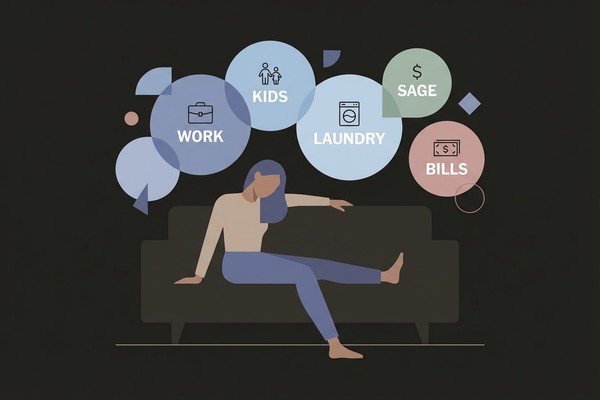
It was the third hard week in a row, and I’d stopped trying to explain it to people. Not because the reasons weren’t valid—work was relentless, one kid had been sick, the other was having friendship drama that required nightly debriefs, and somewhere in there the washing machine had started making that sound that means expensive repair bills are coming. But explaining felt like another task on an already impossible list, another performance I didn’t have energy for.
The mental math of crisis management had taken over everything. Every conversation became a calculation: Do I tell them about the work deadline or the sick kid? How much context do they need? Will they offer help I can’t actually use, which means I’ll have to manage their feelings about not being helpful? It was easier to just smile and say “busy week” and keep moving.
When the Doorbell Rang
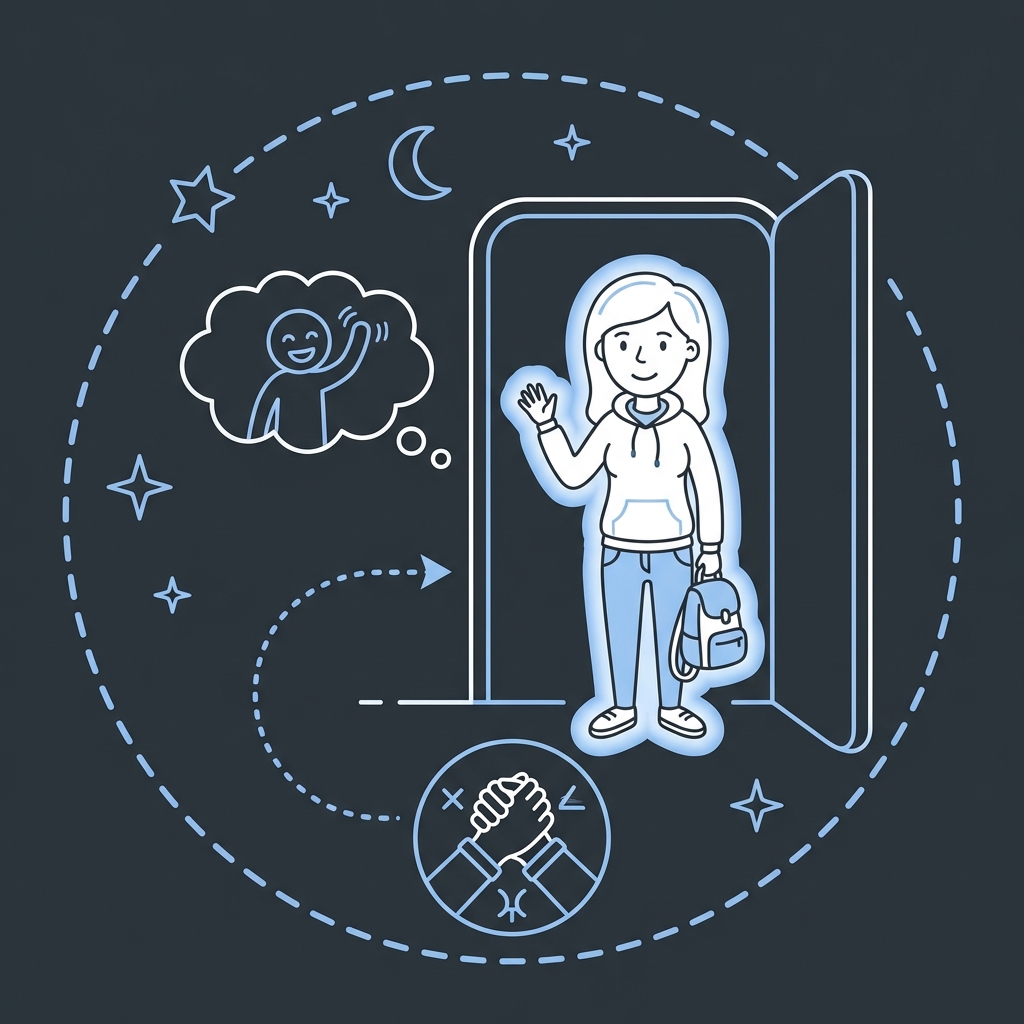
That Thursday evening, I was staring at the refrigerator like it might spontaneously generate dinner when the doorbell rang. Not the quick delivery ring or the polite neighbor knock—a confident, familiar ring that somehow communicated “I’m not going anywhere.”
It was Sarah, holding two grocery bags and wearing the kind of practical jacket that suggested she’d planned to stay awhile. Before I could launch into explanations or apologies about the state of my house, she was already moving past me toward the kitchen.
“I brought ingredients for that pasta thing you like,” she said, unpacking containers like she’d done this a hundred times before. “And I figured I’d just make it here since I was in the neighborhood.”
She wasn’t in the neighborhood. She lived twenty minutes away. But she said it like it was the most natural thing in the world.
The Gift of No Questions
What happened next was so unusual I almost didn’t recognize it: she didn’t ask me what was wrong. She didn’t require a performance of gratitude or an explanation of why I needed help. She just started cooking, chatting about her day while she chopped vegetables, occasionally asking where I kept the olive oil or whether the kids liked mushrooms.
The absence of questions felt revolutionary. No “How can I help?” that would require me to think through logistics and manage her good intentions. No “What’s going on?” that would demand I organize my chaos into a coherent narrative. Just presence, and dinner happening without my input.
Sometimes the most radical act of care is not asking someone to explain why they need it.
I found myself sitting at my own kitchen table, watching someone else take care of my family’s basic needs. The kids wandered in, drawn by actual cooking smells, and Sarah folded them into conversation about school and weekend plans while she stirred sauce. Nobody asked me to facilitate or translate or manage the social dynamics. I was just… there.
The unfamiliarity of it was almost uncomfortable. I kept looking for my role, the way I usually orchestrate family dinner—reminding about homework, negotiating vegetable consumption, keeping conversation flowing. But Sarah had created a bubble where none of that was required of me.
The Weight of Always Being On
Sitting there, I started to notice how tense my shoulders had been for weeks. How I’d been holding my breath without realizing it. The constant low-level hum of mental calculation—what needs to happen next, who needs what, what might go wrong—had become so normal I’d forgotten it wasn’t just how life felt.
This is the thing about being the person who remembers everything: you don’t realize how much energy it takes until someone else temporarily holds that responsibility. The mental load isn’t just about tasks—it’s about being perpetually available to solve problems, anticipate needs, and keep everyone else’s lives running smoothly.
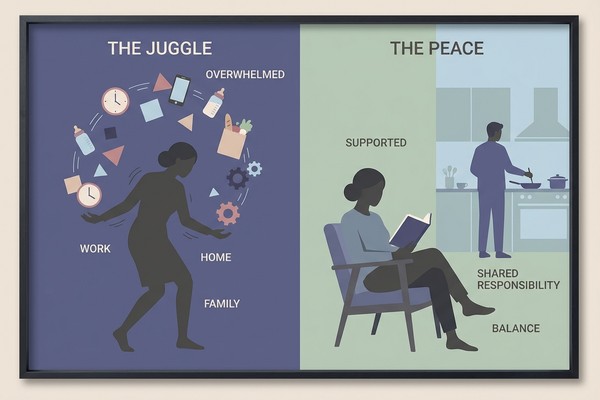
Most of the time, when people offer help, they’re offering to execute tasks I’ve already planned and organized. “Just tell me what you need” still requires me to be the project manager of my own rescue. But Sarah had done something different—she’d taken ownership of an entire outcome. Dinner wasn’t just going to appear; it was going to be good, nutritious, and enjoyable, and I didn’t have to think about any of it.
Learning to Receive Without Earning
The hardest part was letting it happen without trying to earn it. My instinct was to help, to prove I deserved this kindness, to at least set the table or make a salad. But every time I started to get up, Sarah would wave me back down with some variation of “I’ve got it.”
This felt almost transgressive. I’d been raised in the gospel of reciprocity—help must be earned, kindness must be balanced, care must be justified. But here was someone offering support with no strings attached, no performance required, no debt incurred.
The deepest gift isn’t having someone solve your problems—it’s having someone hold space for your problems without needing you to perform gratitude.
As dinner came together, I realized how long it had been since I’d experienced care that didn’t come with invisible price tags. Care that didn’t require me to be grateful in a specific way, or to reciprocate immediately, or to prove I really needed it. Just care offered freely because someone noticed I was struggling and decided to do something about it.
What Apps Can’t Replicate
Later, after Sarah had left and the kitchen was clean (she’d insisted on doing dishes too), I sat with the unfamiliar feeling of an evening that had unfolded without my management. The kids had done homework without reminders. Everyone had eaten vegetables without negotiation. The house felt peaceful in a way I’d forgotten was possible.
This is what no productivity system or AI assistant can replicate: the experience of being truly seen and cared for without having to ask. Technology can help us remember tasks and organize information, but it can’t show up at our door with groceries and the intention to stay. It can’t read the exhaustion in our posture or know that sometimes what we need isn’t efficiency—it’s someone else to hold the weight for a while.
The most sophisticated apps still require us to input our needs, to articulate what’s wrong, to manage the system that’s supposed to help us. But Sarah had operated on a different principle entirely: she’d noticed I was struggling and taken action without requiring me to perform my struggle in a way that made sense to her.
The Ripple Effect of Being Held
That night, I slept better than I had in weeks. Not just because dinner had been handled, but because for a few hours, I’d experienced what it felt like to not be the one holding everything together. The relief was physical—like setting down a heavy bag I didn’t realize I’d been carrying.
The next day, I found myself more patient with the kids, more creative at work, more present in conversations. It wasn’t that my circumstances had changed dramatically—work was still demanding, the washing machine still needed repair, life was still complicated. But I’d been reminded that I didn’t have to carry it all alone.
This is what real support looks like: not optimization or efficiency, but someone else temporarily becoming the one who remembers, who anticipates, who takes responsibility for outcomes. It’s the difference between being helped and being held.
Showing Up Without Being Asked
As I write this, I’m thinking about the people in my life who might be in their own third hard week. The friends who’ve been saying “fine” a little too quickly, who’ve stopped mentioning what’s actually going on, who seem to be holding their breath.
The question isn’t whether they need help—we all need help sometimes. The question is whether I can offer it the way Sarah did: without requiring them to perform their need, without making them manage my good intentions, without needing them to earn care through explanation.
> The most powerful question isn’t “How can I help?” It’s “What if I just showed up?”
Maybe it’s bringing dinner without asking what they need. Maybe it’s taking their kids for a few hours without requiring a playdate in return. Maybe it’s just sitting in their chaos without trying to fix it or understand it or make it make sense.
The friend who just shows up—who sees you struggling and takes action without requiring you to articulate your struggle—offers something irreplaceable. They remind you that you’re worth caring for, not because you’ve earned it or asked for it correctly, but simply because you exist and you matter.
In a world that constantly asks us to optimize and perform and justify our needs, sometimes the most radical gift is someone who just shows up with groceries and stays long enough to make dinner. No questions asked.
This article was created with collaboration between humans and AI—we hope you ❤️ it.