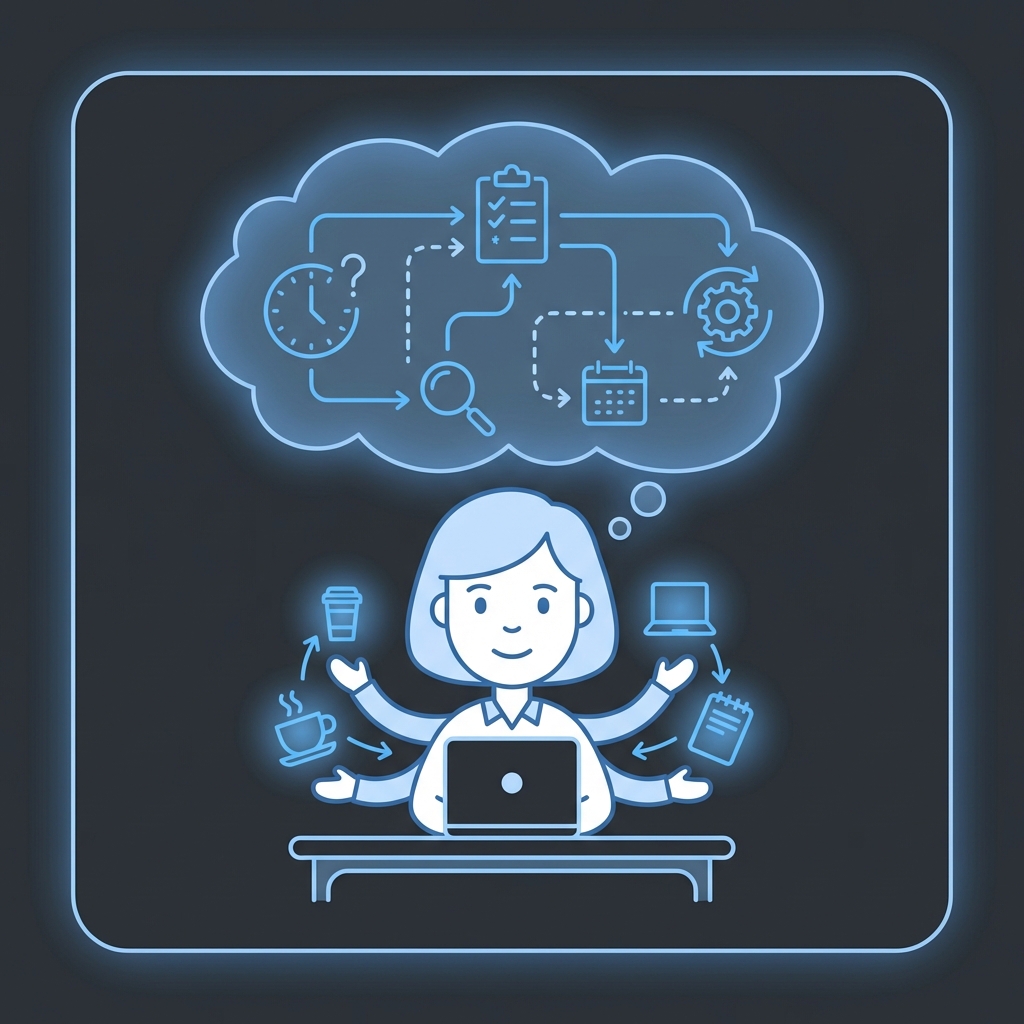
There’s a particular exhaustion that comes from work no one sees. It’s not the exhaustion of checking items off a to-do list or powering through a demanding project. It’s the bone-deep tiredness that settles in when you realize you’ve spent your entire week preventing problems that never happened.
You stocked the medicine cabinet before flu season hit your house. You noticed the car’s gas tank hovering near empty before the morning school run. You caught the double-booked meeting before two important clients showed up at the same time. You remembered to buy birthday wrapping paper three weeks before your nephew’s party, avoiding the last-minute drugstore scramble.
The proof is in what didn’t happen. And because nothing went wrong, no one noticed the work at all.
The Architecture of Prevention
Anticipatory work is the cognitive labor of thinking three steps ahead. It’s scanning for potential problems, preparing for likely scenarios, and building buffers against the unexpected. It operates in the space between “everything’s fine” and “crisis mode” — working to ensure you never reach that second state.
This isn’t the same as planning or organizing, though those skills overlap. Planning assumes you know what’s coming. Anticipatory work assumes you don’t, so you prepare for multiple possibilities. It’s less “here’s what will happen” and more “here’s what could go wrong, and here’s what I’ll do about it.”
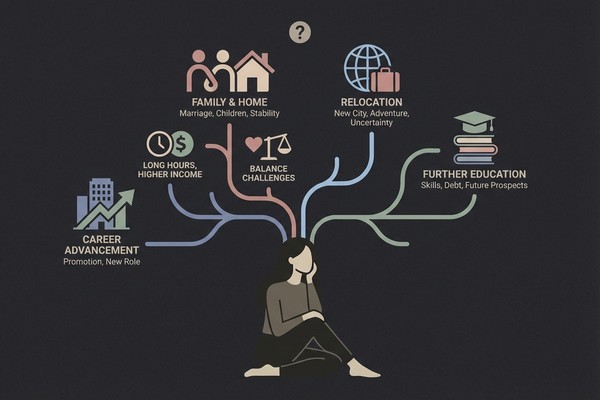
The skill lies not just in thinking ahead, but in knowing which things to think ahead about. Experience teaches you that the school will call about a sick kid on the day you have back-to-back meetings. That the grocery store will run out of your usual brand right when you need it most. That technology will fail at the worst possible moment. So you build redundancy into your systems before you need it.
But here’s the cruel irony: when anticipatory work succeeds, it becomes invisible. The crisis that didn’t happen leaves no evidence of the effort that prevented it. There’s no dramatic rescue story, no moment of triumph, no recognition for averting disaster. Just the quiet satisfaction of a day that went smoothly because you thought ahead.
The Blame Game
When anticipatory work fails, however, it becomes hypervisible. Suddenly everyone notices that you didn’t think to pack extra snacks for the delayed flight, didn’t anticipate the traffic jam, didn’t predict that the babysitter would cancel last minute. The absence of foresight gets scrutinized in a way that its presence never does.
This creates an impossible standard. You’re expected to anticipate everything, but you get no credit when you do. The baseline assumption is that things should just work out, that problems shouldn’t arise in the first place. When they do, it must be because someone wasn’t thinking ahead properly.
The exhaustion isn’t from the work itself — it’s from doing essential work that no one acknowledges as work.
The weight of this expectation is crushing. It means you can never really relax, never assume that someone else is handling the forward-thinking. Because if something goes wrong, the question won’t be “how could we have prevented this?” It will be “why didn’t you see this coming?”
The Weekly Inventory
Consider what you prevented just this week. Maybe you moved the important documents before the toddler could reach them. Maybe you bought groceries a day early because you remembered the store would be closed for the holiday. Maybe you followed up on that insurance claim before it got lost in bureaucratic limbo.
These aren’t dramatic saves. They’re the small acts of foresight that keep daily life running smoothly. You remembered to charge everyone’s devices before the power outage. You packed the umbrella before the weather turned. You scheduled the vet appointment before the pet’s medication ran out.
Each of these represents cognitive work — the mental effort of holding multiple timelines in your head, tracking different people’s needs, and staying alert to potential problems. It’s like running background processes on a computer, constantly scanning for issues that might need attention.
The cumulative effect is mental fatigue that’s hard to explain to others. You haven’t been running around all day, but your brain has been working overtime. You’ve been the early warning system for your household, your workplace, your social circle. And early warning systems never get to rest.
The Scanning Mind
Living in anticipatory mode means your brain is always partially occupied with “what if” scenarios. What if the meeting runs long and you miss pickup? What if the client changes their mind about the deadline? What if the kids get sick right before the work trip? What if the contractor doesn’t show up on the scheduled day?
This constant scanning creates a particular kind of mental load. It’s not the focused attention of working on a specific task, but the diffuse attention of monitoring multiple systems at once. You’re simultaneously tracking the family calendar, the work deadlines, the household supplies, the social obligations, and the seasonal transitions that affect everything else.
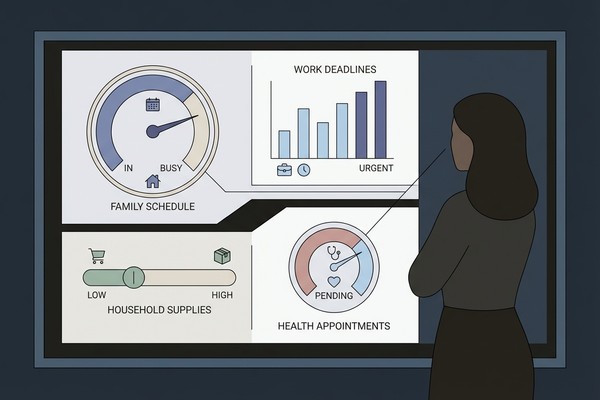
The mental bandwidth required for this kind of monitoring is enormous, but it’s rarely acknowledged as real work. It feels like worrying, not working. It feels like overthinking, not essential planning. But remove this function from a family or workplace, and watch how quickly things start falling apart.
The Gender of Anticipation
Let’s be honest about who typically carries this load. Research consistently shows that women do more anticipatory work, both at home and at work. They’re more likely to remember the social obligations, track the family’s health needs, notice when supplies are running low, and prepare for seasonal transitions.
This isn’t because women are naturally better at this kind of work, though they’re often socialized to believe they are. It’s because anticipatory work tends to fall to whoever cares most about the consequences of things going wrong. When you’re the one who gets blamed for the forgotten birthday gift or the empty refrigerator, you become the one who thinks ahead about birthday gifts and grocery shopping.
The invisible nature of this work makes it particularly insidious. Because no one sees the effort that goes into prevention, it’s easy to assume it happens automatically. It becomes expected rather than appreciated, assumed rather than acknowledged.
The Cost of Constant Vigilance
The real toll of anticipatory work isn’t just the time and mental energy it requires. It’s the way it changes how you move through the world. You can’t fully relax because part of your brain is always on duty, scanning for potential problems. You can’t be fully present because you’re simultaneously tracking what might need attention later.
This hypervigilance becomes a habit that’s hard to break. Even when you try to delegate or step back, your brain keeps running its monitoring programs. You’ve trained yourself to be the backup system for everything, and backup systems don’t get to power down.
You’ve become the person who thinks ahead so others don’t have to — and now you can’t figure out how to stop.
The irony is that this essential skill — the ability to think systemically, prepare for contingencies, and prevent problems before they escalate — is exactly what organizations claim to value. Strategic thinking, they call it. Risk management. Proactive leadership. But when it happens in daily life, managing the logistics that keep everything running, it’s dismissed as basic maintenance rather than recognized as sophisticated cognitive work.
Making the Invisible Visible
The first step toward changing this dynamic is naming the work for what it is. Anticipatory work is skilled labor that requires pattern recognition, systems thinking, and emotional intelligence. It’s the ability to hold multiple variables in your head while tracking how they might interact with each other over time.
When you prevent a scheduling conflict, you’re not just remembering dates — you’re modeling how different people’s needs and constraints intersect. When you stock up before a busy period, you’re not just shopping — you’re predicting resource consumption under changing conditions. When you follow up on important communications, you’re not just being thorough — you’re managing the reliability of systems that others depend on.
This work deserves recognition, not just from others but from yourself. The next time you prevent a problem before it happens, pause to acknowledge the cognitive effort that went into that prevention. You didn’t just get lucky. You thought ahead, prepared appropriately, and executed a solution before anyone else even knew there was a problem to solve.
The Path to Sustainable Support
Recognizing anticipatory work as legitimate labor opens up new possibilities for how to handle it. Instead of trying to optimize your ability to think ahead for everyone, you can start asking different questions. What if you didn’t have to be the only one scanning for problems? What if the mental work of prevention could be distributed or supported?
This is where truly helpful tools distinguish themselves from productivity theater. Instead of asking you to input more information or follow more systems, they take on the scanning function themselves. They notice patterns, track deadlines, and flag potential issues before they require your attention.
The goal isn’t to make you better at holding everything in your head. It’s to help you hold less while ensuring that nothing important falls through the cracks. Because the most sustainable solution to anticipatory work isn’t perfecting your ability to do it — it’s finding support that can share the cognitive load of prevention.
Your brain doesn’t need to be the early warning system for everything. Sometimes the most strategic thing you can do is let something else handle the scanning, so you can focus on what actually requires your unique human insight and care.
The work you do to prevent problems matters. The crises you avert through careful attention and thoughtful preparation are real accomplishments, even if no one else notices them. And recognizing this work as valuable is the first step toward finding sustainable ways to support it.
This article was created with collaboration between humans and AI—we hope you ❤️ it.