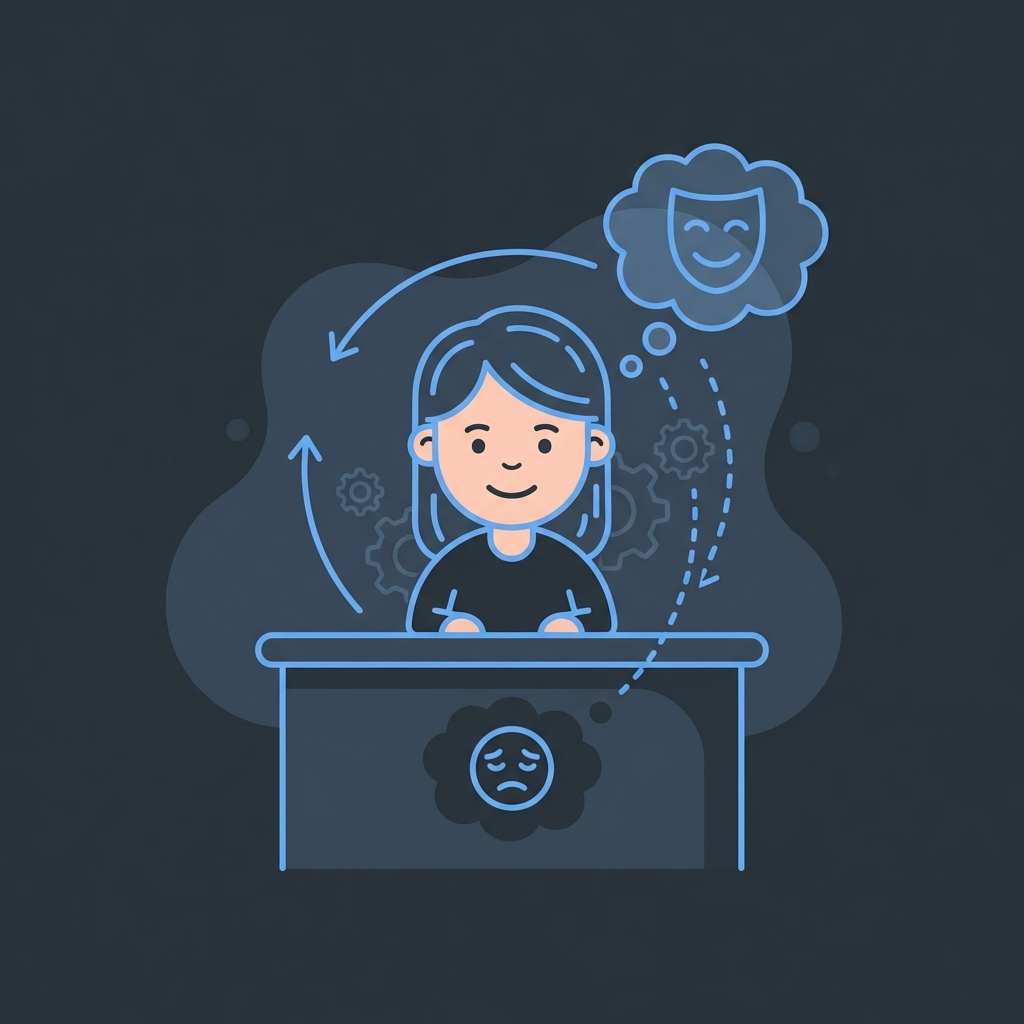
There’s a moment that happens in most households around 6 PM. Someone walks through the door carrying the weight of their day, and within seconds, another person has already performed a dozen micro-calculations. Is he stressed? Should I mention the broken dishwasher now or wait? How do I bring up the school thing without adding to his load? The kids are loud—should I redirect them or let it slide?
This invisible choreography happens thousands of times a day, and it has a name: emotional labor. It’s the work of managing feelings, anticipating needs, and maintaining the emotional temperature of a space so that others can simply exist within it.
Most people think emotional labor means “being supportive” or “caring about feelings.” But it’s far more specific than that. It’s the active, ongoing work of emotional management that someone does so others don’t have to do it themselves.
The Daily Architecture of Feelings
Emotional labor shows up in the smallest moments. It’s reading your teenager’s face when they walk in from school and knowing exactly how to calibrate your response—enthusiastic enough to show interest, but not so much that they retreat. It’s absorbing your partner’s work frustration without adding your own, even when you’ve had an equally difficult day. It’s being the family’s emotional weather station, constantly monitoring atmospheric pressure and adjusting accordingly.
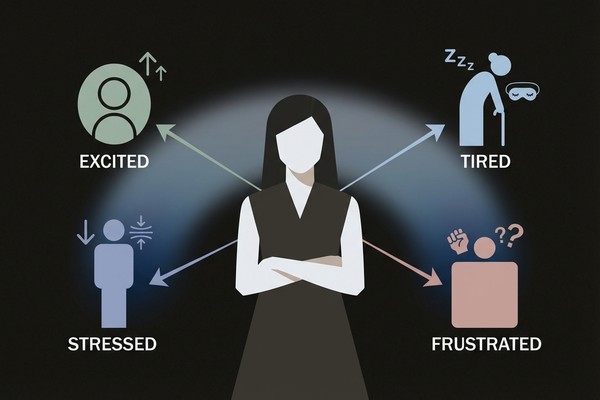
In workplaces, it looks like being the person who notices when someone seems off and gently checks in. It’s smoothing over tension in meetings by redirecting conflict or making light comments that defuse awkwardness. It’s remembering that Sarah’s going through a divorce and might need extra patience, or that Mike gets defensive about budget discussions and requires a softer approach.
The exhausting part isn’t caring about people—most of us want to do that. The exhausting part is being the designated emotional manager, the person responsible for maintaining everyone else’s emotional equilibrium while managing your own.
This work is invisible by design. When it’s done well, no one notices it happened. The proof is in what didn’t happen—the fight that didn’t escalate, the mood that didn’t spiral, the tension that never reached a breaking point.
The most successful emotional labor is the kind that renders itself invisible.
The Gender Gap in Emotional Management
Let’s name what we all know: this work falls disproportionately on women. Not because women are naturally better at it, but because we’ve been socialized to see emotional caretaking as our responsibility. We’re praised for being “naturally nurturing” and criticized when we’re not constantly attuned to everyone else’s emotional needs.
Men aren’t exempt from emotional labor, but they’re more likely to be the recipients than the providers. They’re more likely to have someone else managing the emotional climate around them, anticipating their needs, buffering them from interpersonal friction.
This creates a strange dynamic where one person becomes responsible for everyone’s emotional experience. The emotional laborer becomes a human shock absorber, taking on stress, frustration, and tension so others can remain comfortable.
The mental load of this is staggering. You’re not just managing your own emotions—you’re managing everyone else’s, plus the complex web of relationships between them. You’re running constant background calculations about who needs what, when, and how to deliver it without creating more problems.
Always On, Never Off
What makes emotional labor particularly draining is that it requires you to be perpetually “on.” There’s no clocking out from reading the room, no break from monitoring everyone’s emotional state. Even when you’re physically alone, you’re often mentally preparing for the next interaction—thinking about how to approach a sensitive topic or strategizing how to handle someone’s bad mood.
This constant vigilance is exhausting in a way that’s hard to articulate. It’s not dramatic or crisis-driven; it’s the steady, relentless work of emotional maintenance. Like tending a garden that never stops growing, or keeping a fire at exactly the right temperature—it requires constant, subtle adjustments.
The person doing this work often can’t fully relax because they’re always partially responsible for everyone else’s emotional experience. They can’t have a complete emotional breakdown because someone needs to keep the system running. They can’t be entirely selfish with their emotional energy because others are depending on them to manage the interpersonal dynamics.
You can’t rest when you’re the designated emotional infrastructure.
When the System Breaks Down
What happens when emotional labor goes unrecognized and unshared? The person carrying it eventually hits a wall. They become resentful of always being the one who has to “handle” everything emotionally. They start withdrawing, doing less emotional management, and suddenly everyone notices—but only because things start falling apart.
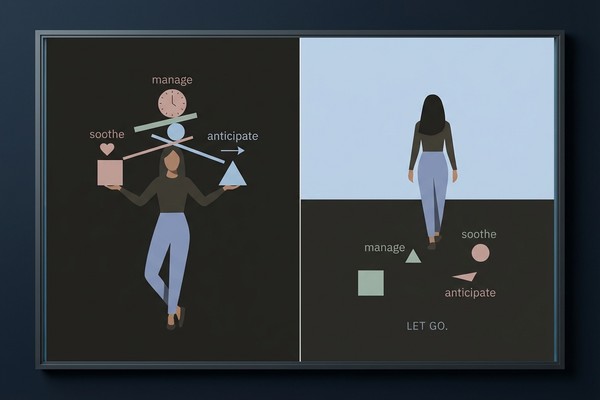
Relationships suffer because one person has been doing the emotional work of two (or more) people. The emotional laborer burns out from constantly prioritizing everyone else’s comfort over their own emotional needs. They may become less patient, less accommodating, less willing to absorb other people’s stress—and suddenly they’re seen as the problem.
This is the cruel irony of emotional labor: when you do it well, it’s invisible. When you stop doing it, you’re blamed for the chaos that follows.
Families and teams that rely too heavily on one person’s emotional management become fragile. They lack resilience because they’ve never developed the skills to handle their own emotional regulation or interpersonal dynamics. When their designated emotional manager is unavailable—sick, overwhelmed, or simply taking a break—everything falls apart.
The Recognition Challenge
Here’s a question worth sitting with: What’s one recurring emotional labor task you do without being asked? Maybe it’s always being the one to smooth things over after an argument. Maybe it’s consistently checking in on family members’ emotional states and adjusting your behavior accordingly. Maybe it’s being the designated conflict-avoider, redirecting tension before it becomes a problem.
Most people doing emotional labor can immediately identify several examples. Most people receiving it struggle to name even one, not because they don’t benefit from it, but because invisible work is, by definition, hard to see.
The first step toward more equitable emotional labor isn’t necessarily changing who does what—it’s recognizing that this work exists and has value. It’s acknowledging that managing emotions, reading rooms, and maintaining interpersonal harmony requires skill, energy, and constant attention.
Building Systems That Share the Load
This is where the conversation gets interesting for those of us thinking about mental load more broadly. Emotional labor, like other forms of invisible work, tends to concentrate in one person because we lack systems for distributing it fairly.
What would it look like to create structures that don’t require one person to be the emotional manager for everyone else? What if emotional awareness and interpersonal skills were seen as everyone’s responsibility, not just the designated caretaker’s?
The goal isn’t to eliminate emotional labor—it’s to stop concentrating it in one person.
Some families and teams are experimenting with this. They’re naming emotional labor explicitly and discussing how to share it. They’re teaching emotional regulation skills to everyone, not just expecting one person to manage everyone else’s emotions. They’re creating systems where multiple people take turns being the emotional weather station, rather than defaulting to the same person every time.
The technology we’re building at Backlit touches on this too. When systems can remember, track, and follow up on the logistical details of life, it frees up mental space that often gets consumed by emotional management. When you’re not constantly worried about forgetting something important, you have more capacity for genuine emotional connection rather than emotional labor.
But the deeper work is cultural. It’s recognizing that emotional labor is labor, that it has costs, and that distributing it more fairly makes everyone more emotionally resilient. It’s understanding that the person who’s always managing everyone else’s feelings deserves to have their own feelings managed sometimes too.
The hidden workday of emotional labor happens in plain sight, in the countless small moments where one person adjusts, accommodates, and absorbs so others don’t have to. Making it visible is the first step toward making it sustainable.
This article was created with collaboration between humans and AI—we hope you ❤️ it.