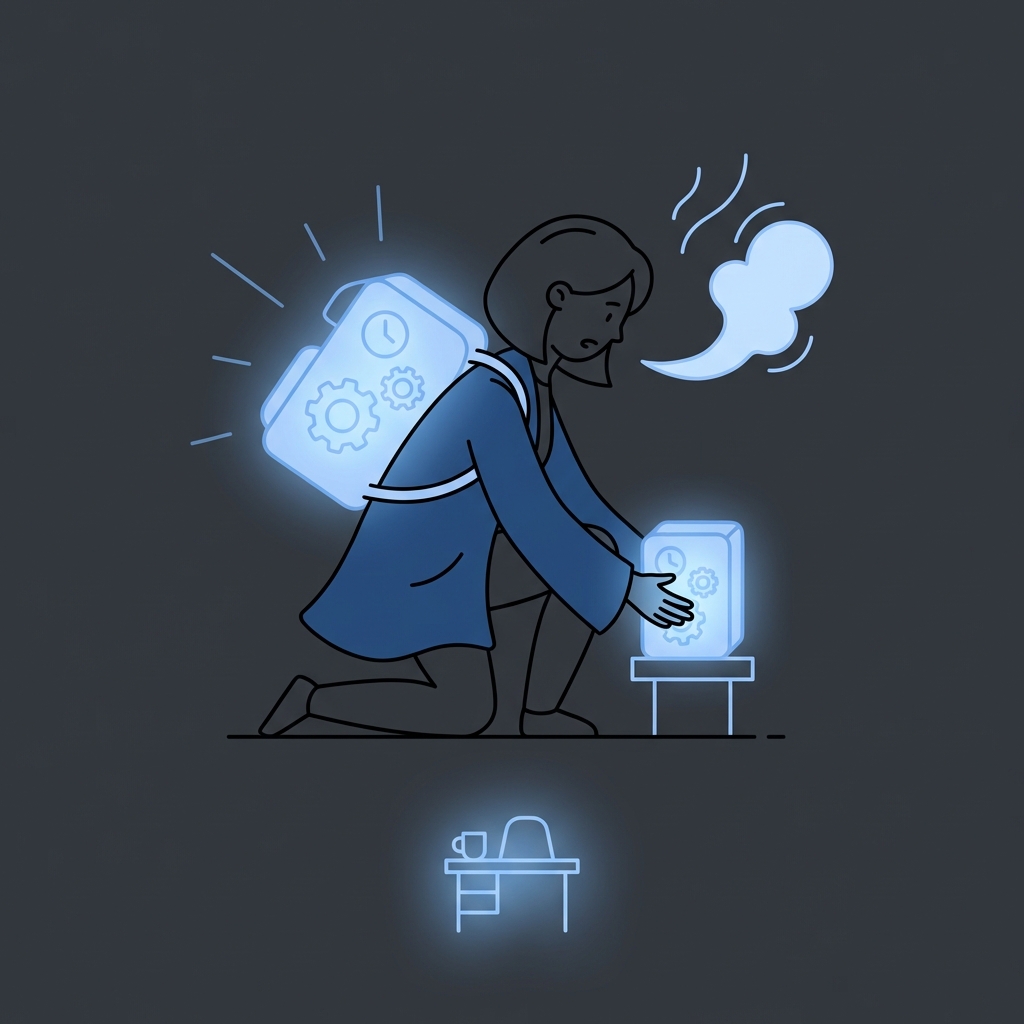
There’s a moment that happens when you’re carrying too much—when the invisible weight of remembering everything finally becomes visible. Maybe it’s when you’re standing in the kitchen at 9 PM, mentally walking through tomorrow’s schedule while loading the dishwasher, and you realize you’ve been the family’s operating system for so long that you can’t remember what it felt like to just be present.
We’ve spent time exploring the hidden workday that runs parallel to your visible one. The emotional labor of reading the room and managing everyone’s feelings. The information management of being the family’s search engine and calendar. The anticipatory work of seeing around corners and preventing problems before they happen. The coordination required to keep multiple lives running smoothly while appearing effortless.
But here’s what we haven’t talked about yet: what happens when you’re not the one doing all of this anymore.
The Fantasy of True Relief
Most conversations about “getting help” still leave you as the manager. Your partner starts doing bedtime, but you’re still the one who notices when the kids outgrow their pajamas. You hire a house cleaner, but you’re still tracking which rooms need attention and making sure the path is clear. You use a meal planning app, but you’re still the one who knows that Tuesday is soccer practice and Thursday is when your daughter refuses to eat anything green.
This isn’t really relief—it’s delegation with a side of quality control.
Real relief would mean not being the default holder of information. It would mean walking into your house and not automatically scanning for what needs attention. It would mean making plans without running a background process on how those plans affect everyone else’s schedule.
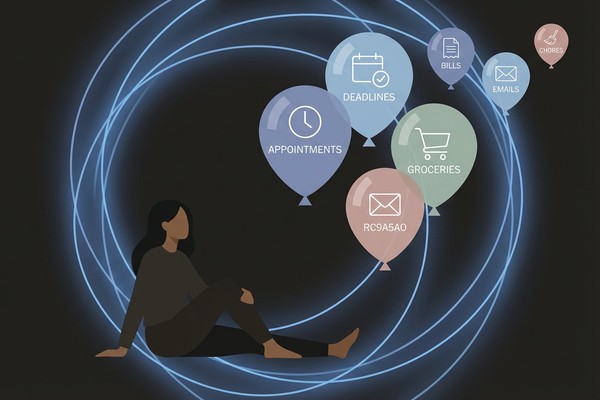
The deepest relief isn’t in doing less—it’s in holding less.
Think about the last time you were sick enough to stay in bed. Not the kind of sick where you’re still checking email, but genuinely, completely down for the count. Do you remember that strange sensation of watching life continue without your input? The mild panic followed by the surprising realization that things actually kept moving?
That’s a tiny taste of what integrated support feels like. Not you managing someone else’s execution of your plan, but genuinely not being the one who has to hold the plan at all.
When the Background Process Finally Stops
Sarah, a marketing director and mother of two, described it perfectly: “I didn’t realize how much mental bandwidth I was using just to track everything until I stopped having to. It was like I’d been running a program in the background for years, and suddenly that processing power was available for other things.”
She wasn’t talking about productivity. She was talking about presence.
When you’re not the person who has to remember that the dog needs his medication and the car needs an oil change and your mother’s birthday is next week, something interesting happens. You start noticing things you’ve been too cognitively loaded to see. The way afternoon light hits your kitchen counter. The specific sound your kid makes when they’re genuinely delighted. The fact that you actually enjoy the work you do when you’re not worried about everything else you’re supposed to be tracking.
This isn’t about having more time—though that happens too. It’s about having more of yourself available for the life you’re actually living.
Why Most “Help” Doesn’t Actually Help
The problem with most support systems is that they optimize the execution while leaving the cognitive ownership intact. They make you better at managing rather than removing the need to manage.
Your smart home can turn off the lights, but you’re still the one who has to remember to set up the automation. Your grocery delivery service can bring food to your door, but you’re still doing the meal planning and inventory management. Your family calendar app can send everyone notifications, but you’re still the one inputting and updating all the information.
These tools treat symptoms, not causes. They speed up the visible work while ignoring the invisible work that makes it all possible.
True support doesn’t make you a more efficient manager—it removes the need for you to be the manager at all.
The difference is profound. When someone else truly holds something, you don’t have to think about it. You don’t have to check if it’s being handled correctly. You don’t have to worry about what happens if the system breaks down. It’s genuinely off your plate, not just moved to a different section of your plate.
What Integrated Support Actually Looks Like
Imagine walking through your day without the constant background hum of things you need to remember to remember. No mental sticky notes about follow-ups and deadlines. No scanning for what might be falling through the cracks.
Instead, things surface when they need your attention, not before. Decisions come to you when they’re ready to be made, not when they first need to be tracked. Follow-ups happen without you having to remember to follow up.
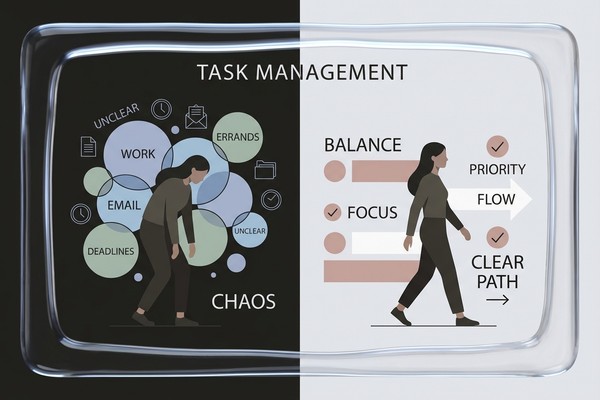
This kind of support is ambient and anticipatory. It works in the background the same way your mental load currently does, except it’s not using your brain to do it. It notices patterns, tracks dependencies, and surfaces information at the right time without requiring you to set up and maintain the system that makes this possible.
When your colleague mentions they’ll send you something “early next week,” you don’t have to remember to check if they actually did. When you tell your kids they can have friends over “sometime soon,” you don’t have to carry the mental note to follow up and coordinate schedules. When you commit to something that depends on other people’s input, you don’t have to be the one tracking whether that input actually arrives.
From Manager to Participant
The most radical shift isn’t in what you do—it’s in what role you play in your own life. Instead of being the default manager of everything, you become a participant in systems that actually work without your constant oversight.
This doesn’t mean you lose control or agency. It means your agency gets directed toward choices that matter rather than maintenance that doesn’t. You decide what you want, but you don’t have to remember to want it. You make commitments, but you don’t have to be the system that ensures they happen.
Think about the difference between being the event planner and being the guest at your own party. Both roles matter, but only one of them allows you to actually enjoy the party.
When you’re not the person who holds everything, you can be present for the things that are actually happening. You can respond to opportunities instead of just managing obligations. You can make decisions from a place of clarity rather than overwhelm.
The mental space that opens up isn’t just available for more tasks—though you could use it that way if you wanted to. It’s available for deeper thinking, creative work, spontaneous connection, or simply the experience of being alive without a constant to-do list running in the background.
The Ripple Effects of Real Relief
When one person in a system stops carrying the invisible load, it changes the entire dynamic. Kids learn to track their own commitments because there isn’t someone else doing it for them. Partners develop their own relationship with household rhythms because they’re not defaulting to your oversight. Work relationships become more direct because colleagues can’t rely on you to remember everything they forgot to mention.
This isn’t about creating chaos by withdrawing your support—it’s about creating space for other people to step into full ownership rather than assisted execution of your plans.
The relief extends beyond you. When you’re not constantly tracking and anticipating, other people get to experience the satisfaction of handling things themselves. They develop their own systems and relationships with responsibility rather than operating as extensions of your mental load.
The goal isn’t to do everything better—it’s to hold less so you can live more.
A Different Kind of Tomorrow
Picture tomorrow morning without the mental inventory that usually starts before you’re fully awake. No scanning through what needs to happen today, who needs to be where, what you might be forgetting. No background anxiety about the things you know you should be tracking but haven’t written down yet.
Instead, you wake up to a day that’s already being held by something other than your memory. The important things surface when they need your attention. The coordination happens without requiring your oversight. The follow-ups happen without you having to remember to follow up.
This isn’t a fantasy about having no responsibilities. It’s a vision of having responsibilities that don’t require you to be the infrastructure that makes them possible.
You’re still making decisions, still caring about outcomes, still engaged with the people and projects that matter to you. But you’re doing all of this from a place of mental spaciousness rather than cognitive overload.
The difference between managing your life and living it isn’t just semantic—it’s the difference between being the system and being supported by the system.
Your Turn to Imagine
Here’s what I want you to consider: pick one area of your life where you’re currently the person who holds everything. Maybe it’s your family’s schedule. Maybe it’s project coordination at work. Maybe it’s maintaining relationships with extended family or keeping track of your household’s needs.
Now imagine what it would feel like if you weren’t the holder of that particular load. Not because you stopped caring about it, but because something else—some other system, some other intelligence—took on the work of remembering, tracking, and anticipating in that space.
What would you do with the mental bandwidth that would free up? How would your relationship to that area of your life change if you could engage with it as a participant rather than as its operating system?
The answer to that question isn’t just about productivity or efficiency. It’s about what becomes possible when you’re not spending so much of your cognitive energy on the infrastructure of living that you miss out on the actual experience of being alive.
Relief isn’t just a feeling—it’s a return to yourself. And that return changes everything.
This article was created with collaboration between humans and AI—we hope you ❤️ it.