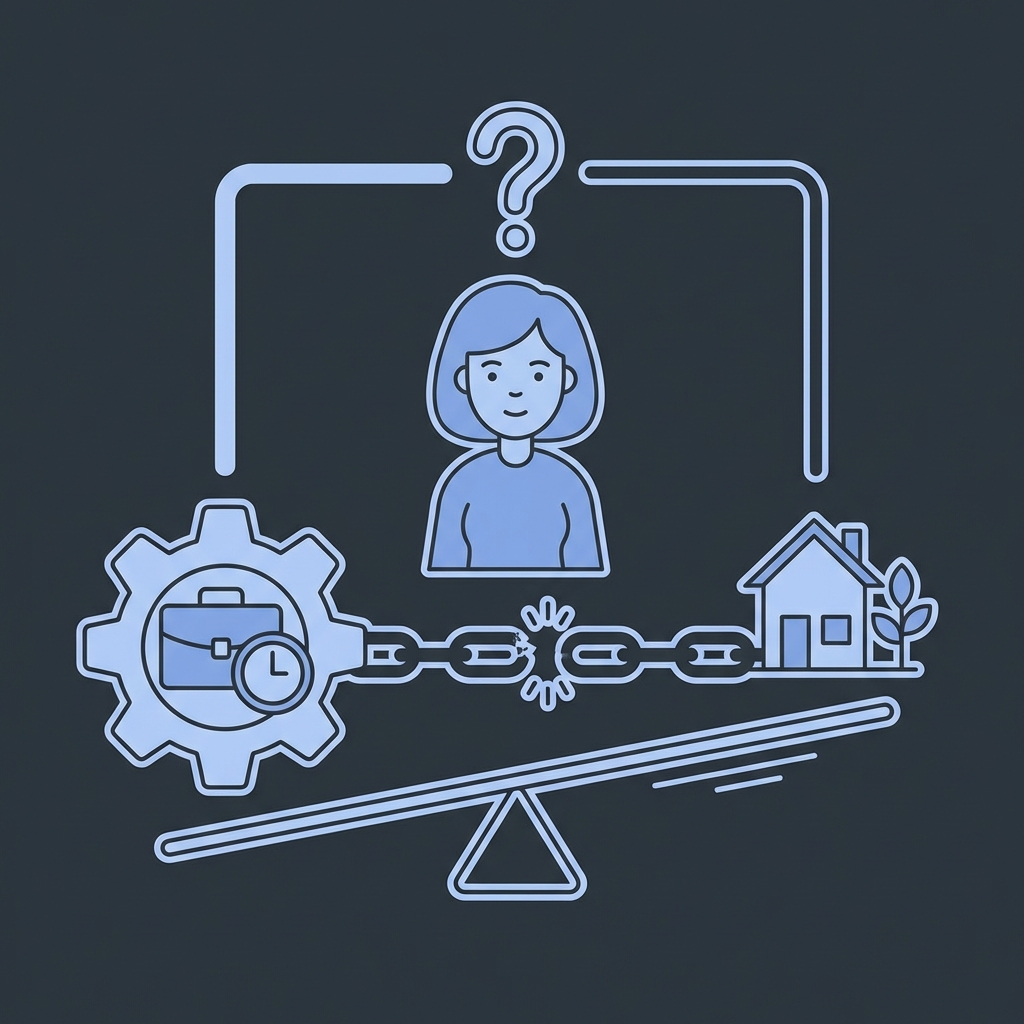
You know that sinking feeling when someone asks how your work-life balance is going? That moment when you realize you’re supposed to have achieved some mythical state of equilibrium, but instead you’re just trying to keep all the plates spinning without anything crashing to the floor?
The whole concept of work-life balance has become one of those phrases that sounds wise and aspirational, but when you actually try to live it, it feels like chasing smoke. That’s because balance, as a metaphor for how we manage our lives, is fundamentally flawed. It assumes a kind of stability and separation that simply doesn’t exist in real human experience.
The Problem with the Balance Metaphor
When we talk about balance, we’re borrowing from physics—the image of a scale with equal weights on both sides, perfectly still and stable. But life isn’t a scale. It’s more like a river, constantly moving, with currents that shift depending on the season, the weather, and what’s happening upstream.
The balance metaphor suggests that work and life are opposing forces that need to be carefully measured and counteracted. Too much work? Add more life. Feeling overwhelmed by personal responsibilities? Lean harder into professional achievement. But this framework misses something crucial: these domains aren’t separate entities competing for your attention. They’re interconnected parts of a single, complex system—you.
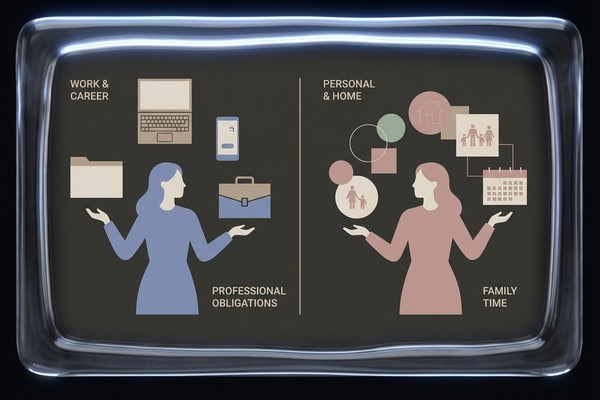
Think about what actually happens in your day. You’re answering a work email while waiting for your kid’s soccer practice to end. You’re having a breakthrough idea for a project while doing dishes. You’re texting your partner about dinner plans between meetings. The boundaries aren’t clean lines—they’re more like watercolors bleeding into each other on wet paper.
The balance myth also implies that the goal is stasis. But stasis in life often signals stagnation, not success. The seasons when everything feels perfectly balanced are usually either unsustainably calm (the calm before the storm) or periods when you’re not growing or being challenged in meaningful ways.
What Integration Actually Looks Like
Integration acknowledges what balance denies: that you’re one person living one life, not a collection of separate identities that need to be managed like different bank accounts. Instead of trying to wall off work from life, integration asks a different question: How can these domains support each other?
This doesn’t mean letting work colonize every corner of your existence. It means recognizing that sometimes your personal values can guide professional decisions, and sometimes professional skills can solve personal challenges. It means designing systems that work across your whole life, not just within artificial boundaries.
For instance, maybe you batch your grocery shopping and meal planning on Sunday mornings when your brain is fresh, treating it with the same strategic thinking you’d apply to a work project. Or maybe you use the communication skills you’ve developed at work to have better conversations with your family. Integration looks for synergies instead of assuming conflict.
> Integration asks: How can these domains support each other, rather than compete?
The key difference is that integration doesn’t promise equilibrium. It promises coherence. Your choices across different areas of life can reflect your values and priorities without needing to be perfectly proportioned at every moment.
The Guilt Machine of Perfect Balance
Here’s what the balance obsession actually creates: a constant sense of falling short. When work is demanding, you feel guilty about neglecting your personal life. When you prioritize family time, you worry about falling behind professionally. The balance framework turns every choice into evidence of failure somewhere else.
This guilt is particularly acute for working parents, especially mothers, who are often carrying the invisible mental load of managing household logistics while also trying to advance their careers. The balance metaphor suggests that if you just organized better or had better boundaries, you could achieve that perfect equilibrium. But the problem isn’t your organizational skills—it’s that you’re trying to solve a systems problem with an individual solution.
The truth is messier and more forgiving: some weeks, work needs more of you. Some seasons, family takes precedence. Some months, you’re focused on health or friendships or personal projects. This isn’t failure—it’s being human.
A Better Question: What Needs Protection?
Instead of asking “Am I balanced?” try asking “What needs protection this week?” This reframes the challenge from achieving perfect proportions to making intentional choices about where to focus your finite energy.
Maybe this week, your relationship needs protection because you and your partner have been ships passing in the night. Maybe next month, a work deadline requires you to be more present professionally. Maybe during your child’s first week of school, family logistics need extra attention.
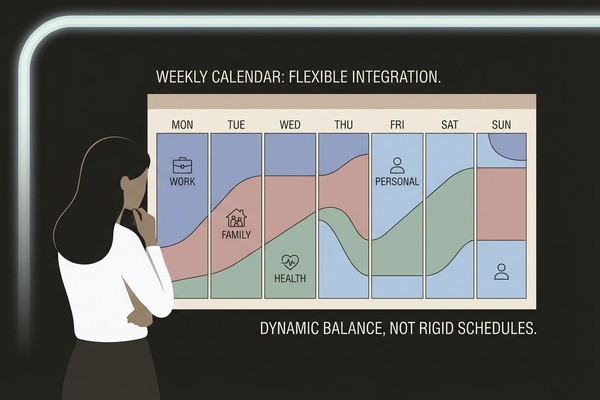
This approach acknowledges that your capacity isn’t infinite, but it also doesn’t assume that every domain deserves equal time and energy at every moment. It lets you be strategic about your choices instead of guilty about your limitations.
Protection also means setting boundaries—not between work and life, but around what matters most in any given period. Sometimes that means saying no to social commitments when work is intense. Sometimes it means leaving the office early when your kid needs you. The boundaries shift based on what you’re protecting, not on maintaining some abstract balance.
The Mental Load of Constant Recalibration
One of the hidden costs of the balance framework is the constant mental work of monitoring and adjusting. You’re not just doing your job and living your life—you’re also constantly evaluating whether you’re doing them in the right proportions. This meta-work of balance maintenance becomes its own source of mental load.
Integration reduces this cognitive burden by focusing on coherence rather than proportion. Instead of tracking time spent in each domain, you can focus on whether your choices align with your current priorities and values. This shift from accounting to alignment is surprisingly liberating.
It also means you can stop apologizing for being human. When work is demanding, you don’t need to feel guilty about ordering takeout. When you’re present for your family, you don’t need to apologize for not checking email. Integration assumes that you’re making the best choices you can with the information and energy you have.
Support That Thinks Across Your Whole Life
The tools and systems that actually help with life management understand integration intuitively. They don’t try to separate your work tasks from your personal responsibilities—they help you manage the whole messy reality of being one person with multiple roles and commitments.
This is where most productivity systems fall short. They’re designed around the balance myth, assuming that you can compartmentalize your responsibilities and manage them separately. But real life is more interconnected than that. The doctor’s appointment affects your work schedule. The work deadline impacts your family dinner plans. The school pickup time determines when you can schedule that important call.
The best support systems don’t try to separate your life into neat categories—they help you manage the beautiful mess of being wholly human.
What you need is support that thinks across domains, that understands that managing your life isn’t about achieving perfect balance but about making coherent choices that reflect your values and priorities. Support that reduces the mental load of constant recalibration and lets you focus on what actually matters.
Living Integrated
Integration isn’t about having it all or doing it all perfectly. It’s about recognizing that you’re one person living one complex, interconnected life, and designing systems and making choices that honor that reality. It’s about letting go of the impossible standard of perfect balance and embracing the more achievable goal of intentional coherence.
This shift from balance to integration isn’t just semantic—it’s liberating. It frees you from the guilt of never being perfectly proportioned and lets you focus on what actually serves your life as a whole. It acknowledges that some seasons will be work-heavy, others family-focused, and that this natural rhythm is a feature of a full life, not a bug to be fixed.
The goal isn’t to eliminate the complexity of modern life but to navigate it with more grace and less guilt. Integration offers a framework for doing exactly that—not by promising perfect balance, but by helping you make choices that feel coherent and sustainable across the whole beautiful mess of being human.
This article was created with collaboration between humans and AI—we hope you ❤️ it.