It happened on a Tuesday. The permission slip was due that morning—the one for the field trip you’d circled on the calendar three weeks ago, the one you’d mentally noted every time you passed the kitchen counter where it sat. But somehow, in the morning rush of lunches and backpacks and “did you brush your teeth,” it never made it into the folder. Your child came home deflated, the only one who couldn’t go.
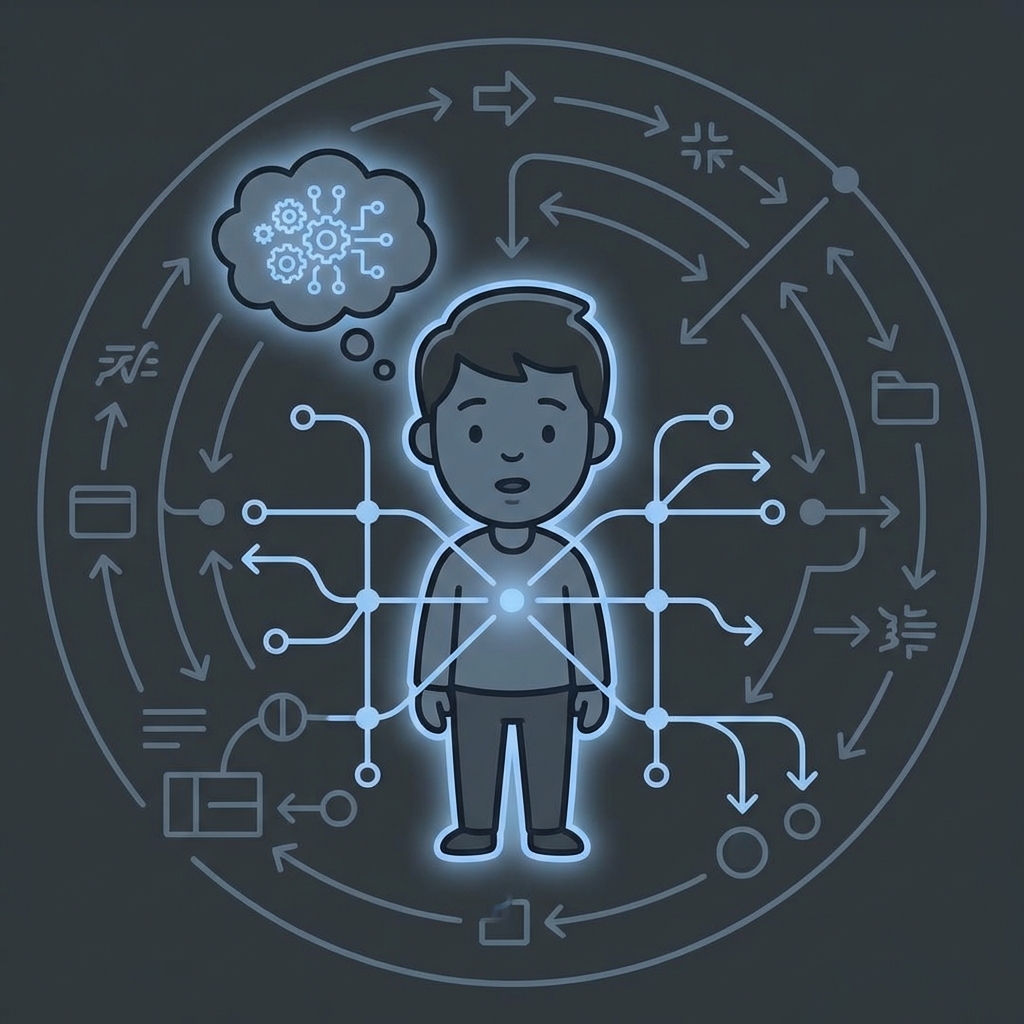
That’s when it hit you. Not the guilt—you’d felt that plenty of times before. This was different. This was the cold, clarifying realization that you weren’t just dropping balls. You were the system. Every reminder, every deadline, every moving piece that kept your family’s life functioning—it all lived in your head. And when your head got full or distracted or simply human, things fell apart.
You are the integration layer between all the disconnected pieces of modern life. You’re the one who remembers that the car registration expires next month, that your partner has a big presentation Thursday so maybe don’t schedule the plumber that day, that your mother-in-law’s birthday is coming up and someone should probably order flowers. You’re the human API connecting the school’s communication system with the family calendar with the work schedule with the grocery list with the social obligations.
The Weight of Being Everyone’s Memory
The realization doesn’t come all at once. It builds slowly, like water behind a dam. You start noticing how often people turn to you with questions: “When is that thing again?” “Did you remember to…?” “What was the name of that place we went to?” You become the family’s external hard drive, storing not just your own commitments but everyone else’s too.
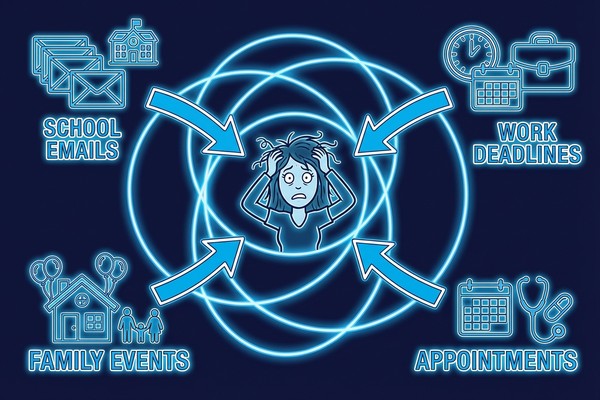
What makes this particularly exhausting is that being the system is invisible work. When everything runs smoothly—when the birthday gifts arrive on time, when the doctor’s appointments don’t conflict with work meetings, when the kids have what they need for school—it looks effortless. The proof isn’t in what you did; it’s in what didn’t go wrong.
The proof is in what didn’t happen.
But when something slips through the cracks, suddenly everyone notices. The system failed, which means you failed, because you are the system.
The Emotional Cocktail
When this reality fully hits, the emotional response is complex. There’s anger—why is this all on me? There’s grief for the mental space you’ve lost, the cognitive bandwidth that’s constantly occupied by other people’s needs and schedules. There’s exhaustion from the relentless nature of it all; being the system means you’re never really off duty.
But there’s also, strangely, relief. Relief in naming what you’ve been feeling but couldn’t articulate. Relief in understanding why you feel so tired even when you haven’t “done” much. The mental load of tracking, remembering, and coordinating is real work—it’s just work that nobody sees or acknowledges.
Some people feel a twisted sense of pride in being indispensable. “I’m the only one who knows where everything is,” becomes both complaint and identity. But that pride is usually masking a deeper fear: what happens if I stop being the system? Will everything fall apart? Will anyone step up?
How We Got Here
This wasn’t always how families functioned. Previous generations had more structured, predictable rhythms. There were fewer choices to manage, fewer systems to integrate, fewer moving pieces to track. Communities were smaller and more connected. Extended families lived closer. The cognitive load was distributed differently.
Modern life changed all that. We have more flexibility, which means more decisions. We have more opportunities, which means more scheduling. We have more tools and systems, which paradoxically means more integration work—someone has to connect the school app with the family calendar with the work schedule with the carpool coordination.
Technology promised to make this easier, but often it just shifted the burden. Instead of one family calendar on the kitchen wall, we have multiple digital calendars that need to be synced. Instead of calling the school when we have questions, we get constant streams of emails and app notifications that need to be processed and acted upon.
The default assumption became that someone in the family would handle the integration work. And that someone, statistically speaking, is usually the woman. Not because women are naturally better at remembering things, but because someone has to do it, and gendered expectations about caregiving and household management mean it often falls to her.
Reframing the Need
Here’s what productivity culture gets wrong: it treats needing systems as a personal failing. Can’t remember everything? You need better habits. Feeling overwhelmed by mental load? You need better organization. Struggling to keep track of everyone’s schedules? You need a better planner.
This framing is not just unhelpful—it’s harmful. It suggests that the problem is your capacity, not the impossible complexity of what you’re being asked to manage. It implies that with enough optimization and discipline, you should be able to hold it all in your head seamlessly.
But humans weren’t designed to be integration layers. We weren’t built to hold dozens of deadlines, hundreds of small tasks, and countless interdependencies in active memory while also doing our actual work and living our actual lives.
Needing systems isn’t a personal weakness—it’s a reasonable response to unreasonable complexity.
The problem isn’t that you can’t remember everything. The problem is that you’re being asked to remember everything. The problem isn’t that you need help—it’s that the help available still requires you to do most of the cognitive work.
Where Are You the System?
Take a moment to inventory where you serve as the integration layer in your life. Where are you the one who remembers, tracks, and connects the dots?
Maybe you’re the one who knows which kid has which activity on which day. Maybe you’re the one who tracks when bills are due and which ones have been paid. Maybe you’re the one who remembers that your partner mentioned wanting to try that new restaurant, so when you’re planning date night, you’re the one who suggests it.
Maybe at work, you’re the one who remembers what was discussed in last month’s meeting and how it connects to this month’s project. Maybe you’re the one who knows which vendor handles what and when their contracts are up for renewal. Maybe you’re the one who remembers that Sarah from accounting is going on maternity leave next month, which means the budget review timeline needs to shift.
These aren’t necessarily big, dramatic responsibilities. They’re often small, seemingly insignificant pieces of information and coordination. But they add up. Each one takes a small amount of cognitive space. Collectively, they can fill your entire mental bandwidth.
Imagining Something Different
What would it feel like to have a system that actually supported you instead of requiring you to support it? Not just a tool that helps you organize your thoughts, but something that could hold some of the cognitive load itself?
Imagine a system that could notice patterns in your family’s schedule and proactively remind you about potential conflicts. Something that could track the expiration dates and renewal deadlines that crowd your mental space. Something that could remember the small details and preferences that make relationships work smoothly, without you having to actively manage that information.
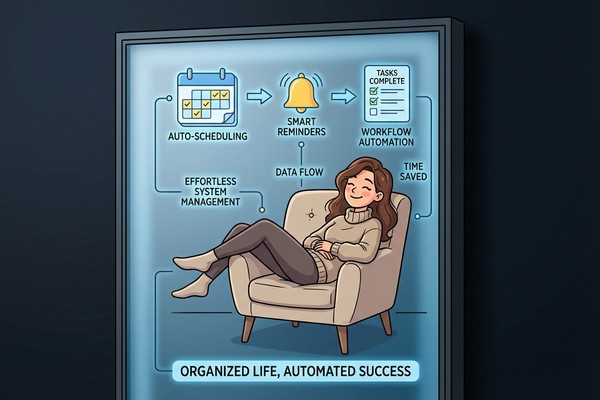
This isn’t about optimizing your productivity or helping you do more. It’s about reducing the mental load—helping you hold less so you have space for what actually matters to you.
The goal isn’t to make you more efficient at being the system. The goal is to build systems that don’t require you to be the system at all.
The Path Forward
Recognizing that you’ve become the integration layer is the first step. It’s not a comfortable realization, but it’s a necessary one. You can’t address a problem you haven’t named.
The next step is refusing to accept that this is just how things have to be. The mental load you’re carrying isn’t inevitable—it’s the result of systems that were designed without considering who would do the integration work. Those systems can be redesigned.
You deserve support that actually supports you. You deserve systems that reduce your cognitive burden rather than just reorganizing it. You deserve to have mental space for your own thoughts, your own priorities, your own life.
The moment you realized you were the system was heavy. But it was also the beginning of imagining something lighter.
This article was created with collaboration between humans and AI—we hope you ❤️ it.