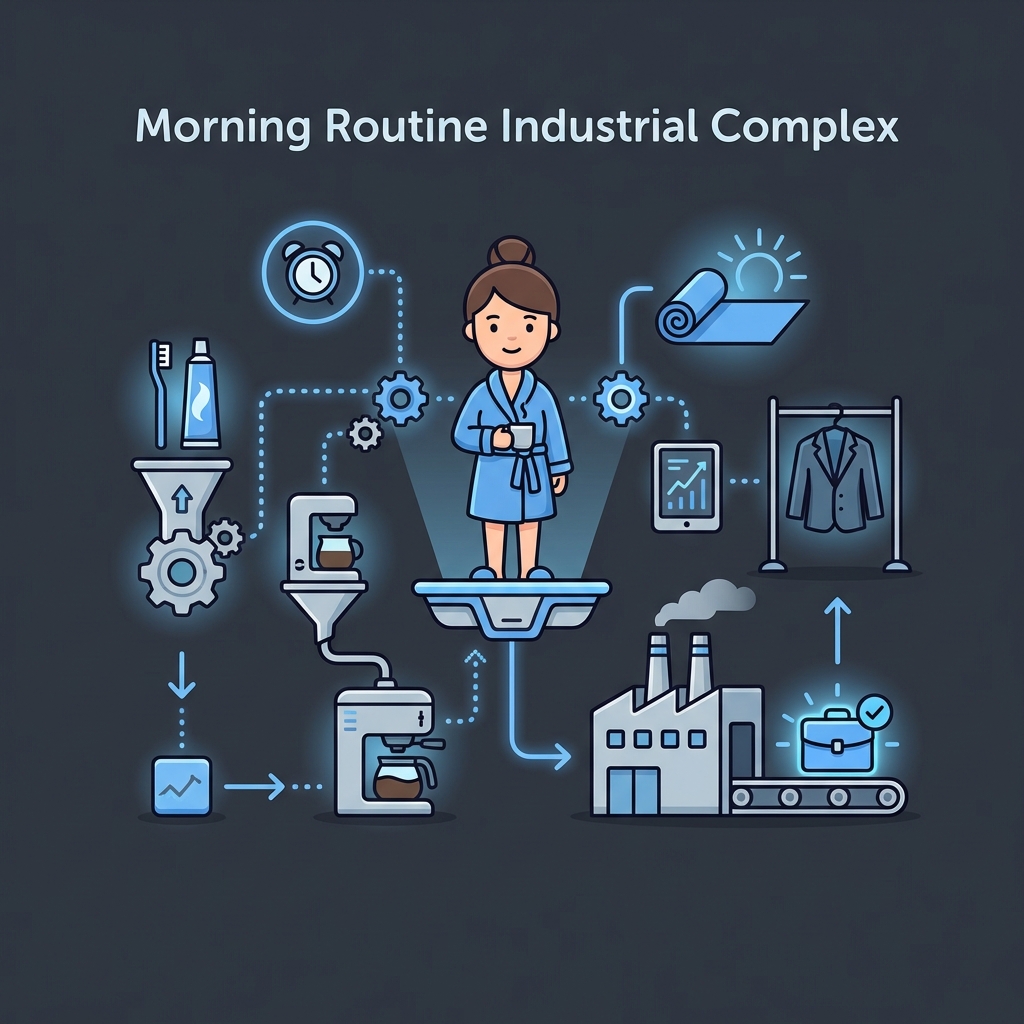
The internet wants you to believe that successful people wake up at 5 AM, meditate for twenty minutes, journal their gratitudes, drink lemon water, and complete a workout before most of us have hit snooze for the second time. The morning routine industrial complex has convinced us that the first two hours of our day determine our worth as human beings—and if we’re not optimizing every moment, we’re failing at life.
But here’s what they don’t tell you: most of these routines are designed by people whose biggest morning challenge is choosing between the home gym and the Peloton. They’re not accounting for toddlers who refuse to wear pants, night shifts that end at 6 AM, or the simple reality that some of us are not morning people and never will be.
The problem isn’t routines themselves—structure can genuinely help us feel more grounded and intentional. The problem is the moral superiority wrapped around them, the rigid perfectionism that turns helpful habits into another source of shame.
The Morality of Morning Optimization
Walk through any bookstore’s self-help section and you’ll find dozens of books promising that the right morning routine will transform your entire life. Wake up earlier, they say. Do more before breakfast. Earn your day.
This messaging isn’t accidental. Morning routines are the perfect productivity product because they tap into our deepest anxieties about control and worthiness. If you can just get your morning right, the logic goes, everything else will fall into place. Your day will be productive, your goals will be met, your life will have meaning.
The morning routine industrial complex sells control in a world that feels increasingly uncontrollable.
But this framing does something insidious: it makes morning routines about moral character rather than practical support. It suggests that people who struggle with mornings—whether due to sleep disorders, caregiving responsibilities, depression, or simply natural chronotype—are somehow lacking in discipline or commitment.
The truth is, morning routines work for some people in some circumstances. They fail spectacularly for others. Neither outcome says anything meaningful about your character, your potential, or your worth as a person.
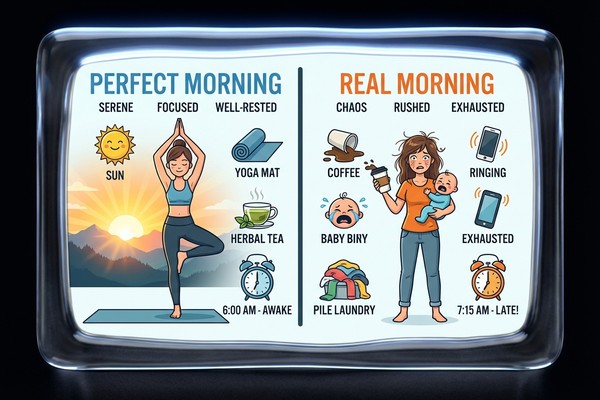
Who Gets to Have Perfect Mornings
The most popular morning routine advice comes from a very specific demographic: people with significant control over their schedules, minimal caregiving responsibilities, and enough financial security to prioritize personal optimization over survival.
Consider who’s missing from these conversations:
- Single parents who are already up before dawn packing lunches and finding matching socks
- Healthcare workers finishing night shifts when others are starting their gratitude practice
- People managing chronic illness or mental health conditions that make rigid schedules feel impossible
- Anyone whose morning is dictated by someone else’s needs—whether that’s a baby, an aging parent, or a demanding boss
The standard morning routine advice doesn’t just ignore these realities; it actively judges them. It suggests that if you can’t carve out an hour for yourself each morning, you’re not trying hard enough. If you can’t wake up before your responsibilities kick in, you lack commitment.
This is particularly harmful for working parents, who are already carrying an enormous mental load. The last thing they need is another standard to fall short of, another way to feel like they’re not doing enough.
Rhythm Over Rigidity
What if we approached morning routines differently? Instead of rigid optimization, what if we focused on rhythm—flexible patterns that support us rather than constrain us?
Rhythm acknowledges that life is variable. Some mornings you’ll have twenty minutes to yourself; others you’ll be lucky to brush your teeth before rushing out the door. Some seasons of life allow for elaborate self-care rituals; others require survival mode.
A rhythm-based approach asks different questions:
- What do I actually need to feel grounded in the morning?
- How can I build in flexibility for the unpredictable?
- What’s the minimum that still feels supportive?
This isn’t about lowering standards—it’s about designing systems that work with your life rather than against it.
The goal isn’t the perfect morning; it’s the sustainable morning.
The Three-Part Framework
Instead of prescriptive routines, try thinking in terms of three categories: anchor, optional, and bonus.
Your anchor is the one non-negotiable thing that helps you feel like yourself. Maybe it’s coffee in your favorite mug. Maybe it’s three deep breaths before getting out of bed. Maybe it’s checking the weather so you feel prepared for the day. This should take less than five minutes and be possible even on chaotic mornings.
Your optional activities are things you do when you have time and energy. These might include exercise, meditation, journaling, or reading. The key is removing the guilt when you skip them. They’re nice-to-haves, not moral imperatives.
Your bonus elements are the luxurious add-ons for particularly spacious mornings. Maybe it’s a long bath, an elaborate breakfast, or a walk around the block. These aren’t part of your routine—they’re gifts to yourself when circumstances allow.
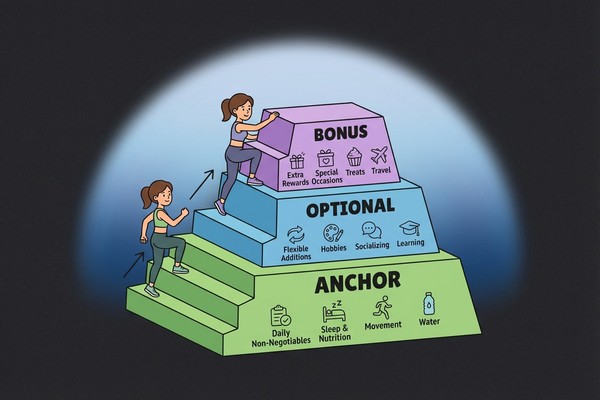
This framework removes the all-or-nothing thinking that makes so many routines unsustainable. You can have a “successful” morning with just your anchor. Everything else is extra credit.
Designing Around Constraints
The most sustainable routines are built around your actual constraints, not your aspirational ones. This means getting honest about what your mornings really look like.
If you have young children, your routine might need to happen in two-minute increments scattered throughout the morning chaos. If you work night shifts, your “morning” routine might happen at 2 PM. If you’re managing depression, your routine might be as simple as opening the blinds and drinking a glass of water.
None of these adaptations make your routine less valid. They make it more realistic, which means you’re more likely to stick with it.
The key is identifying what you can control within your constraints. You might not be able to control when your toddler wakes up, but you can control having your coffee ready to brew. You might not be able to fit in a workout, but you can do some gentle stretches while your coffee brews.
Your Minimum Viable Morning
Here’s a thought experiment: what would your morning routine look like if you only had ten minutes and limited energy? Strip away everything that’s performance or aspiration. What’s left?
This isn’t your ideal morning—it’s your baseline. The version that works when everything else falls apart. When you know you can handle your minimum viable morning even on the hardest days, you remove a source of stress and self-judgment.
From there, you can build up. But you always have something to fall back on.
The most powerful morning routine is the one you can do on your worst day.
Beyond Individual Optimization
The deeper issue with morning routine culture isn’t just the rigidity—it’s the individualism. It places the burden of a good day entirely on personal discipline and optimization, ignoring systemic factors that actually determine how our mornings unfold.
Maybe the problem isn’t that you can’t wake up early enough for a perfect routine. Maybe the problem is a work culture that demands constant availability, childcare systems that don’t support working parents, or economic pressures that require multiple jobs.
Real support would look like flexible work schedules, affordable childcare, and systems that adapt to human needs rather than demanding humans adapt to inhuman expectations.
Until we have those systemic changes, we need morning approaches that work within current constraints—not ones that pretend those constraints don’t exist.
The morning routine industrial complex wants to sell you control, but real control comes from designing systems that bend without breaking. It comes from routines that serve your actual life, not your Instagram-worthy aspirations.
Your morning doesn’t need to be perfect. It just needs to be yours.
This article was created with collaboration between humans and AI—we hope you ❤️ it.