
There’s a certain desperation that comes with buying yet another planner. You know the feeling—standing in the store aisle or scrolling through reviews, convinced that this one will finally be the system that makes everything click. The weekly layout, the habit tracker, the goal-setting pages. This time will be different.
But three weeks later, you’re back to feeling overwhelmed, and the beautiful planner sits abandoned on your desk, its pages mostly blank except for the first few enthusiastic entries. The shame creeps in. If you can’t even stick to a simple planning system, how can you expect to handle everything else?
Here’s what nobody tells you: planner hopping isn’t a character flaw. It’s a symptom.
The Hope Trap
When life feels chaotic, a new planner represents possibility. It whispers promises of control, of finally having a handle on all the moving pieces. The marketing doesn’t help—every productivity system claims to be the one that will transform your scattered existence into something manageable and beautiful.
This hope isn’t naive. It’s completely understandable. When you’re drowning in responsibilities, any tool that promises relief feels like a lifeline. The problem isn’t wanting that relief. The problem is that most planning tools are designed for lives that aren’t already at capacity.
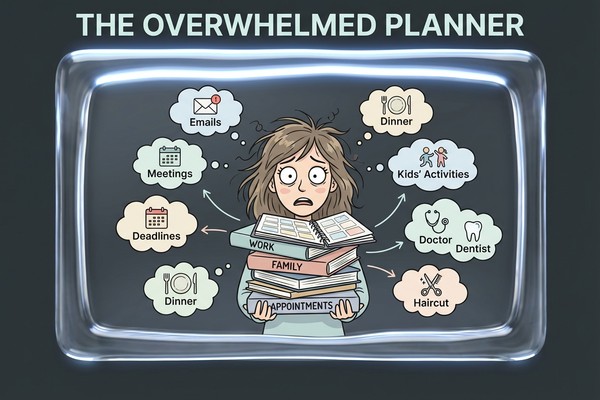
Think about it: traditional planners assume you have time to plan. They assume you have the mental bandwidth to remember to check the planner, update it, and follow through on what you’ve written. They assume your problem is organization, not overload.
But what if your real problem isn’t that you’re disorganized? What if your real problem is that you’re trying to fit 30 hours of life into 24-hour days?
The Capacity Math Problem
Here’s the brutal truth that productivity culture doesn’t want to acknowledge: no amount of optimization can solve a capacity problem. If your inputs exceed your available time and energy, better planning tools won’t create more hours in the day. They’ll just make you more aware of how impossible your situation is.
No planner can solve a life that’s over capacity.
Capacity isn’t just about time—it’s about mental energy, emotional bandwidth, and physical stamina. You might have two free hours on Sunday afternoon, but if you’ve spent the week managing crisis after crisis, those two hours might not contain enough functional capacity to tackle your planning ritual.
This is why the most elaborate planning systems often fail the people who need help most. When you’re already maxed out, adding a complex system that requires daily maintenance becomes another burden, not a solution. The planner becomes one more thing you’re failing at, one more source of guilt.
The math is simple but harsh: if what’s coming at you exceeds what you can reasonably handle, the solution isn’t better organization. The solution is reducing what’s coming at you.
Reducing the Inputs
Before you buy another planner, ask yourself: what are the biggest inputs in your life right now? Not just the tasks and appointments, but the mental inputs—the things you have to remember, track, anticipate, and manage.
Maybe it’s being the family’s social coordinator, remembering everyone’s schedules and managing all the logistics. Maybe it’s being the default person for work questions, the one everyone comes to when they need something figured out. Maybe it’s managing aging parents’ needs while juggling your own family’s demands.
These inputs didn’t appear overnight, and they won’t disappear just because you found the perfect weekly layout. But they can be reduced through three key strategies: boundaries, defaults, and handoffs.
Boundaries mean saying no to new inputs before they become your responsibility. This might look like not volunteering for the school fundraiser this year, or letting calls go to voicemail instead of being available 24/7. Boundaries feel selfish until you realize that protecting your capacity protects your ability to show up for what matters most.
Defaults eliminate decision-making around recurring situations. Instead of planning every meal from scratch, you might establish “Tuesday is pasta night” or “we order pizza when I work late.” Defaults aren’t about perfection—they’re about reducing the cognitive load of constant micro-decisions.
Handoffs involve transferring ownership of inputs to other people or systems. This might mean teaching your teenager to manage their own school calendar, or setting up automatic bill pay so you’re not mentally tracking due dates. Handoffs require upfront investment but pay dividends in reduced mental load.
Choosing Tools That Actually Help
Once you’ve addressed capacity, you can choose tools more strategically. The question isn’t “what’s the best planner?” but “what kind of support do I actually need?”
If you’re constantly forgetting appointments, you need a system that reminds you proactively, not one that requires you to remember to check it. If you’re overwhelmed by household tasks, you need something that tracks what needs doing and when, not another place to write lists you’ll lose.
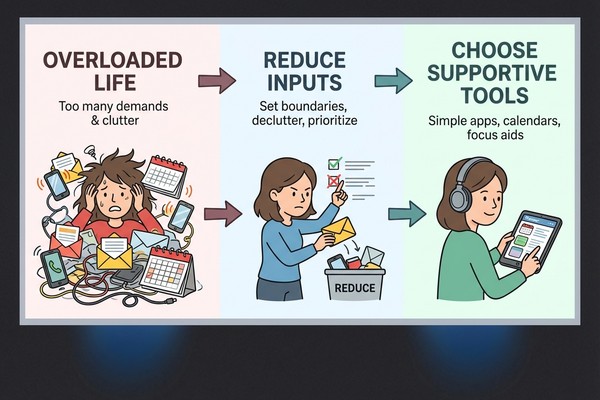
The best planning tools for overloaded lives have three characteristics: they require minimal maintenance, they work proactively (not passively), and they reduce mental load rather than adding to it.
This means looking for systems that remember things for you, not systems that help you remember better. It means choosing tools that follow up automatically, not tools that remind you to follow up. It means finding solutions that take ownership of outcomes, not just organization.
The Management Trap
Here’s where most productivity advice goes wrong: it assumes you want to become a better manager of your life. But management is work. Updating systems is work. Checking multiple apps is work. Color-coding your calendar is work.
When you’re already at capacity, the last thing you need is more work—even if that work is supposedly making you more efficient. This is why elaborate productivity systems often fail. They turn you into a project manager of your own existence, spending precious mental energy on the system itself rather than on the things that matter.
The goal isn’t to become a better manager of overwhelm. The goal is to need less management.
The most helpful tools are the ones you barely have to think about. They work in the background, handling the remembering and tracking and following up so you don’t have to. They’re less like planners and more like competent assistants—present when needed, invisible when not.
This shift in thinking changes everything. Instead of asking “how can I get better at managing all this?” you start asking “what would it look like if I didn’t have to manage all this?”
The answer isn’t another planner. It’s systems that plan alongside you, holding the mental load so you don’t have to. It’s tools that understand that remembering is work, and take that work off your plate rather than making it prettier or more organized.
Your life doesn’t need better management. It needs less to manage. And sometimes, the most productive thing you can do is put down the planner and start saying no to what’s filling it up in the first place.
The perfect planner doesn’t exist because perfection isn’t the point. Relief is. And relief comes not from organizing overwhelm better, but from having less overwhelm to organize.
This article was created with collaboration between humans and AI—we hope you ❤️ it.