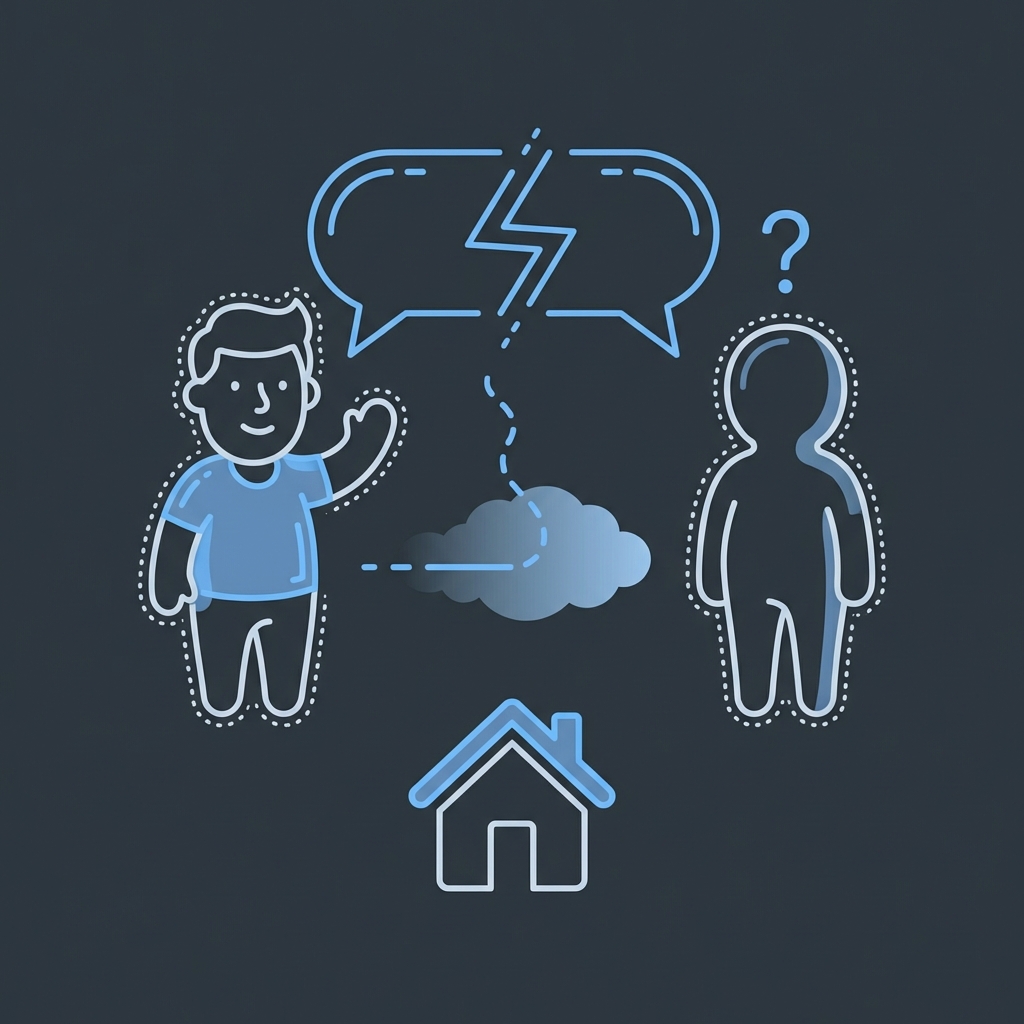
The water heater died on a Tuesday morning. Not dramatically—no flooding, no emergency—just the quiet realization that the shower had run cold and wouldn’t warm up again. Twenty years ago, this would have been an inconvenience. Today, it felt like a small crisis.
I stood in my kitchen, scrolling through plumber reviews on my phone, calculating how long I could reasonably ask my family to shower at the gym. The irony wasn’t lost on me: I was surrounded by houses full of people, yet completely alone in solving this problem.
Mrs. Chen next door probably knew three good plumbers. The family across the street had just renovated their entire bathroom. But I didn’t know Mrs. Chen well enough to knock on her door, and I’d never spoken to the renovating family beyond a wave. So instead, I spent forty minutes reading Yelp reviews and cross-referencing Angie’s List ratings, trying to decode which stranger I should trust with my home.
This is what we’ve traded for privacy and independence: the cognitive work of being our own village.
When Neighbors Were Infrastructure
There used to be a different kind of knowing in neighborhoods. Not the deep intimacy of close friendship, but something more practical and equally valuable—ambient awareness. People knew the rhythms of each other’s lives without trying to. They noticed when newspapers piled up, when someone’s teenager was home sick, when a car had been parked in the same spot for too long.
This wasn’t nostalgia-tinted community theater. It was functional social infrastructure. The neighbor who watered your plants didn’t need detailed instructions—they’d seen you do it a hundred times. The person across the street knew your work schedule well enough to accept packages. Someone always seemed to know which local contractor did good work, which doctor was taking new patients, which school had the better kindergarten teacher.
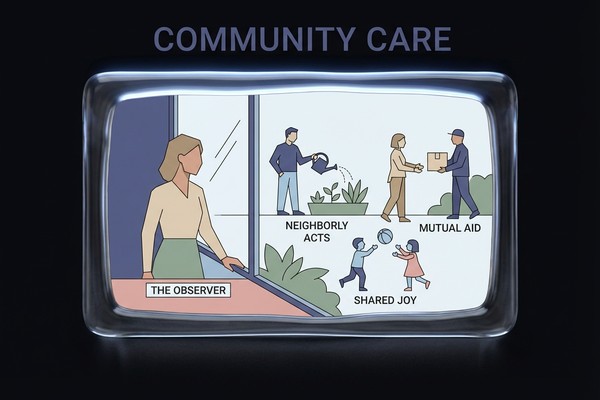
The knowledge was distributed and effortless. You absorbed information about your immediate world simply by living in it, and you contributed the same way. The mental load of daily problem-solving was shared across multiple households, even when people barely knew each other’s last names.
The neighbor who used to know your name also knew your rhythms, your needs, your small emergencies.
Now we live adjacent to strangers and call it community because we’re geographically close. We’ve confused proximity with connection, and in the process, we’ve made ourselves responsible for information and support that used to be collectively held.
The Load That Moved In
When ambient community disappeared, something had to fill the gap. That something was us—specifically, our mental capacity. Every small crisis that would have been solved with a quick conversation now requires research, vetting, and coordination. Every resource that would have been shared knowledge now lives in our individual mental filing systems.
The water heater incident wasn’t really about plumbing. It was about the dozens of micro-decisions and information-gathering tasks that now fall to each household separately. Which service provider to trust. How to coordinate schedules. Whether the price is fair. How to handle the disruption to daily routines. All of this used to be community knowledge, passed along casually and held collectively.
We’ve replaced social infrastructure with digital infrastructure, but the two don’t carry the same cognitive load. Google can tell you which plumbers have good reviews, but it can’t tell you that Mike from three streets over is reliable, reasonably priced, and always cleans up after himself. Nextdoor can connect you to neighbors, but it can’t replicate the casual, ongoing awareness that made help feel natural rather than transactional.
The result is that we’ve become our own research departments, our own quality control, our own emergency response systems. We manage not just our own lives, but all the knowledge work that used to be distributed across a network of casual relationships.
The Professional Solution
Modern life offers a clean substitute: paid services for everything that neighbors used to provide informally. Can’t find a good plumber? There’s an app for that. Need someone to watch your packages? Pay for a service. Want recommendations for local services? Subscribe to a community platform.
This feels like progress—professional, efficient, reviewed and rated. But it’s also expensive, both financially and cognitively. Every transaction requires decision-making energy. Every service provider needs to be researched, scheduled, and managed. Every interaction starts from zero, with no shared context or ongoing relationship.
The paid solution also shifts the entire burden onto individual households. Instead of information flowing naturally through a network of relationships, each family becomes responsible for gathering, processing, and acting on all the information they need. The mental load doesn’t disappear—it concentrates.
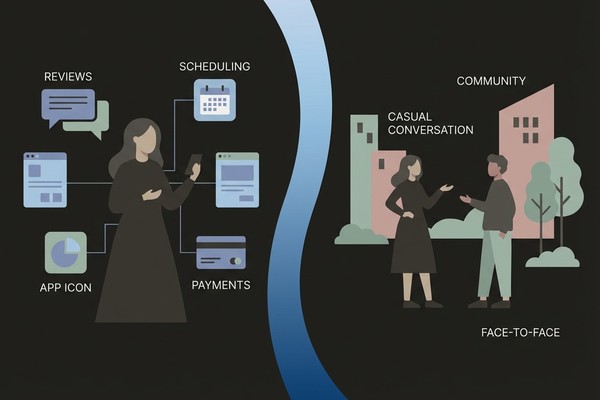
And there’s something else we lose in the translation from community knowledge to professional services: the safety net of people who notice when things go wrong. Professional service providers come when called, but they don’t notice when you haven’t called and probably should have. They solve the problems you’ve identified, but they don’t catch the ones you’ve missed.
What Absence Costs
The disappearance of ambient community creates costs that extend far beyond convenience. When no one knows your rhythms, no one notices when they change. When no one shares your daily reality, no one can offer the kind of practical support that prevents small problems from becoming big ones.
This isolation compounds during the times when we most need community support. New parents, dealing with illness, managing aging relatives, handling job loss—these are exactly the moments when ambient community used to kick in naturally. People noticed need without being asked and offered help without making it a big deal.
Now we have to explicitly ask for help, which requires admitting vulnerability to people who don’t know our baseline. We have to explain our situations to strangers, coordinate with people who don’t understand our routines, and manage relationships that exist only for the duration of the crisis.
The cognitive overhead is exhausting. Not only do we carry the full weight of our problems, but we also carry the full weight of solving them, finding resources, and coordinating support. We’ve become project managers of our own lives in ways that would have been unthinkable when community infrastructure was intact.
We’re not just solving problems alone—we’re holding all the knowledge about how to solve them.
Beyond Convenience
This isn’t really about efficiency or convenience. It’s about the fundamental human need to be known and to exist in a context larger than our individual households. Ambient community provided something that professional services and digital platforms can’t replicate: the experience of being seen and known as part of the fabric of daily life.
When the neighbor knew your name, they also knew your story. Not the intimate details, but the practical context that made helping each other feel natural. They knew you worked early shifts, so they could accept your packages. They knew your kids’ ages, so they could recommend the right babysitter. They knew your car, so they could mention if they’d seen it parked somewhere unusual.
This kind of knowing created resilience. Not the dramatic, crisis-response kind of resilience that makes good stories, but the quiet, everyday resilience that prevents crises from developing in the first place. Problems got caught early. Resources got shared efficiently. The mental load of daily life got distributed across multiple people who cared enough to pay attention.
The Infrastructure Gap
We’re living through the collapse of social infrastructure without quite naming it as such. We’ve individualized solutions to collective problems and then wondered why we feel so overwhelmed. We’ve replaced community knowledge with personal research and called it empowerment.
The gap isn’t just about neighborliness or social connection—it’s about the invisible systems that used to make daily life manageable. These systems didn’t require deep relationships or significant time investment. They required only the kind of ambient awareness that comes from sharing space and paying attention.
Some neighborhoods are trying to rebuild this infrastructure intentionally. Community groups, neighborhood apps, organized social events. But there’s something different about infrastructure that develops organically versus infrastructure that requires active maintenance. The first feels effortless; the second feels like another item on the to-do list.
The question isn’t how to return to some imagined golden age of community—that’s neither possible nor necessarily desirable. The question is how to rebuild the practical systems of mutual support that make individual life sustainable.
> Who do you have nearby who knows your life well enough to notice when something’s wrong?
It’s a simple question, but for many of us, the answer reveals how much we’re carrying alone. The neighbor who used to know your name also used to know when you needed help, often before you knew it yourself. Without that ambient awareness, we’ve become responsible not just for solving our problems, but for noticing them, researching solutions, and coordinating all the support we need.
The water heater got fixed, eventually. But I’m still thinking about what it cost—not just the repair bill, but the hours of research, the mental energy of coordinating strangers, the isolation of handling it entirely alone. Twenty years ago, this story would have been about a neighbor’s recommendation and a quick phone call. Today, it’s about the quiet weight of being our own village, one small emergency at a time.
This article was created with collaboration between humans and AI—we hope you ❤️ it.