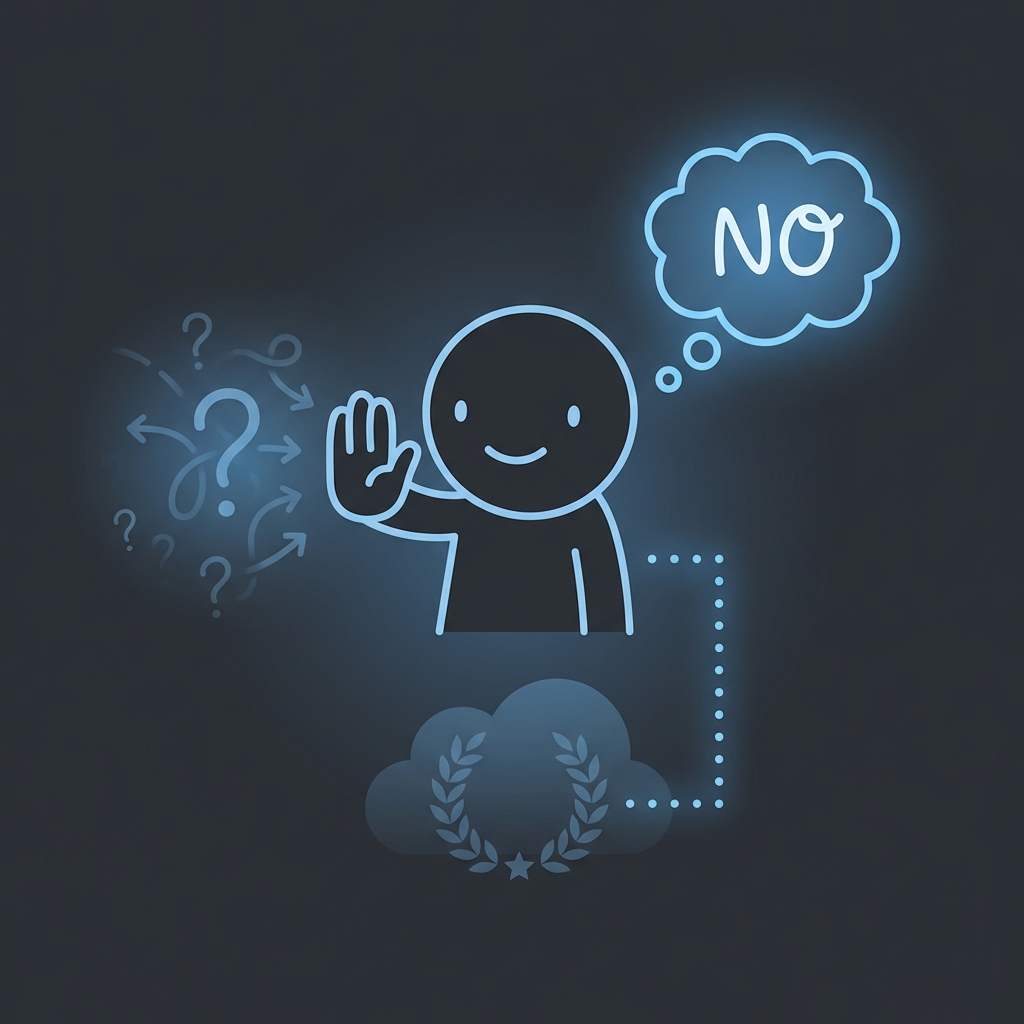
The email landed in my inbox at 3:47 PM on a Tuesday, sandwiched between a client follow-up and a school pickup reminder. It was friendly, well-intentioned, and completely reasonable. Would I be interested in joining a committee for a cause I genuinely cared about? The time commitment was “minimal”—just a monthly meeting and some light coordination work.
My cursor hovered over the reply button for exactly twelve minutes.
In those twelve minutes, I ran the full internal audit that anyone carrying mental load knows by heart. I calculated the obvious time cost (two hours monthly), then the invisible time cost (the mental space it would occupy between meetings, the guilt when I inevitably couldn’t give it my full attention, the energy required to context-switch between this and everything else). I weighed my genuine interest in the cause against the reality that my care wouldn’t magically create more hours in my week.
Most tellingly, I felt the familiar tug of identity math: saying no would make me selfish, wouldn’t it? Less committed to things that matter. The kind of person who doesn’t step up.
The Safer Yes
Here’s what nobody talks about when they celebrate boundary-setting: saying yes often feels emotionally safer than saying no, even when we’re already stretched thin. Yes keeps us in good standing. Yes maintains our reputation as someone who cares, who contributes, who can be counted on. Yes feels like proof of our values.
No, on the other hand, feels like evidence against us. It feels like we’re revealing something unflattering about our priorities or our character. We’ve internalized the idea that having limits means we’re limited—that boundaries are a character flaw rather than a design feature.
But here’s the thing about that Tuesday afternoon decision: I said no. Not with a long explanation or an apology tour, just a simple acknowledgment that I couldn’t take on additional commitments right now, along with genuine appreciation for being asked.
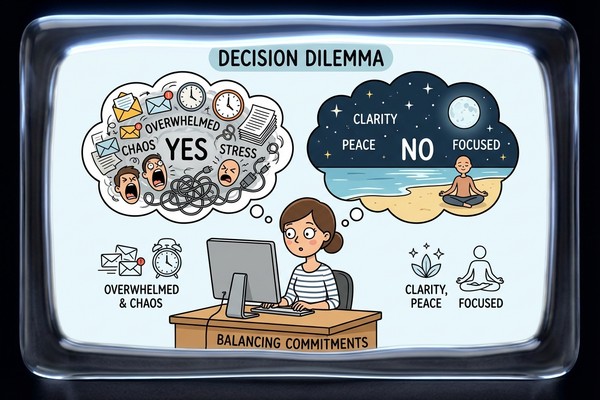
The relief that followed wasn’t immediate—it took about a day to sink in. But when it did, it felt like I’d given myself a gift I didn’t know I needed. Wednesday morning felt lighter. I had mental space for the things already on my plate. I could be fully present for the work I’d already committed to instead of splitting my attention across an ever-expanding list of obligations.
The relief after a good boundary isn’t just about what you avoided—it’s about what you preserved.
Boundaries as Systems Design
This is where the productivity culture gets boundaries completely wrong. They’re usually framed as personal development—something you do to become more assertive or to practice self-care. But boundaries aren’t about becoming a different kind of person. They’re about designing a life system that actually works.
Think about any system you interact with daily. Your phone has limits on how many apps can run simultaneously before performance degrades. Your car has a maximum safe speed. Your home’s electrical system has circuit breakers that prevent overload. These aren’t character flaws of the system—they’re protective features that keep the whole thing functioning.
Your life needs the same kind of protective mechanisms. When you say yes to everything that seems worthwhile, you’re essentially running your personal system without circuit breakers. Eventually, something’s going to blow.
The committee invitation was a perfect example of this dynamic. The cause was important, the people were lovely, and the work was meaningful. But adding it to my existing commitments would have pushed my system past its sustainable capacity. Not dramatically—just enough to create that constant low-level stress that comes from having slightly too much in motion at once.
The Math of Mental Load
What makes boundary decisions so complex is that the real cost isn’t always visible in the initial request. Someone asks for two hours of your time, but they’re really asking for a slice of your mental bandwidth that extends far beyond those two hours.
You’ll think about the meeting while making dinner. You’ll remember you need to prepare for it while trying to focus on other work. You’ll carry a low-level awareness of this commitment through dozens of other activities. The mental load of tracking and anticipating extends the true cost far beyond the official time commitment.
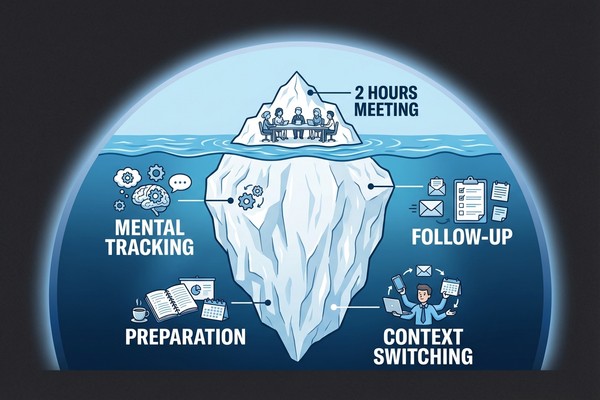
This is why “it’s just a small thing” requests can be the most challenging to navigate. They seem unreasonable to refuse, but they’re often the death by a thousand cuts that leaves people feeling overwhelmed without being able to point to any single overwhelming commitment.
The productivity culture’s answer to this problem is usually time management—better calendars, more efficient systems, optimized schedules. But that’s treating the symptom, not the cause. The issue isn’t that we’re bad at managing our time; it’s that we’re trying to fit too much into the container of our lives.
The Scripts That Work
When I finally replied to that committee invitation, I used language that felt warm without being apologetic:
“Thank you so much for thinking of me for this—it sounds like meaningful work. I’m not able to take on additional commitments right now, but I appreciate being asked.”
No elaborate justification, no promise to consider it in the future, no suggestion of alternative ways I might contribute. Just acknowledgment, appreciation, and a clear boundary.
Here’s another script that works well for ongoing requests:
“I’ve learned I do my best work when I can give my full attention to fewer things. Right now, that means I need to say no to new commitments, even ones I care about.”
Good boundaries don’t require elaborate justifications—they require clarity about what you’re protecting.
The key is framing your no around what you’re preserving rather than what you’re avoiding. You’re not rejecting the opportunity because it’s bad; you’re protecting your ability to show up fully for what you’ve already committed to.
The Overlooked Victory
Here’s what I realized in the days following that decision: we celebrate the wrong victories when it comes to boundaries. We applaud the dramatic nos—turning down the toxic job, leaving the draining relationship, standing up to the unreasonable boss. Those are important, but they’re also relatively rare.
The victories that actually shape our daily experience are smaller and less visible. It’s the Tuesday afternoon email you don’t say yes to. The weekend commitment you politely decline. The “quick favor” you redirect to someone with more capacity.
These decisions don’t feel heroic in the moment. They often feel selfish or disappointing. But they’re the ones that create the space for you to breathe, to be present, to do your existing work well instead of doing everything adequately.
The proof isn’t in what you accomplished by saying no—it’s in what didn’t happen. The stress that didn’t compound. The attention that didn’t fragment. The energy that stayed available for what mattered most.
Your Next Week’s Kindness
So here’s the question worth sitting with: what’s one thing you could say no to that would make next week a little kinder to yourself?
Maybe it’s the social obligation you’re dreading. The volunteer commitment that’s become more burden than joy. The work project that’s outside your actual responsibilities. The family gathering that always leaves you drained.
It doesn’t have to be dramatic or permanent. It just has to be honest about what your system can sustainably handle right now.
The goal isn’t to become someone who never helps or never commits to anything meaningful. It’s to become someone whose yes means something—because it comes from a place of genuine capacity rather than reflexive people-pleasing or identity protection.
Your boundaries aren’t a character flaw. They’re the circuit breakers that keep your whole life from overloading. And that Tuesday afternoon decision? It wasn’t selfish—it was systems design.
This article was created with collaboration between humans and AI—we hope you ❤️ it.