
The alarm hasn’t even gone off yet, but you’re already awake. It’s 6:47 AM and your mind is running through today’s choreography: the presentation deck that needs final edits before the 10 AM client call, the permission slip that’s been sitting on the counter for three days, the fact that there’s literally nothing for dinner and grocery pickup closes at 8 PM.
You reach for your phone to add “buy bread” to your mental inventory, but before you can even unlock the screen, it rings. The school. At 6:48 AM.
“Hi, this is the attendance office. We have Emma here in the nurse’s office with a fever of 101.2. She’ll need to be picked up.”
And just like that, the day you’d mapped out in your head dissolves.
When Two Worlds Collide
This is the moment that productivity advice never prepares you for. Not the gentle “unexpected interruption” that time management books acknowledge with a knowing nod. This is the full-contact collision between two equally urgent realities: the work deadline that’s been circled on your calendar for weeks and the immediate needs of a sick child.
The client presentation can’t be moved. Three departments have aligned their schedules, the CEO will be there, and you’ve been building toward this for a month. But Emma has a fever and school policy is non-negotiable. Someone has to pick her up within the hour.
Your partner is already in back-to-back meetings that started at 6 AM Pacific time. Your mom lives two hours away. The babysitter doesn’t do sick days.
The invisible triage begins immediately: not just what needs to happen, but who will make it happen, and what it will cost.
Standing in your kitchen at 7 AM, still in pajamas, you’re running calculations that would make a logistics coordinator dizzy. If you pick up Emma now, you can still make the client call from home if she sleeps. But someone needs to call the pediatrician, and they don’t open until 8:30. The grocery order you were going to place during lunch break will have to wait, which means another night of creative pantry dinners. The dry cleaning pickup you promised to handle gets pushed to tomorrow, along with the oil change that’s now three weeks overdue.
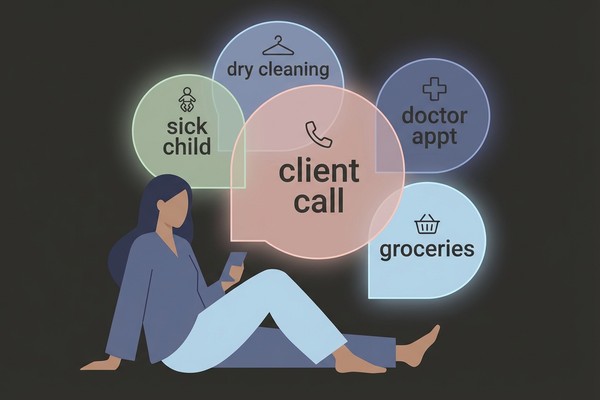
The Real-Time Decision Tree
What happens next isn’t just “handling an emergency.” It’s performing complex project management in real time, with incomplete information and competing priorities that all feel urgent.
You text your partner: “Emma sick, picking her up now. Can you call Dr. Martinez at 8:30?” Immediately, you know this means they’ll be distracted during their morning meetings, probably taking notes on their phone in the hallway between calls.
You email your team: “Working from home today due to family situation. Will still join client call at 10.” Professional, brief, revealing nothing about the fever checks and medicine schedules that will punctuate your morning.
You call Emma’s teacher to arrange pickup of today’s assignments, knowing that homework supervision will now squeeze into the margins of your afternoon. The permission slip on the counter catches your eye—the field trip is Friday, and forms are due tomorrow. You grab a pen and fill it out while the phone rings, multitasking in a way that feels both efficient and slightly frantic.
The drive to school takes twelve minutes. Emma is pale and quiet, the kind of sick that means she’ll need attention throughout the day, not just medicine and a nap. You’re already recalculating: the presentation will need to be delivered with one eye on your laptop and one on a seven-year-old who might need anything from crackers to comfort.
What Doesn’t Get Done
Back home by 8:15, you settle Emma on the couch with a thermometer and a tablet. The pediatrician’s office is busy—of course it is—and you’re on hold for eight minutes while simultaneously reviewing your presentation slides and responding to a client email that came in overnight.
The appointment gets scheduled for 2 PM, right when you’d planned to prep for tomorrow’s budget meeting. That prep work joins the growing list of tasks that are sliding: the expense report due Friday, the thank-you note for your nephew’s birthday gift, the call to schedule Emma’s dental cleaning.
Each accommodation creates a small debt that will come due later, usually when you’re already behind.
Your partner texts updates from their meetings, but you can sense the distraction in their abbreviated responses. They’re managing their own version of this juggling act, trying to be present for work while tracking Emma’s fever and your logistics updates.
The client call goes well—better than you expected, given that you delivered half of it while making soup and checking Emma’s temperature. But the mental bandwidth required to switch between “strategic consultant” and “concerned parent” every few minutes leaves you feeling depleted in a way that’s hard to name.
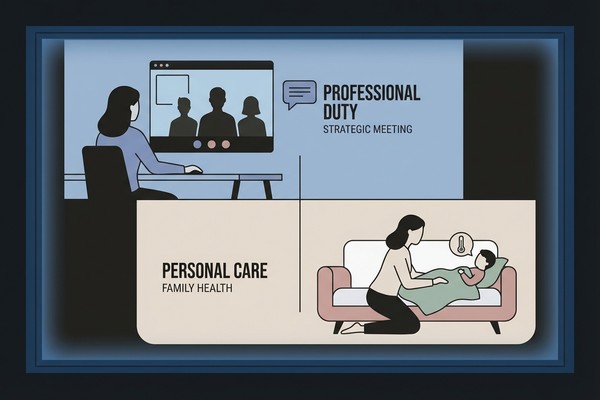
The Invisible Coordination Work
What strikes you most, later, is how much coordination happened in those first few hours. Not just the obvious tasks—picking up Emma, calling the doctor, rearranging the day—but the meta-work of managing information flow between all the moving pieces.
Updating your partner on symptoms and medication timing. Letting Emma’s teacher know she’ll miss the math test. Rescheduling the grocery pickup and figuring out what to make for dinner with what’s already in the pantry. Mentally noting that you’ll need to sanitize Emma’s tablet and wash the throw pillows she’s been using.
This coordination work is largely invisible, even to the people who benefit from it. Your partner knows Emma is sick and has a doctor’s appointment, but they might not realize you also handled the school communication, the medication schedule, the meal planning around a reduced appetite, and the mental load of tracking which symptoms to watch for.
The client team knows you delivered a strong presentation despite working from home, but they have no visibility into the fever checks that happened between slides or the soup preparation that occurred during the Q&A section.
The Cost of Seamless Transitions
By evening, Emma’s fever has broken and she’s asking for real food again. The crisis has passed, but you’re left with that particular exhaustion that comes from managing multiple urgent priorities simultaneously.
Tomorrow will bring its own challenges: the budget meeting you couldn’t prep for, the expense report that’s now genuinely urgent, the follow-up items from today’s client call that need attention. The grocery situation still isn’t resolved, and you’re looking at another night of pantry creativity.
Your partner helps with bedtime routine and cleanup, but you find yourself doing the mental inventory that happens at the end of days like this: What got dropped? What needs to be picked up tomorrow? What are the ripple effects of today’s accommodations?
The proof of good crisis management is often what doesn’t fall apart, not what gets accomplished.
Naming the Work
This kind of day isn’t unusual for working parents. The specifics change—different emergencies, different deadlines, different logistics—but the fundamental challenge remains the same: managing the collision between professional responsibilities and family needs while maintaining the invisible coordination that keeps both worlds functioning.
What’s rarely acknowledged is that this coordination work is skilled labor. Reading the situation quickly, triaging competing priorities, communicating effectively across multiple contexts, adapting plans in real time—these are complex cognitive tasks that require significant mental bandwidth.
Yet because this work often happens in the margins of “regular” work and “regular” parenting, it can feel like it doesn’t count. Like it’s just “life” rather than labor. Like managing it smoothly is just basic competence rather than a specific skill set.
A Gentle Question
At the end of a day like this, it’s worth asking: What would have helped most?
Not in a self-improvement way, not as a setup for optimizing next time, but as a genuine inquiry into what support looks like when two worlds collide.
Maybe it’s a partner who can take the doctor’s appointment without needing a briefing on symptoms and timing. Maybe it’s a workplace that acknowledges family emergencies without requiring professional stoicism. Maybe it’s a system that remembers the permission slip deadline so it doesn’t become another item in the mental juggle.
Or maybe it’s simply having this coordination work seen and named for what it is: skilled, valuable labor that deserves recognition rather than invisibility.
The parent who also had a deadline didn’t just manage competing priorities today. They performed complex project management under pressure, maintained professional standards while providing care, and kept multiple systems running smoothly through an unexpected disruption.
That’s not just “handling it.” That’s expertise.
This article was created with collaboration between humans and AI—we hope you ❤️ it.