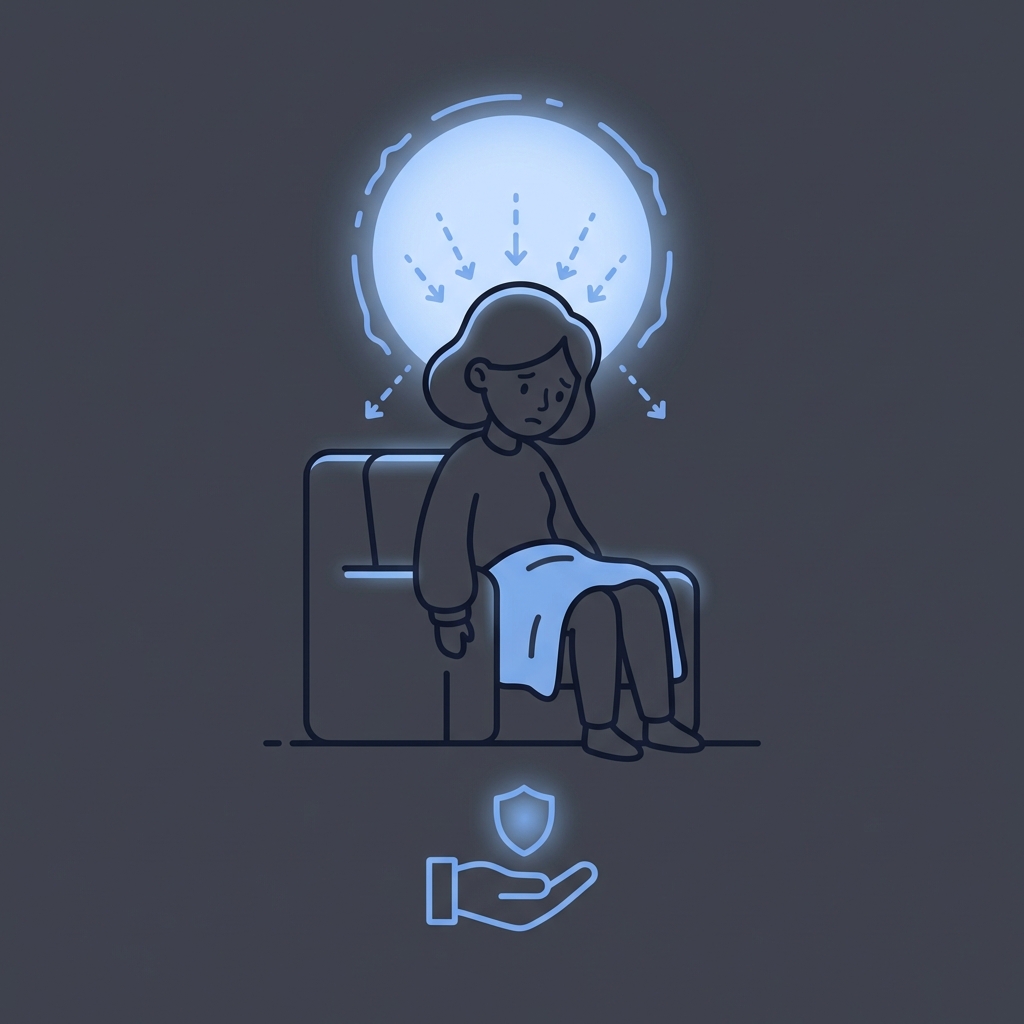
You know that moment when someone asks how you’re doing, and you automatically say “fine” while internally cataloging seventeen different ways your life feels like it’s held together with duct tape and wishful thinking? That reflexive “fine” is so practiced it comes out even when you’re running on three hours of sleep, managing a work crisis, and wondering if you remembered to feed the dog this morning.
We’ve all mastered this performance. The “I’ve got it handled” smile. The casual “just busy” when someone notices you look tired. The way we downplay struggles that would flatten someone else, because admitting difficulty feels like admitting failure.
But here’s what I’ve learned: the permission to not be doing well might be the most radical form of self-care we never talk about.
The Exhaustion of Being Fine
The “fine” performance isn’t just about what we say—it’s about how we organize our entire lives around appearing competent. We respond to emails immediately to seem on top of things. We volunteer for extra projects to prove we can handle more. We show up to events we’re too tired for because canceling feels like letting people down.
This performance demands enormous energy. Every interaction requires us to calculate: How much struggle is acceptable to show? What’s the right amount of overwhelm that signals I’m busy and important but not incompetent? We become method actors in our own lives, so committed to the role that we sometimes forget it’s not actually who we are.
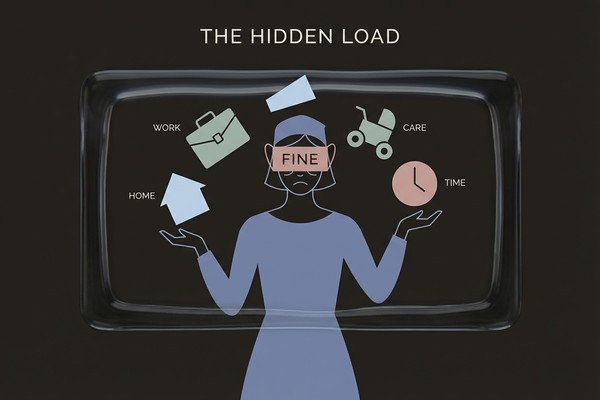
The irony is that maintaining this facade often makes us less functional, not more. When we’re spending energy pretending everything is manageable, we have less energy for actually managing things. When we’re afraid to ask for help because it would break character, we end up drowning in tasks that could have been shared or eliminated entirely.
Think about the last time you were genuinely struggling. How much of your mental bandwidth went toward hiding that struggle versus addressing it? The performance itself becomes another item on an already impossible to-do list.
Who We Think We’re Protecting
We tell ourselves the “fine” performance is considerate. We don’t want to burden others with our problems. We don’t want to seem needy or incapable. We want to be the reliable one, the person others can count on, not the person who needs counting on.
But dig deeper, and the real reasons get more complicated. Sometimes we perform “fine” because we’re terrified of being seen as the person who can’t handle what everyone else seems to manage effortlessly. Sometimes it’s because we’ve learned that our worth is tied to our usefulness, and admitting struggle feels like admitting we’re less valuable.
The “fine” performance often protects our image more than it protects anyone else.
Sometimes we maintain the facade because we’ve internalized the toxic idea that struggle is a personal failing rather than a human experience. We’ve bought into productivity culture’s lie that the right systems, the right mindset, the right optimization will eliminate difficulty from our lives entirely.
But here’s the thing about protection: it only works if what we’re protecting actually needs protecting. Most of the time, the people who care about us would rather have honesty than performance. They’d rather know how to support us than wonder why we seem increasingly distant and stressed.
What Happens When the Mask Comes Off
I remember the first time I told someone the truth about how I was actually doing. It was a Tuesday afternoon, and a colleague asked the standard “How’s it going?” I was so tired from pretending that instead of my usual “Great, just busy!” I said, “Honestly? I’m pretty overwhelmed right now.”
The world didn’t end. She didn’t suddenly see me as incompetent or unreliable. Instead, she said, “Oh thank god, me too. I thought I was the only one drowning over here.”
That conversation changed something fundamental. Not just because I got support, but because I realized how much energy I’d been wasting on the performance. When you stop pretending everything is manageable, you can start actually managing things.
The Gifts of Honest Struggle
When we drop the “fine” performance, several things become possible that weren’t before. Real connection tops the list. There’s something profoundly bonding about shared struggle, about admitting that life is hard and we’re all just figuring it out as we go. The relationships that deepen when you stop performing are usually the ones worth keeping anyway.
Practical support becomes available too. When people know you’re struggling, they can actually help. They can take something off your plate, offer resources you didn’t know existed, or simply stop adding to your burden. But they can’t help with problems they don’t know about.
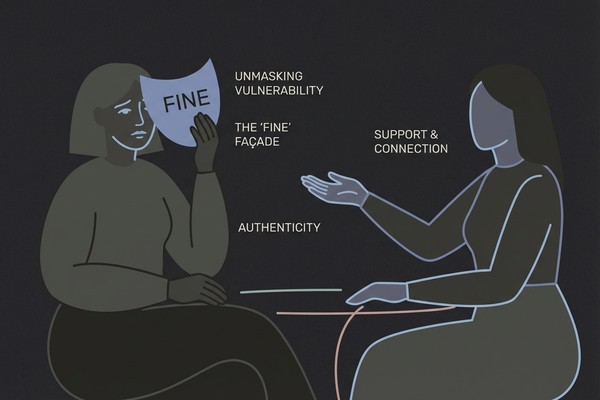
Maybe most importantly, you get to rest from the exhausting work of pretending. The mental energy that was going toward performance can be redirected toward solutions, self-care, or simply surviving until things get easier. And they do get easier, but not usually while we’re pretending they’re already easy.
There’s also something powerful about modeling honesty about struggle. When we admit we’re not okay, we give others permission to not be okay too. We push back against the toxic positivity that insists everyone should be thriving all the time. We create space for the full range of human experience.
The Risk is Real (And Worth Taking)
Let’s be honest about the risks. Some people will see vulnerability as weakness. Some will use your honesty against you. Some will add to your burden instead of helping carry it. These risks are real, and they’re part of why the “fine” performance exists in the first place.
But here’s what I’ve learned about risk: the people who punish you for being human weren’t actually safe relationships to begin with. The jobs that penalize you for having limits weren’t sustainable anyway. The systems that require you to pretend struggle doesn’t exist are broken systems.
The risk of being seen as human is smaller than the cost of pretending you’re not.
The vulnerability hangover is real too—that feeling of exposure and regret that can follow honest conversations about struggle. But it usually passes, and what remains is often relief and deeper connection.
Starting Small, Going Slow
You don’t have to go from “everything’s fine” to “let me tell you about my seventeen different crises” overnight. Honesty about struggle can start small and build gradually.
Maybe it begins with “I’m having a tough week” instead of “I’m great.” Maybe it’s admitting you’re tired instead of pretending you thrive on four hours of sleep. Maybe it’s saying “I can’t take that on right now” instead of adding another impossible commitment to your list.
The goal isn’t to become someone who overshares or makes every conversation about your problems. It’s to stop the exhausting performance of having no problems at all. It’s to create space for the reality that life is sometimes difficult, and that difficulty doesn’t disqualify you from being worthy of care and support.
The Permission Slip You Write Yourself
Here’s the truth that took me too long to learn: you don’t need anyone else’s permission to stop being fine all the time. You can write your own permission slip to be human, to struggle, to need help, to not have it all figured out.
The permission to not be doing well isn’t about giving up or wallowing in problems. It’s about acknowledging reality so you can work with it instead of against it. It’s about conserving the energy you’ve been spending on performance and redirecting it toward solutions, rest, or simply getting through.
Most importantly, it’s about discovering that you are worthy of care and support even when—especially when—you’re not doing well. The people and systems that can only value you when you’re performing strength weren’t actually seeing you anyway.
So the next time someone asks how you’re doing, consider telling them. Not the performance version, but the real version. See what becomes possible when you stop pretending to be fine and start being human instead.
This article was created with collaboration between humans and AI—we hope you ❤️ it.