
The call comes on a Tuesday afternoon, sandwiched between meetings and the mental inventory of what needs to happen before you pick up the kids. Your mom’s voice sounds exactly the same—warm, familiar, asking about your week. You’re half-listening while scanning emails when she mentions the electric bill again.
“I told you about that mix-up with the electric company, right? They’re saying I missed a payment, but I know I sent it. I always send it on the fifteenth.”
You pause. She did tell you. Last week. And the week before that.
”Mom, didn’t we figure that out already? You called them and they found the payment?”
A small silence. “Oh. Yes, that’s right. I forgot I told you.”
The conversation continues normally—she asks about the kids, mentions the neighbor’s new dog, complains about the weather. You hang up thinking nothing of it. But later, driving home, that pause echoes. The repetition. The slight confusion in her voice when you reminded her.
When Normal Isn’t Normal Anymore
The signs don’t arrive with fanfare. They slip in quietly, disguised as ordinary moments. A story told twice in the same conversation. A missed appointment that “wasn’t on the calendar.” Bills paid late, then early, then questioned entirely. Your parent, who once managed everything effortlessly, starts asking you to help them remember things they’ve done for decades.

At first, you rationalize. Everyone forgets things. Everyone gets overwhelmed. You’re busy too—maybe you’re the one misremembering. But then your sibling calls with their own collection of small incidents. The neighbor mentions seeing Mom looking confused at the mailbox. The pharmacy calls because she hasn’t picked up her medication.
Each incident feels minor in isolation. Together, they form a pattern you don’t want to recognize.
The transition from child to navigator happens not in a moment, but in a thousand tiny shifts you don’t see coming.
What catches you off guard isn’t just the realization that your parent needs help—it’s the immediate weight of figuring out what kind of help, how much, and how to provide it without stripping away their dignity. Suddenly, you’re researching things you never thought you’d need to know. What are the early signs of dementia versus normal aging? How do you have a conversation about driving safety? What’s the difference between assisted living and memory care?
The Invisible Work Multiplies
The phone calls start multiplying. Not just with your mom, but about your mom. You’re calling her doctor’s office to understand what “mild cognitive changes” actually means. You’re researching local senior services. You’re having careful conversations with your siblings about who can do what, when, and how to coordinate it all.
Your to-do list, already stretched thin with work deadlines and kids’ activities, suddenly includes items you never anticipated. “Research eldercare attorneys.” “Find Mom a pill organizer.” “Look into medical alert systems.” Each task spawns three more. The pill organizer leads to questions about medication management, which leads to conversations about home safety, which leads to researching grab bars and stair railings.
The emotional labor is even heavier than the logistical work. You find yourself mentally rehearsing difficult conversations. How do you suggest someone stop driving when driving represents freedom? How do you talk about money and estate planning without sounding like you’re waiting for them to die? How do you balance their autonomy with their safety?
You start noticing things during visits that you never paid attention to before. Is the house as clean as it used to be? Are there expired items in the refrigerator? Does she seem smaller somehow, more fragile? You find yourself cataloguing details to discuss with your siblings later, turning family visits into informal assessments.
The Role Reversal Nobody Prepared You For
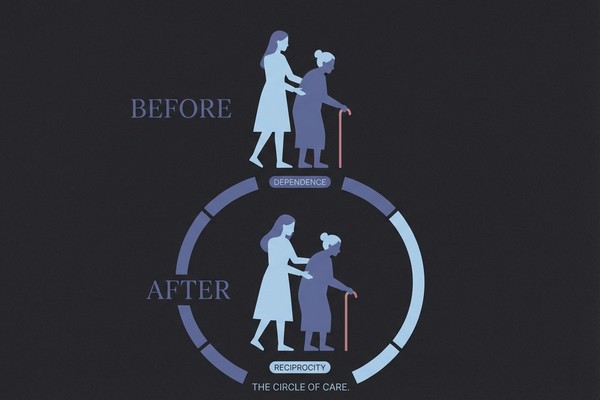
The hardest part isn’t the practical stuff—it’s the emotional archaeology of watching your parent become someone who needs protection instead of providing it. The person who taught you to tie your shoes and balance a checkbook now asks you to help them remember which bills they’ve paid. The parent who once had all the answers now looks to you for guidance about their own life.
You realize you’re grieving someone who’s still here, mourning the loss of who they were while loving who they’re becoming.
This isn’t the dramatic, movie-version of caregiving that starts with a crisis and a clear diagnosis. This is the slow-motion version that unfolds over months and years, where you’re constantly recalibrating what “normal” looks like. Some days are good—your mom is sharp and independent and you wonder if you’ve been overthinking everything. Other days, she calls three times to ask the same question, and you realize the changes are real and progressing.
The guilt is relentless. You feel guilty for noticing the changes, guilty for not noticing them sooner, guilty for feeling overwhelmed, guilty for the moments when you wish things could go back to how they were. You feel guilty for having a life outside of this new reality, and guilty for the times when caregiving feels like a burden instead of a privilege.
What Nobody Tells You About This Season
The advice about eldercare focuses on the practical: legal documents, medical decisions, safety modifications. But no one prepares you for how this changes your relationship with time itself. You start thinking in terms of “while we still can”—while she can still live independently, while she still recognizes everyone, while she can still make her own decisions.
You develop a new kind of hypervigilance. Every phone call might be the one where something has changed. Every visit includes an informal assessment. You find yourself taking mental snapshots of good moments, knowing they might become precious later.
The isolation is real too. Your friends with aging parents understand, but they’re dealing with their own situations. Your friends with young kids are sympathetic but can’t relate. You’re juggling the needs of multiple generations while trying to maintain your own life, and there’s no roadmap for this particular kind of overwhelm.
The traditional productivity advice feels almost insulting in this context. “Batch similar tasks together.” “Delegate what you can.” “Focus on what matters most.” As if the emotional work of watching your parent age could be optimized away. As if the mental load of coordinating care across multiple family members could be streamlined into efficiency.
The New Normal Takes Shape
Gradually, you develop systems. Not the kind that productivity experts recommend, but the kind that emerge from necessity and love. You learn which conversations are worth having and which battles aren’t worth fighting. You figure out how to balance respect for your parent’s autonomy with concern for their safety. You discover which family members are good at which kinds of support.
You realize this isn’t a problem to be solved but a season to be navigated. The goal isn’t to return things to how they were—it’s to figure out how to love well in the reality of how things are now.
This is what adult caregiving really looks like: not a crisis to manage, but a long, slow dance between independence and interdependence, between honoring the past and adapting to the present.
The phone calls continue, but now you listen differently. You’ve learned to hear not just what’s being said, but what’s not being said. You’ve developed patience for repetition and grace for confusion. You’ve accepted that this is your life now—not temporarily, not until things get better, but as a new chapter that will continue evolving.
Some days still catch you off guard. A moment of clarity that reminds you of who your parent used to be. A new confusion that signals another small loss. But you’ve learned to hold both the grief and the love, the frustration and the privilege of being trusted with someone’s vulnerability.
The conversation that started with a confused phone call about an electric bill has become something much larger: a recognition that the people who once took care of you now need you to take care of them. And while no one prepared you for how heavy this responsibility would feel, no one prepared you for how meaningful it would be either.
This article was created with collaboration between humans and AI—we hope you ❤️ it.