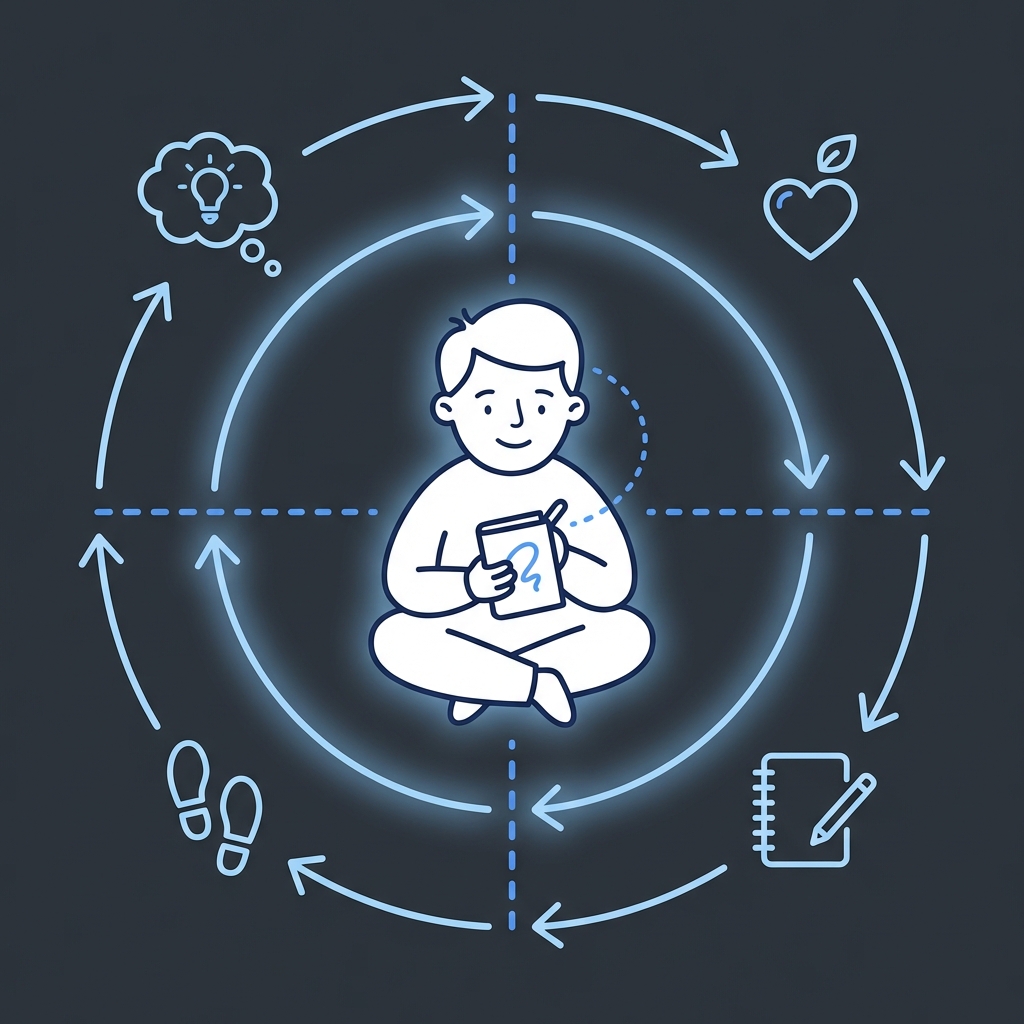
Most of us live our lives like we’re driving at night with dirty windshields. We can see enough to keep moving forward, but the view is clouded with accumulated grime—old commitments, half-finished projects, promises we made to ourselves months ago that we’ve forgotten about entirely. We squint through the blur and call it normal.
Then something happens. A birthday that feels heavier than expected. A friend’s life crisis that makes us examine our own. A random Tuesday when we catch ourselves staring at the ceiling, wondering how we got here. Suddenly, we’re doing what most people call a “life review”—that panicked inventory of where we are versus where we thought we’d be.
But here’s what I’ve learned: waiting for crisis or New Year’s Eve to check in with your actual life is like only cleaning your house when company’s coming. By then, the mess feels overwhelming, and you’re operating from a place of emergency rather than intention.
The Case for Quarterly Check-ins
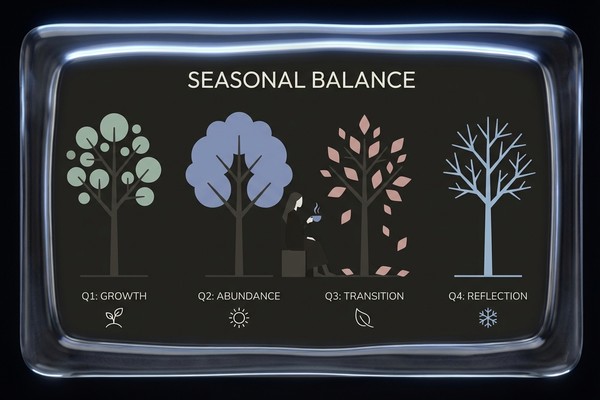
There’s something almost radical about the idea of reviewing your life every three months. Not because you’re broken or behind, but because you’re alive and things change. The project that excited you in January might be draining you by April. The relationship that felt solid in March might need attention by June. The health routine that worked through winter might need adjusting for summer.
Three months is long enough for real patterns to emerge, but short enough that course corrections don’t feel like complete overhauls. It’s the difference between gentle steering and emergency braking.
Most productivity advice treats life like a machine that needs optimizing. But life is more like a garden—it needs regular tending, seasonal adjustments, and sometimes you need to pull up what’s no longer serving you to make room for what wants to grow.
Four Questions That Change Everything
The beauty of a quarterly review isn’t in having the right answers—it’s in asking questions that actually matter. Not “Am I productive enough?” or “What should I optimize?” but deeper questions that help you see where you actually are, not where you think you should be.
The first question is deceptively simple: What’s working? Not what’s perfect, not what matches your five-year plan, but what’s genuinely working in your life right now. Maybe it’s the morning walk you started that’s become a non-negotiable anchor to your day. Maybe it’s the boundary you set with a demanding client that’s created space for better work. Maybe it’s the way you and your partner have figured out a dinner routine that doesn’t leave anyone resentful.
We’re so trained to focus on what’s broken that we often miss what’s humming along beautifully. But recognizing what’s working isn’t just feel-good reflection—it’s strategic intelligence. These are the things to protect, to invest in, to build on.
The second question cuts deeper: What’s accumulated? This is where most people discover they’ve been carrying invisible weight for months. The email newsletter you signed up for in a moment of inspiration but now dread seeing in your inbox. The commitment you made when you had more energy that now feels like a stone in your shoe. The pile of books you bought with good intentions that now just reminds you of all the self-improvement you’re not doing.
Accumulation happens gradually, then suddenly you realize you’re carrying things that no longer fit who you’re becoming.
The third question requires honest inventory: Where are you most depleted, and where are you most energized? This isn’t about good and bad activities—it’s about recognizing that your energy is finite and paying attention to what fills your tank versus what drains it. Sometimes the thing that depletes you is necessary but needs better boundaries. Sometimes the thing that energizes you is something you’ve been treating as optional.
The fourth question is where the magic happens: What needs to shift? Not everything at once, not a complete life overhaul, but what one or two things would create the most relief or movement in your life right now?
Mapping Your Actual Life
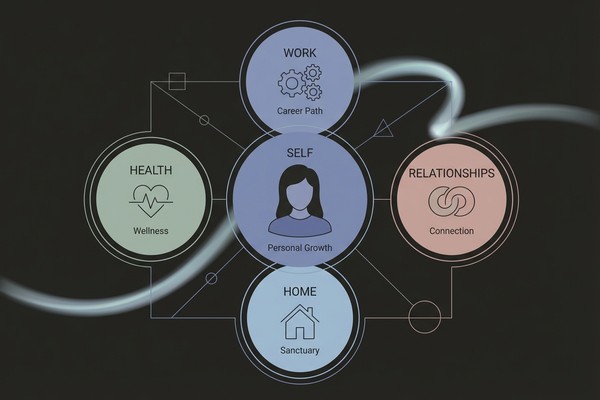
A quarterly review worth doing looks at your whole life, not just your career goals or fitness metrics. Life happens in domains that intersect and influence each other in ways that spreadsheets can’t capture.
Your work domain includes not just your job, but how you feel about your professional identity, whether your current role aligns with your values, and if the way you’re working is sustainable. It’s about noticing if you’ve been saying yes to opportunities that don’t actually excite you, or if you’ve been avoiding challenges that might stretch you in good ways.
Your home domain is about more than chores and maintenance—it’s about whether your physical space supports who you’re becoming, whether your living situation creates peace or stress, and how the daily rhythms of domestic life are working for everyone involved.
Health isn’t just about whether you’re exercising enough. It includes sleep, stress levels, how you’re nourishing yourself, whether you’re addressing nagging issues you’ve been putting off, and if your relationship with your body feels sustainable or punitive.
Relationships deserve their own examination: which connections are giving you energy versus draining it, where you might be overgiving or underinvesting, and whether the people closest to you know who you’re becoming or only who you used to be.
And then there’s the domain we often neglect entirely: your relationship with yourself. Are you treating yourself with the same kindness you’d show a good friend? Are you making space for the things that make you feel like yourself, or have you been so focused on responsibilities that you’ve lost track of what actually brings you joy?
The Art of Gentle Subtraction
The most powerful part of a quarterly review isn’t adding more to your life—it’s recognizing what you can let go of. This is where the real relief lives.
For every domain, there’s usually something that can be kept, something that can be dropped, and something that can be handed off to someone else. The key is being honest about what’s actually serving you versus what you think should be serving you.
Maybe you keep the morning routine that grounds you, drop the podcast that’s started to feel like homework, and hand off the grocery shopping to a delivery service. Maybe you keep the creative project that’s been energizing you, drop the volunteer commitment that’s become a burden, and hand off some of the household management to other family members.
The goal isn’t to become more efficient—it’s to become more intentional about what deserves your attention.
This isn’t about being selfish or irresponsible. It’s about recognizing that your energy and attention are finite resources, and being thoughtful about how you’re spending them. When you’re not depleted by things that don’t matter, you have more to give to what does.
Your Quarterly Date with Reality
The mechanics of a quarterly review are surprisingly simple. Set aside thirty minutes—not a weekend retreat, not a day-long intensive, just thirty focused minutes. Find a quiet space, make yourself a cup of something warm, and sit down with a notebook or document.
Start with gratitude for what’s working, then move through each domain with curiosity rather than judgment. What’s been energizing you? What’s been draining you? What’s accumulated that you didn’t notice day by day? Where do you feel most aligned with who you’re becoming, and where do you feel like you’re just going through motions?
The magic isn’t in having profound insights—it’s in creating a regular practice of paying attention to your actual life instead of the life you think you should be living.
Some quarters, the review will reveal that you’re exactly where you need to be and the main work is to keep protecting what’s working. Other quarters, you’ll discover you’ve drifted further from your values than you realized, and small adjustments can create significant relief.
The point isn’t to optimize yourself into a more productive version of who you are. It’s to stay connected to who you’re becoming, to notice what’s serving that growth and what’s getting in the way, and to make gentle course corrections before you need emergency interventions.
Because the alternative—waiting until crisis forces a reckoning—means living most of your life with that dirty windshield, squinting through accumulated grime instead of seeing clearly where you’re going. And you deserve better than that. You deserve to live with intention, to notice what’s working, and to make space for what wants to emerge.
Your life is happening now, not just during the big moments of reflection. A quarterly check-in is simply a way of honoring that truth.
This article was created with collaboration between humans and AI—we hope you ❤️ it.