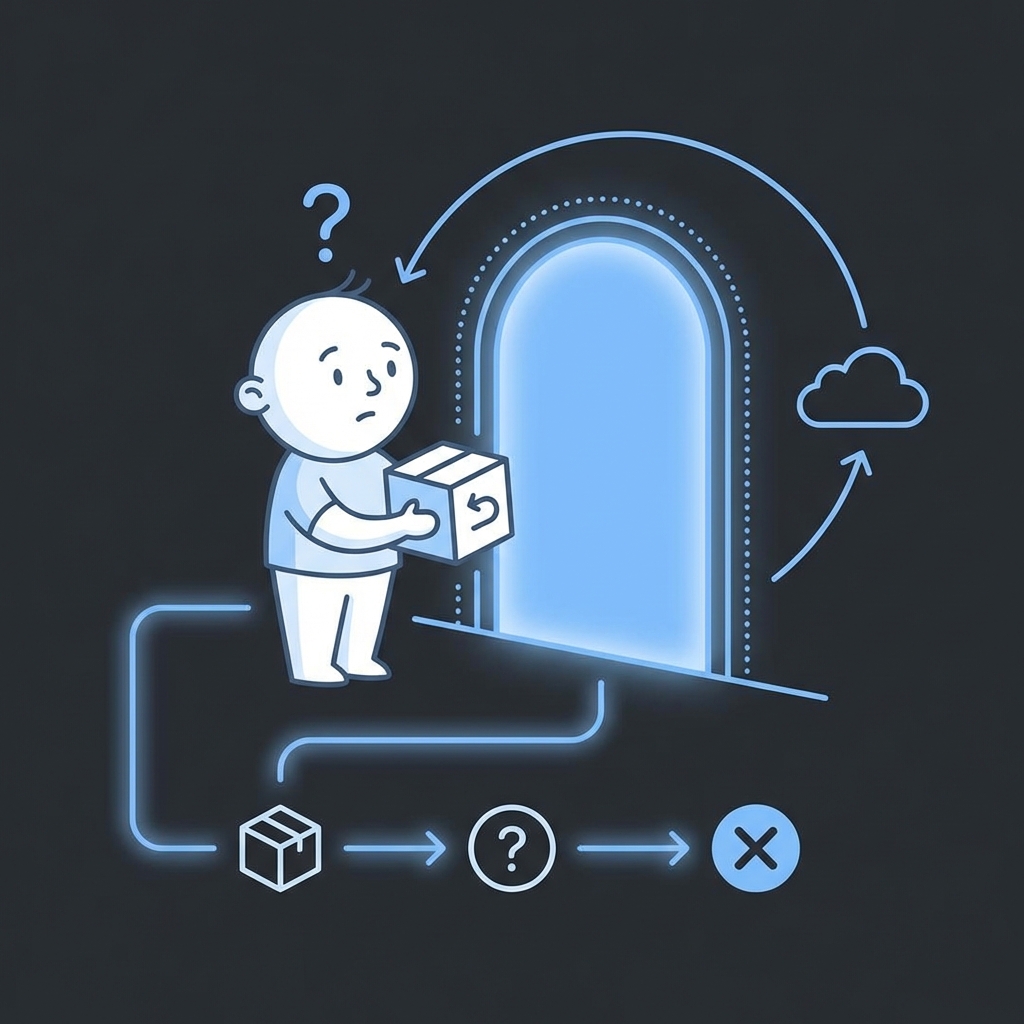
You didn’t sign up for half the things on your mental list. Yet there they are, crowding your thoughts at 2 AM, demanding attention you never consciously agreed to give. The grocery shopping for your elderly neighbor. The team birthday celebrations you somehow became responsible for organizing. The family group chat where you’re the unofficial keeper of everyone’s schedules.
These tasks didn’t arrive with contracts or formal handoffs. They simply appeared in your life through a series of small moments—a casual “you’re so good at this,” a temporary favor that became permanent, or just being the person who happened to be standing nearby when something needed doing.
Most productivity advice treats your task list like a deliberate collection of choices. But the truth is messier. Many of us are carrying work we never chose, managing responsibilities that accumulated through proximity rather than decision. And here’s what no one tells you: you can give them back.
How Tasks Find You (Without Permission)
Tasks are surprisingly good at finding new owners. They don’t need your signature or explicit agreement—just your presence and a moment of vulnerability. Maybe you helped once during a crisis, and suddenly you’re the go-to person. Maybe you demonstrated competence in an area, and that competence became your permanent assignment.
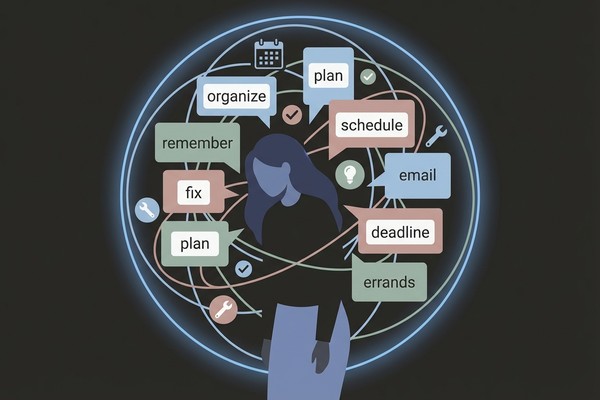
The accumulation happens so gradually that you rarely notice the exact moment a task becomes “yours.” One day you’re helping a colleague navigate a software issue, and six months later you’re the unofficial IT support for half the office. You offered to coordinate one playdate, and now you’re managing the social calendar for three families.
This isn’t about being a people-pleaser or lacking boundaries, though those can accelerate the process. It’s about how tasks naturally migrate toward people who seem capable of handling them. Competence attracts responsibility like a magnet attracts metal filings.
The workplace is particularly skilled at this kind of invisible task redistribution. Someone needs to “own” the team’s morale, the office plants, the new employee onboarding experience that isn’t quite official but definitely needs to happen. These tasks hover in organizational limbo until they find someone willing to catch them—often without realizing they’ve become the permanent catcher.
The Three Magnets: Why Tasks Stick to You
Tasks stick to people through three primary mechanisms, and understanding them helps explain why you’re holding so much you never chose.
Proximity makes you the obvious choice simply by being there. You work near the printer, so printer problems become your problems. You live closest to your aging parents, so their needs naturally flow toward you. Physical or relational closeness creates an invisible assignment of responsibility.
Competence turns your skills into permanent job descriptions. You’re organized, so you become the keeper of group logistics. You’re emotionally intelligent, so workplace conflicts land on your desk. You’re tech-savvy, so every digital problem in your extended family becomes your weekend project. Your abilities become your obligations.
Habit is perhaps the stickiest of all. What starts as temporary help calcifies into permanent expectation. You covered someone’s responsibilities during their vacation, and now it’s just assumed you’ll handle both roles. You started sending weekly family updates during a crisis, and two years later you’re still the family newsletter editor.
Once a task finds you, it tends to stay found.
The insidious part is how natural this feels. Of course you’re the one who handles it—you’re good at it, you’re available, you care about the outcome. The task didn’t arrive with malicious intent; it simply found the most suitable home and settled in.
The Myth of Permanent Ownership
Perhaps the most damaging belief about task accumulation is that once something becomes yours, it stays yours forever. This false permanence keeps people trapped in roles they never auditioned for, carrying weight they never agreed to lift.
But ownership isn’t actually permanent. It just feels that way because we rarely see examples of successful task returns. When someone does manage to hand back a responsibility, it happens quietly. The person who stops organizing office birthday parties doesn’t announce it—they just stop, and eventually someone else picks it up or the tradition fades.
The proof is in what didn’t happen. The meetings that somehow still occurred after you stopped scheduling them. The family events that got coordinated by someone else once you stepped back. The office culture that adapted when you were no longer the unofficial social director.
Tasks want to be completed more than they want to be completed by you specifically. Most responsibilities are more portable than they appear. They’ve just been living with you so long that both you and everyone around you forgot they could live elsewhere.
Your Return Policy: A Practical Framework
Returning tasks isn’t about abandoning responsibility—it’s about returning responsibility to its rightful owner or finding it a more appropriate home. Here’s how to evaluate what you’re carrying that could go back.
Scope Assessment starts with honest inventory. Look at your mental load and identify tasks that arrived without explicit agreement. These are prime candidates for return. Ask yourself: Did I choose this, or did it choose me? Is this aligned with my actual role, or has role creep made it mine by default?
The key is distinguishing between tasks that legitimately belong to you and tasks that have simply attached themselves to you over time. Your job responsibilities, your family obligations, your chosen commitments—these stay. But the unofficial project management, the emotional labor you inherited, the coordination work that somehow became yours—these are eligible for return.
Timing matters more than you might expect. The best time to return a task is before it becomes urgent, while there’s still space for transition. Waiting until you’re overwhelmed or resentful makes the return feel like abandonment rather than redistribution.
Look for natural transition points: the end of a project cycle, someone’s return from leave, a team restructuring, or simply the beginning of a new quarter. These moments create openings for responsibility to shift without creating crisis.
Handoff Language determines whether your return succeeds or gets rejected. The goal isn’t to dump tasks but to facilitate their migration to more appropriate owners. This requires clarity about what you’re returning and why, plus a concrete suggestion for where it should go next.
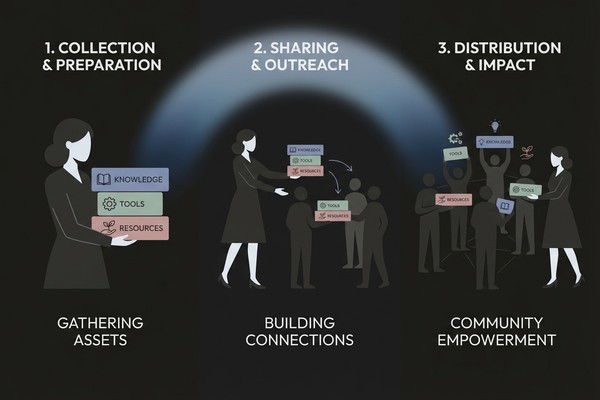
Instead of “I can’t do this anymore,” try “I think this would be better handled by someone who…” Instead of disappearing from a responsibility, communicate the transition: “I’ve been coordinating this, but going forward it makes more sense for…”
What Returns Require
Successful task returns demand three things that our productivity culture rarely acknowledges: courage, clarity, and a recipient.
Courage because returning tasks feels like letting people down, even when you’re returning something that was never truly yours. It requires facing the discomfort of disappointing expectations you never set but somehow inherited. It means accepting that some people might be frustrated with you for stepping back from work you never agreed to do.
Clarity about why the return makes sense—not just for you, but for the task itself. The most successful returns happen when you can articulate why someone else is better positioned to handle the responsibility. This isn’t about your limitations; it’s about optimal task placement.
A recipient who can actually take on what you’re returning. This is where many return attempts fail. You can’t just drop tasks into the void and hope someone catches them. Successful returns identify the appropriate new owner and facilitate the transition.
Sometimes the recipient is obvious—the task returns to its original owner or the person whose actual job description includes this work. Sometimes you need to help create a system or process that can handle what you’ve been handling manually.
The Task You Never Chose
Take a moment to identify one task you currently own that you never actually chose. Maybe it’s the weekly team check-ins that evolved from a temporary solution. Maybe it’s managing your family’s holiday traditions because you organized one successful gathering. Maybe it’s being the point person for neighborhood issues because you happened to be home when the first crisis occurred.
Notice how this task arrived in your life. Was it proximity, competence, or habit that made it stick? How long has it been living with you? What would happen if it found a different home?
This isn’t about immediately returning everything you never chose—some of these tasks might align with your values or bring you satisfaction despite their accidental origins. But awareness creates choice. You can’t return what you don’t recognize as returnable.
The first step in reducing mental load isn’t doing tasks more efficiently—it’s questioning whether they need to be yours at all.
Beyond Individual Returns
While personal task returns can provide immediate relief, the bigger opportunity lies in creating systems that prevent accidental accumulation in the first place. This means making task ownership explicit rather than assumed, creating clear handoff processes, and building cultures where responsibility doesn’t automatically flow toward the most competent or available person.
The goal isn’t to avoid all unexpected tasks—life requires flexibility and mutual support. But there’s a difference between choosing to help and having help become your permanent job description. The difference is awareness, intention, and the knowledge that what accidentally becomes yours can intentionally become someone else’s.
Your mental load doesn’t have to be a permanent collection of everything you’ve ever touched. Some of what you’re carrying can go back to where it came from. Some of it can find a better home. And some of it might discover it didn’t need to be carried by anyone at all.
The return policy exists. You just need to learn how to use it.
This article was created with collaboration between humans and AI—we hope you ❤️ it.