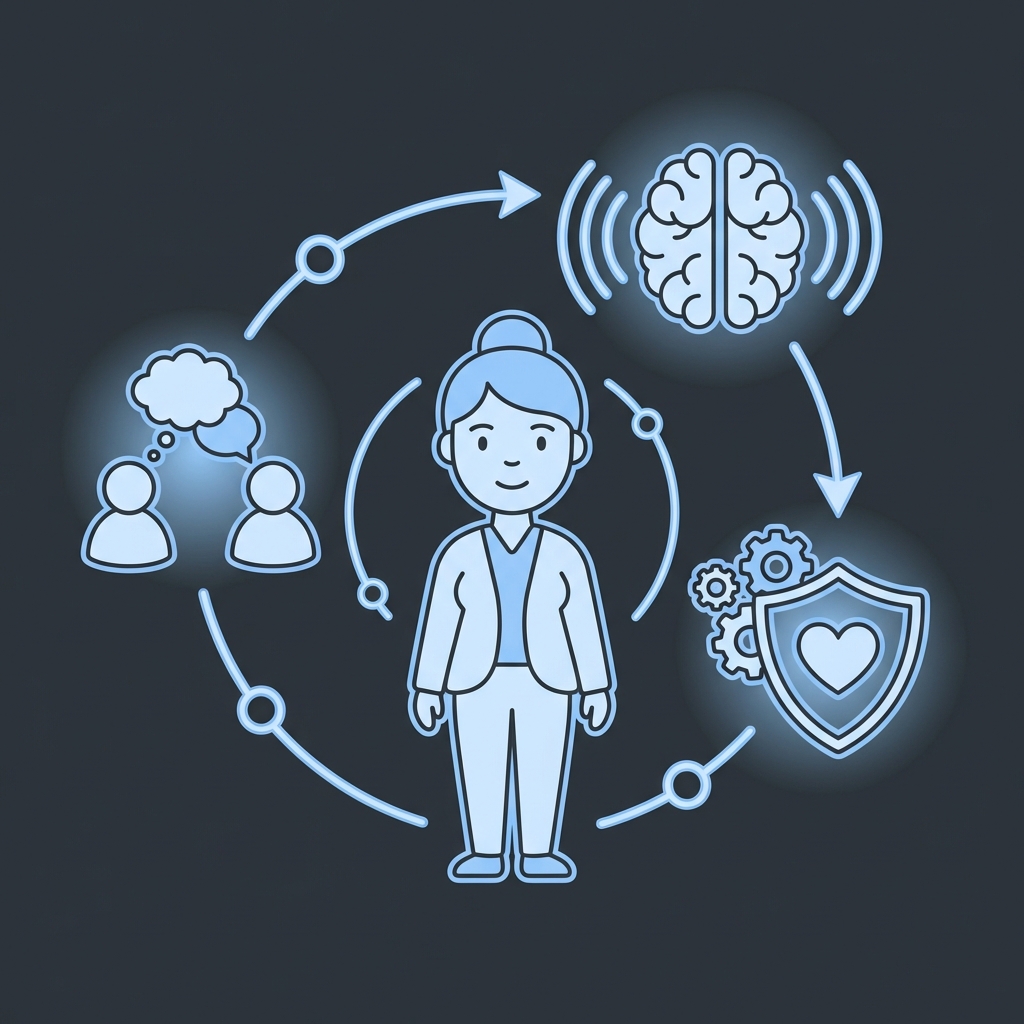
When my friend Sarah called me at 2 AM last month, sobbing about her divorce papers, I didn’t give her advice. I didn’t try to solve anything. I just listened, said “this is awful,” and stayed on the phone until she felt ready to sleep. The next morning, she texted: “I don’t know what I would have done without you last night.”
What happened in that conversation wasn’t just friendship—it was social support in action. And according to decades of research, it might have been one of the most powerful interventions for Sarah’s long-term health and resilience that anyone could have provided.
Social support consistently emerges as one of the strongest protective factors in psychological and medical research. People with strong social connections live longer, recover faster from illness, show greater resilience to stress, and report higher life satisfaction. The effect sizes are so robust that some researchers argue social isolation should be treated as seriously as smoking or obesity as a public health threat.
But here’s what most people don’t understand: the research reveals that “support” is far more nuanced than just “having people around.” The science shows us exactly what kinds of connection actually move the needle—and why so many of us can feel desperately alone even when surrounded by others.
The Architecture of Support
Researchers have identified four distinct types of social support, each serving different psychological and physiological functions. Understanding these categories helps explain why a crowded party can leave you feeling lonelier than a quiet conversation with one close friend.
Emotional support is what most people think of first—the listening ear, the shoulder to cry on, the person who validates your feelings without trying to fix them. This is Sarah’s 2 AM phone call. Research shows emotional support directly buffers the stress response system, actually lowering cortisol levels and reducing inflammation markers.
Instrumental support involves practical help—babysitting your kids when you’re sick, bringing meals after surgery, helping you move apartments. This type of support reduces the cognitive load of managing life’s logistics during difficult times, freeing up mental resources for healing and coping.
Informational support means sharing knowledge, advice, or guidance. This could be your accountant friend helping with tax questions, or someone who’s been through divorce explaining the legal process. It’s about reducing uncertainty and helping people make informed decisions.
Appraisal support might be the least recognized but most crucial type—it’s when someone helps you make sense of your experiences, validates your perspective, or helps you reframe situations. “You’re not crazy for feeling overwhelmed by this” or “Your reaction is completely normal given what you’re dealing with” are examples of appraisal support.
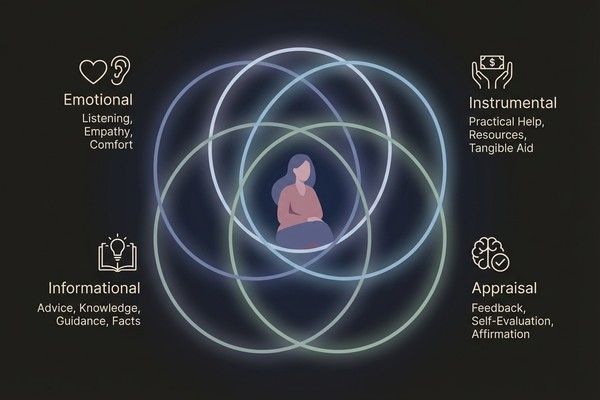
The most resilient people tend to have access to all four types, often from different people in their network. Your sister might provide emotional support, your neighbor instrumental help, your mentor informational guidance, and your therapist appraisal support.
The Power of Knowing It’s There
Here’s where the research gets really interesting: perceived social support often matters more than received social support. In other words, knowing help is available if you need it can be more protective than actually getting help.
This finding initially puzzled researchers. How could the mere belief that support exists be more powerful than actual assistance? The answer lies in how our nervous systems respond to stress.
When we believe support is available, our bodies don’t activate the full stress response—even when facing genuine threats.
Studies using brain imaging show that people who report high perceived social support show less amygdala activation when viewing threatening images. Their bodies literally don’t sound the same alarm bells because some part of them knows they’re not facing danger alone.
This explains why building support networks before you need them is so crucial. By the time you’re in crisis, your capacity to reach out and build new connections is often compromised. The research suggests we should be cultivating these relationships during stable periods, creating a foundation of perceived support that will be there when storms hit.
Acute Stress vs. The Long Haul
Social support functions differently depending on the type of stress you’re facing. During acute crises—job loss, medical diagnosis, relationship breakup—people often mobilize beautifully. Friends bring casseroles, family members call daily, colleagues pick up extra work. This surge of support can be incredibly healing.
But chronic stress tells a different story. When someone is dealing with ongoing challenges—caring for an aging parent, managing a chronic illness, navigating long-term unemployment—the initial wave of support often fades. People return to their own lives, assuming you’ve “gotten through” the crisis, not realizing you’re still in it.
The research shows this is exactly when social support becomes most crucial for long-term health outcomes. Chronic stress without adequate support leads to persistent inflammation, compromised immune function, and increased risk for depression and anxiety. Yet it’s precisely when support often becomes hardest to access.
This creates what I call the “casserole gap”—the period after acute crisis support ends but before normal life resumes. It’s when people stop asking how you’re doing because they assume you’re “better,” but you’re still struggling with the ongoing reality of your situation.
The Loneliness Paradox
Perhaps the most sobering finding in social support research is how many people report feeling unsupported despite being surrounded by others. You can have a full social calendar, hundreds of social media connections, and regular contact with family while still feeling fundamentally alone.
This happens when relationships lack depth, reciprocity, or emotional safety. Surface-level interactions—even frequent ones—don’t provide the psychological benefits that research associates with social support. In fact, maintaining many shallow relationships while lacking deeper connections can actually increase stress and feelings of isolation.
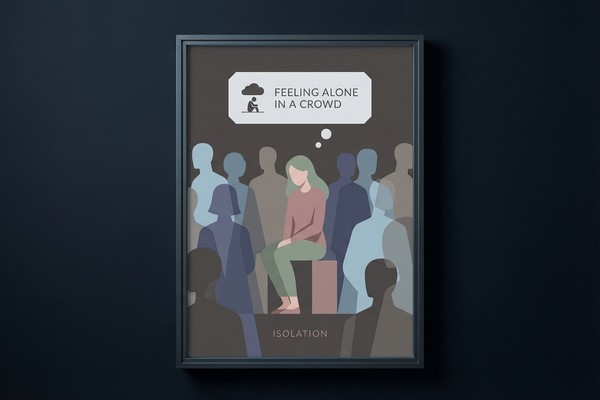
The research reveals that quality trumps quantity every time. Having two people you can truly count on provides more health benefits than having twenty acquaintances you see regularly but can’t really talk to about what matters.
This insight challenges our cultural emphasis on networking and social media connections. While these can be valuable, they’re not substitutes for the kind of relationships that actually protect our health and wellbeing.
Designing for Connection
Understanding the science of social support has practical implications for how we structure our lives. Instead of waiting for support to emerge naturally, we can be intentional about cultivating the relationships that research shows matter most.
This means prioritizing depth over breadth in relationships. It means having conversations that go beyond surface pleasantries. It means being willing to be vulnerable and creating space for others to be vulnerable with you.
Real support isn’t about having all the answers—it’s about being present for the questions.
It also means recognizing that different people might provide different types of support, and that’s perfectly fine. Your workout buddy might not be the person you call during an emotional crisis, but their consistent presence in your life still contributes to your overall sense of being supported.
The research also suggests we should be proactive about offering support to others, not just seeking it for ourselves. Providing support to others has its own health benefits—it activates reward centers in the brain and contributes to a sense of purpose and connection.
Building Before You Need It
The most actionable insight from social support research is this: the time to build your support network is when you don’t need it. During stable periods, when you have emotional and mental bandwidth, invest in relationships that could sustain you during harder times.
This doesn’t mean being transactional about friendship or only connecting with people for what they might provide. Instead, it means recognizing that deep, reciprocal relationships are one of the most important investments you can make in your long-term wellbeing.
It means showing up for others when they need support, knowing that this creates the kind of reciprocal relationships that research shows are most protective. It means being willing to have real conversations about real things, moving beyond small talk to the kind of connection that actually matters.
When Sarah called me that night, she wasn’t just getting emotional support in the moment—she was accessing a relationship we’d been building for years. The foundation of trust, shared vulnerability, and mutual care that made that 2 AM conversation possible didn’t happen overnight. It was the result of countless smaller moments of connection, support, and presence.
The research on social support ultimately tells us something both simple and profound: we’re not meant to navigate life’s challenges alone. The relationships that sustain us through difficult times are among the most powerful tools we have for protecting our health, maintaining our resilience, and finding meaning in our experiences.
In a culture that often emphasizes individual achievement and self-reliance, this feels almost revolutionary. But the science is clear: our connections with others aren’t just nice to have—they’re essential for our survival and flourishing. The question isn’t whether we need support, but whether we’ll be intentional about creating the conditions for it to exist when we need it most.
This article was created with collaboration between humans and AI—we hope you ❤️ it.