
The productivity industrial complex wants you to believe that life is one long optimization problem. Find the right system, develop the right habits, and you’ll cruise smoothly from your twenties to your seventies with the same morning routine and task management app. It’s a seductive lie that ignores something fundamental: life moves in seasons, and each season carries its own invisible weight.
I realized this watching a friend struggle with the same productivity system that had worked beautifully for her just two years earlier. Back then, she was a single consultant with flexible hours and predictable energy. Now she was a new mom trying to apply the same time-blocking method to days punctuated by feeding schedules and sleep deprivation. The system hadn’t failed—it was simply built for a different season of life.
The Weight Shifts, But Never Disappears
Most advice treats life stages like minor variations on a theme. “Busy parent? Just wake up earlier!” “Caring for aging parents? Time to optimize your schedule!” But the invisible labor that fills our minds doesn’t just increase or decrease—it fundamentally changes shape.
In your formation years, the mental load is largely about building: learning systems, establishing routines, figuring out who you want to become. The cognitive work centers on choices and possibilities. Your brain holds potential paths, not daily logistics.
During intensity seasons—whether that’s climbing a career ladder, raising young children, or managing a health crisis—the load becomes immediate and relentless. Your mind carries not just today’s tasks but tomorrow’s contingencies. You’re running multiple complex systems simultaneously, each with their own failure modes and backup plans.
The same productivity hack that saves you in one season can suffocate you in another.
Caregiving seasons bring a different kind of mental weight entirely. You’re not just managing your own life but anticipating the needs of others who can’t advocate for themselves. The invisible work includes emotional regulation, medical coordination, and the exhausting task of being someone else’s external memory system.
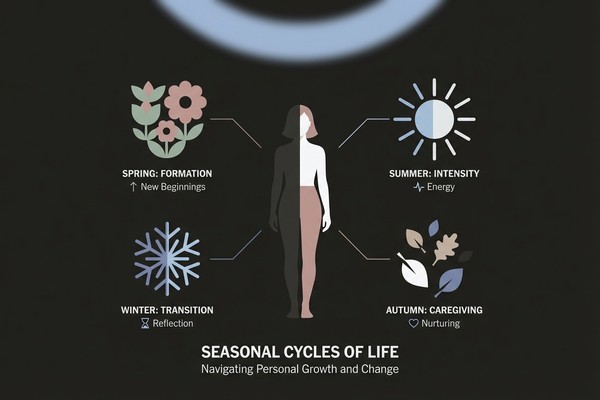
Then there are transition seasons—job changes, divorces, empty nests, retirement—where the mental load is about dismantling old systems while building new ones. Your brain holds both what was and what might be, creating a unique form of cognitive dissonance.
Finally, release seasons offer something rare: the opportunity to carry less. But even these require their own form of invisible work—the active practice of letting go, of resisting the cultural pressure to fill every moment with productivity.
Why Life-Stage Blindness Makes Advice Useless
The worst productivity advice comes from people who’ve forgotten what their current season used to feel like. The empty-nest executive who preaches 5 AM workouts to the mom with a colicky baby. The retired entrepreneur who can’t understand why his adult children don’t just “batch their errands more efficiently.”
This isn’t malice—it’s life-stage blindness. When you’re not actively living in a particular season, its specific constraints become invisible to you. The mental load that felt crushing at the time gets smoothed over by memory, reduced to a simple problem that surely could have been solved with better systems.
I see this blindness everywhere. Productivity gurus who built their expertise during their formation years, then spend decades selling those same strategies to people in completely different seasons. Wellness influencers who discovered meditation during a release season, then wonder why stressed parents can’t just “find ten minutes of quiet.”
The result is advice that not only doesn’t work but actively increases the mental load. Now you’re not just struggling with your season’s natural challenges—you’re also carrying shame about why the “proven” solutions aren’t working for you.
What Season-Specific Support Actually Looks Like
Tools and systems built for specific seasons look radically different from one-size-fits-all solutions. They acknowledge the particular shape of that season’s invisible labor instead of pretending it doesn’t exist.
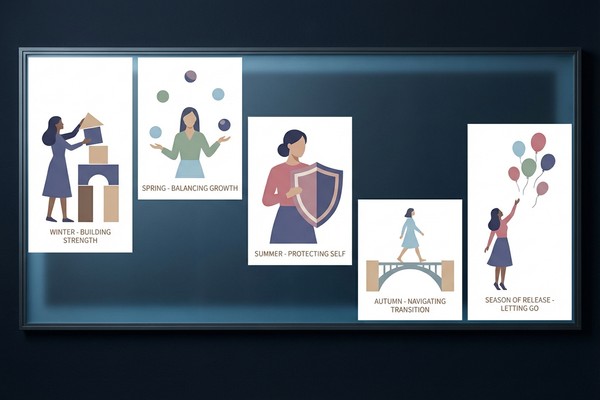
Support for formation seasons focuses on exploration and experimentation. It holds space for uncertainty and provides scaffolding while you build your own systems. The mental load here is about possibilities, so the tools help you navigate choices without premature optimization.
Intensity season support is about survival and sustainability. It assumes you’re already at capacity and works to prevent overflow rather than maximize output. These tools take ownership of outcomes, not just tasks. They remember what you can’t afford to forget and make decisions you don’t have bandwidth to make.
The best tools for any season reduce the cognitive load specific to that season, not just the visible tasks.
Caregiving season support recognizes that you’re managing multiple complex systems with interdependent needs. It anticipates cascading effects and holds contingency plans. Most importantly, it acknowledges that the person doing the caregiving also needs care.
Transition season support is about holding both stability and change. It provides continuity while you rebuild, maintaining what still serves while helping you release what doesn’t. The focus is on gentle restructuring, not dramatic overhaul.
Release season support is perhaps the most misunderstood. It’s not about doing less—it’s about choosing what deserves your mental energy. These tools help you actively practice letting go rather than simply accumulating fewer tasks.
The Season You’re In Right Now
Most of us can identify our current season intuitively, but we rarely give ourselves permission to design our lives around it. We keep trying to force summer strategies into winter realities, then wonder why we’re exhausted.
Formation seasons often feel like you should have it figured out by now. The invisible work of building identity and systems gets dismissed as “just being disorganized.” But this cognitive labor is real and necessary—you’re literally constructing the framework for how you’ll operate in future seasons.
Intensity seasons can feel like drowning in slow motion. Everything seems urgent because in this season, many things actually are urgent. The mental load isn’t a failure of prioritization—it’s the natural result of managing multiple high-stakes systems simultaneously.
Caregiving seasons carry the weight of others’ wellbeing alongside your own. The invisible labor includes not just logistics but emotional regulation, advocacy, and the exhausting work of being strong for people who depend on you. This isn’t martyrdom—it’s the specific cognitive demands of this season.
Transition seasons feel unstable because they are unstable. Your brain is working overtime to maintain continuity while processing change. The mental fog isn’t a personal failing—it’s the natural result of running old and new systems in parallel.
Release seasons can feel surprisingly difficult because our culture doesn’t teach us how to carry less. The invisible work here is active curation—choosing what deserves your mental energy and releasing what doesn’t.
What This Series Will Explore
Over the coming weeks, we’ll dive deep into each season, exploring not just what they look like but what they feel like from the inside. We’ll examine the specific shape of invisible labor in each phase and why the solutions that work in one season often fail spectacularly in another.
More importantly, we’ll explore what support actually looks like when it’s designed for a specific season’s needs. Not generic productivity hacks, but tools and approaches that acknowledge the particular cognitive demands you’re facing right now.
Life isn’t a problem to be solved—it’s a series of seasons to be lived.
We’ll also address the transitions between seasons, which often catch us off guard. How do you recognize when you’re moving from one phase to another? What does it look like to gracefully release the systems that served you in one season to make space for what you need in the next?
This isn’t about optimizing your way through life’s seasons—it’s about understanding them well enough to ask for the right kind of help. Because the support you need in your formation years looks nothing like what serves you during intensity, and the tools that save you during caregiving might suffocate you in release.
The goal isn’t to move through seasons faster or more efficiently. It’s to stop fighting the season you’re in and start designing support that actually fits its shape. Because when you finally have tools built for your current reality instead of someone else’s memory of what life used to be like, the relief is profound.
Which season are you living in right now? And more importantly—what would support designed specifically for that season actually look like?
This article was created with collaboration between humans and AI—we hope you ❤️ it.