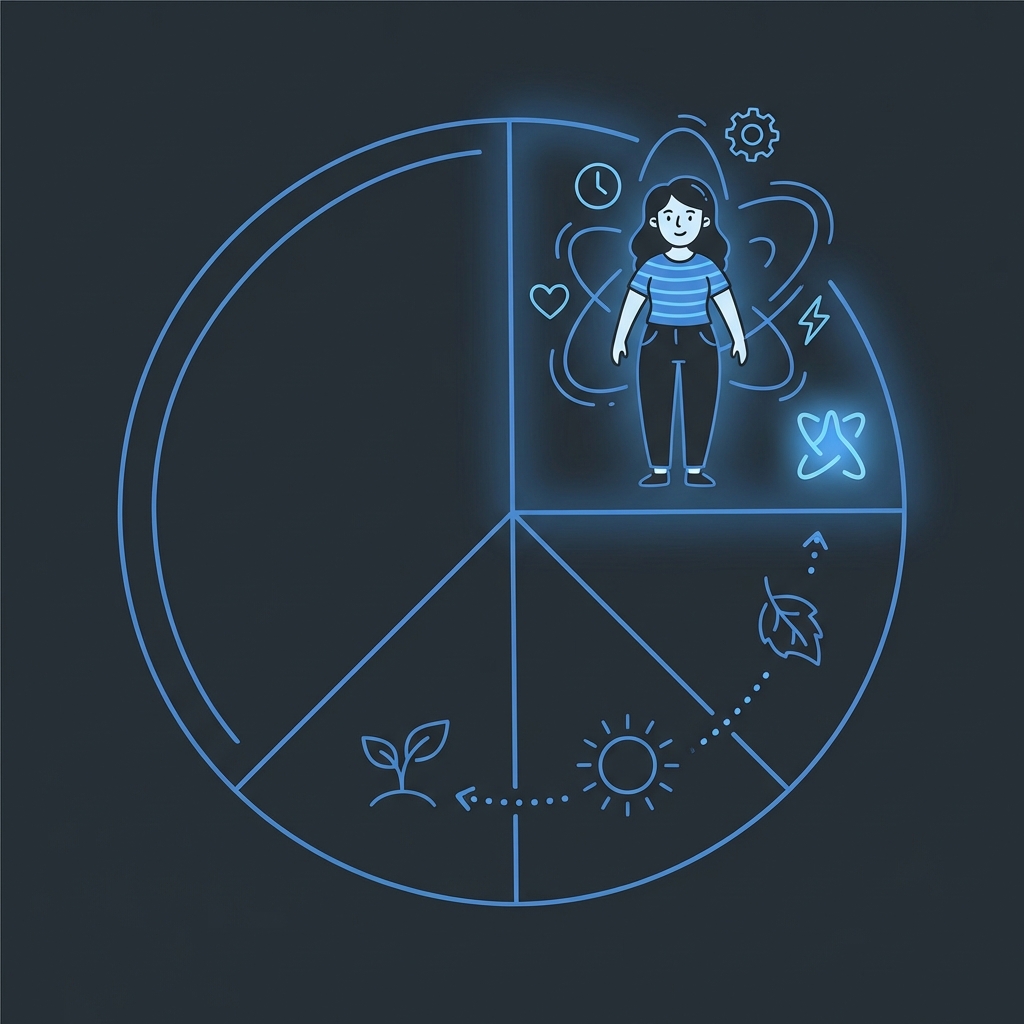
There’s a season of life that doesn’t get talked about enough, probably because the people living through it are too exhausted to write the essays. It’s the season when your toddler has a fever the same week your biggest client wants to accelerate their timeline, while your mom calls to say she’s confused about her new medications, and your partner mentions that the mortgage rate conversation really can’t wait much longer.
Welcome to the intensity years.
These aren’t the years when you’re figuring out who you are or what you want to do with your life. You’ve moved past that particular luxury. These are the years when you know exactly who you are—you’re the person everyone needs, all at once, right now.
When Everything Peaks at Once
The intensity years typically hit somewhere between your early thirties and late forties, though the exact timing varies. What doesn’t vary is the feeling of being caught in a perfect storm of simultaneous demands. Your career is hitting its stride just as your kids need you most. Your parents are beginning to need more support right as your own health starts requiring actual attention instead of benign neglect. Your financial responsibilities have multiplied—mortgage, childcare, maybe student loans, definitely that growing list of things that break and need replacing.
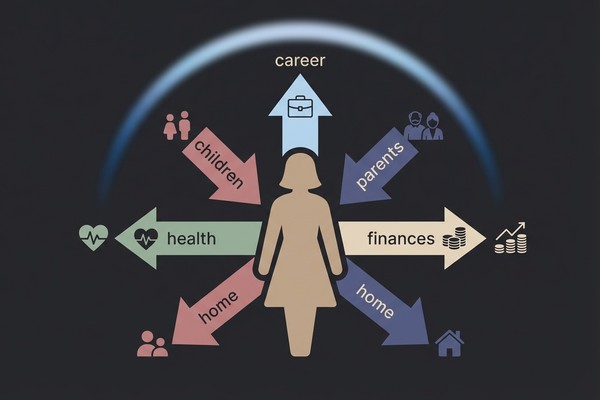
Each domain would be manageable on its own. A demanding career phase when you’re twenty-five and single? Bring it on. Navigating the complexity of young children when that’s your primary focus? Challenging but doable. Supporting aging parents when you have the emotional bandwidth? An honor, even. But the intensity years don’t offer the courtesy of sequential challenges. They pile everything on at once, creating a compound effect where the stress from one area amplifies the difficulty of managing all the others.
The cruel mathematics of this season is that nothing can wait. Your three-year-old can’t postpone needing you because Q4 is busy. Your father’s doctor’s appointment can’t be rescheduled around your presentation to the board. The leak in your roof doesn’t care that you’re already stretched thin. Each demand arrives with its own urgency, its own timeline, its own consequences for delay.
The Myth of “Just This Phase”
Well-meaning people love to remind you that “this is just a phase.” They’re technically right—the intensity years don’t last forever. But they’re also dangerously wrong about the timeline. This isn’t a six-month sprint or even a two-year marathon. For most people, the intensity years span a decade or more. Sometimes longer.
The “just a phase” narrative is particularly insidious because it suggests you should be able to white-knuckle your way through with sheer endurance. It implies that the solution is to simply hold your breath until it passes, rather than learning how to breathe differently in this thinner air.
The intensity years aren’t a sprint you can power through—they’re a climate you have to learn to live in.
This misconception leads to some genuinely harmful advice. People suggest you should say no to everything non-essential, as if the problem is that you’re choosing too many optional commitments. But during the intensity years, almost nothing feels optional. Your child’s need for dinner isn’t optional. Your parent’s medical appointment isn’t optional. The project your boss assigned isn’t optional. The intensity comes from the collision of multiple non-negotiable responsibilities, not from poor boundary-setting.
Why Single-Domain Solutions Fall Short
Most support systems are designed for single-domain problems. There are parenting resources for managing children, career coaching for professional challenges, eldercare guides for supporting aging parents, financial planning for money management. Each assumes you have the mental bandwidth to focus primarily on that one area.
But the intensity years don’t work that way. When you’re trying to manage a work crisis while your child has strep throat and your mother needs help understanding her insurance benefits, you don’t need three separate experts. You need someone who understands that these problems exist in relationship to each other, competing for the same limited resources of time, energy, and mental capacity.
Traditional productivity advice becomes almost comically inadequate here. “Time-blocking” sounds great until your carefully blocked morning gets demolished by a school closure. “Batch similar tasks” makes sense until you realize that every task feels urgent and nothing is actually similar to anything else when you’re operating across completely different domains with completely different stakeholders.
The compound effect of intensity-year stress means that struggles in one area immediately impact your capacity in all others. A sleepless night with a sick child doesn’t just affect your parenting the next day—it affects your ability to focus in meetings, your patience with your aging parent’s repeated questions, your capacity to make good financial decisions, even your ability to remember to eat lunch.
The Emotional Tax of Constant Switching
What makes the intensity years particularly exhausting isn’t just the volume of responsibility—it’s the constant context switching between completely different types of thinking and caring. One moment you’re negotiating a contract, the next you’re wiping a runny nose, then you’re researching physical therapy options for your dad, followed by trying to remember if you paid the water bill.
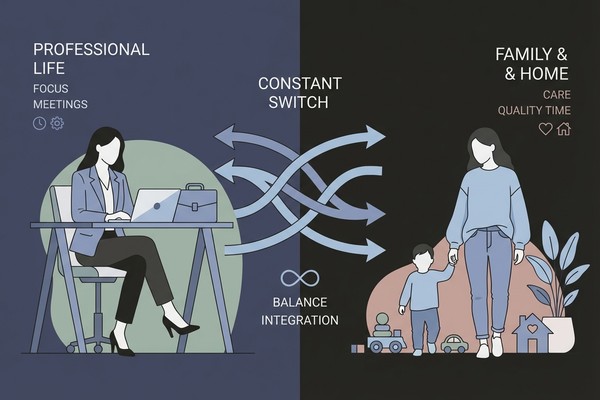
Each context requires different skills, different emotional registers, different ways of being in the world. The professional you needs to be strategic and decisive. The parent you needs to be patient and nurturing. The adult child you needs to be respectful but advocating. The partner you needs to be collaborative and present. The friend you—well, the friend you might have to wait.
This constant switching creates what researchers call “cognitive residue”—part of your brain stays stuck in the previous context even as you try to fully engage with the current one. You’re never quite all there, anywhere.
What Thriving Actually Requires
Here’s what the productivity industrial complex gets wrong about the intensity years: the solution isn’t optimization. You can’t hack your way out of this season by finding the perfect app or morning routine or organizational system. The intensity years require a fundamentally different approach—one focused on reducing mental load rather than increasing efficiency.
Thriving during this season means accepting that you can’t hold it all in your head anymore. It means building systems that remember for you, track for you, and follow up for you. It means acknowledging that your brain is already doing the work of three full-time jobs and maybe it’s time to get some help with the remembering part.
The goal isn’t to do more things better—it’s to hold fewer things in your mind while still ensuring nothing falls through the cracks.
This might mean finally investing in tools that actually take responsibility for outcomes, not just organize your inputs. It might mean having honest conversations with family members about redistributing some of the invisible work of coordination and planning. It might mean recognizing that the mental load of remembering everyone else’s needs and schedules and preferences is itself a job, and treating it accordingly.
The Long View
The intensity years test everything you thought you knew about yourself and your capacity. They reveal the difference between being busy and being overwhelmed, between having a full life and having an unsustainable one. They teach you that resilience isn’t about how much you can carry—it’s about knowing when and how to set things down.
Most importantly, they teach you that this feeling—the feeling of being pulled in seventeen directions at once, of never quite catching up, of loving your life and feeling exhausted by it simultaneously—isn’t a personal failing. It’s a rational response to an irrational volume of simultaneous responsibility.
The people around you who seem to be handling it all effortlessly? They’re not. They’re just in a different season, or they’ve learned to be more selective about what they share, or they have support systems you can’t see. The intensity years humble everyone eventually.
What you need during this season isn’t motivation or inspiration or another productivity hack. You need acknowledgment that what you’re doing is hard, validation that feeling overwhelmed makes perfect sense, and practical support that actually reduces what you have to hold in your head.
You need someone to recognize that you’re already doing the impossible, every single day.
Take a moment to name the top three simultaneous demands in your life right now. Not to solve them or optimize them or feel guilty about them. Just to acknowledge them. Sometimes the first step toward managing intensity is simply naming it honestly.
This article was created with collaboration between humans and AI—we hope you ❤️ it.