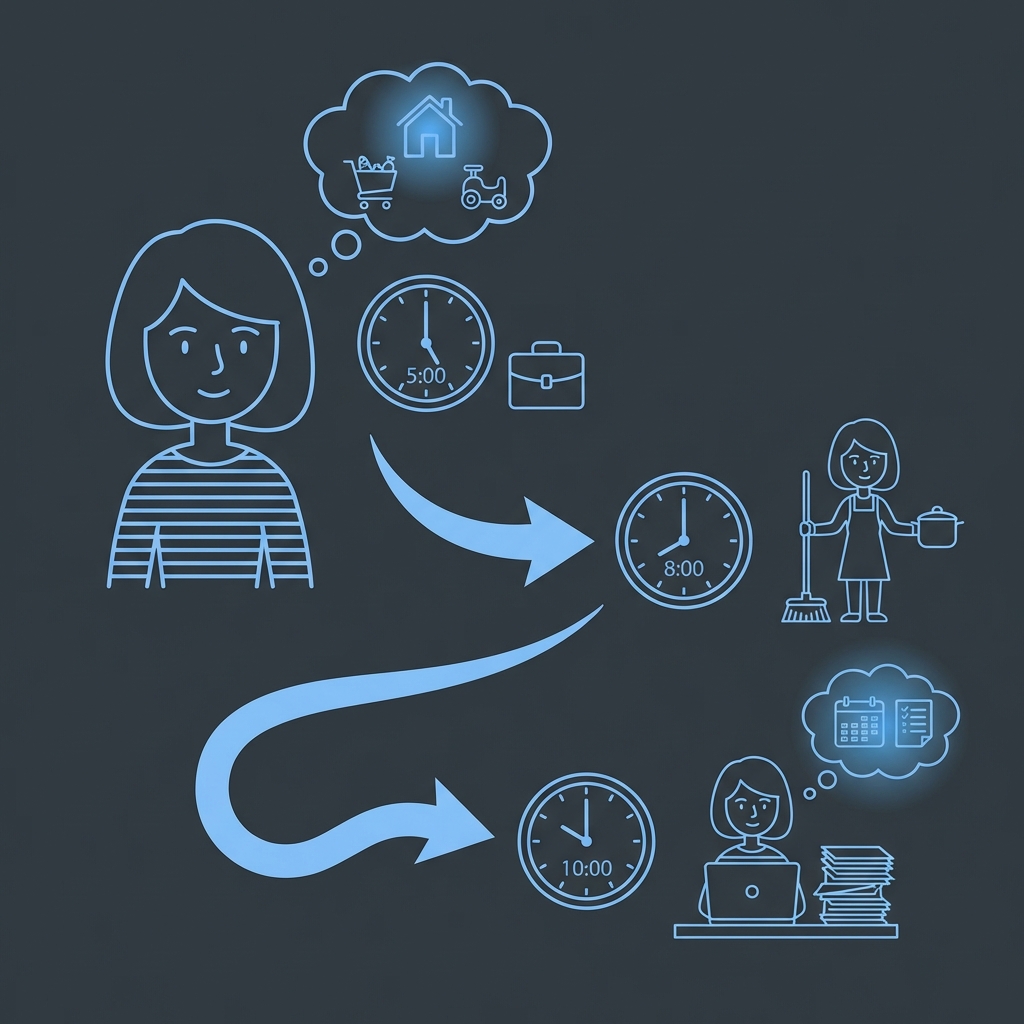
You finally get the kids to bed. The dishes are done, the lunches are packed, and tomorrow’s clothes are laid out. You sink into the couch, expecting relief, but instead find your mind spinning through the day’s interactions. Did you handle that tantrum well? Should you have been firmer about screen time? What about that doctor’s appointment you need to schedule? The physical work is done, but your brain hasn’t gotten the memo.
This is what I call the second shift of the second shift—that persistent mental processing that happens after all the visible caregiving tasks are complete. While sociologist Arlie Hochschild coined “the second shift” to describe the unpaid domestic work that follows paid work, there’s another layer she didn’t fully capture: the cognitive and emotional aftermath that continues long after the last dish is put away.
The Invisible Processing Load
We’ve become comfortable talking about the second shift—the cooking, cleaning, and childcare that happens after the official workday ends. But there’s a residual cognitive load that persists even after these tasks are complete. Your body might be still, but your mind is conducting a complex orchestra of replaying, planning, and worrying.
This isn’t the same as the mental load of remembering what needs to be done. This is the processing of what was already done and the anticipatory anxiety about what’s coming next. It’s the difference between holding the list and digesting the experience.
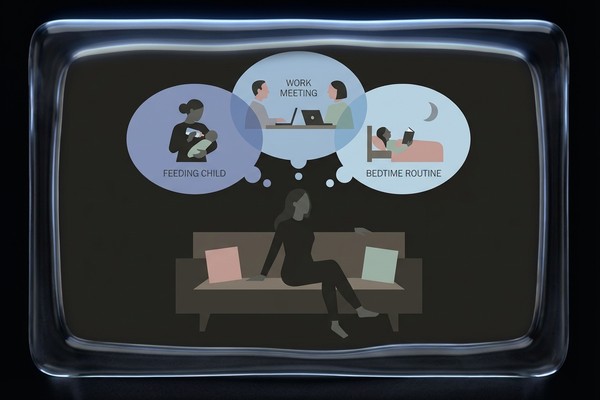
Think about it: when you finish a challenging work project, you might decompress by talking it through with a colleague or reflecting on what went well. But caregiving rarely gets this kind of processing time. Instead, you move from one intense interaction to the next, accumulating emotional residue without space to metabolize it.
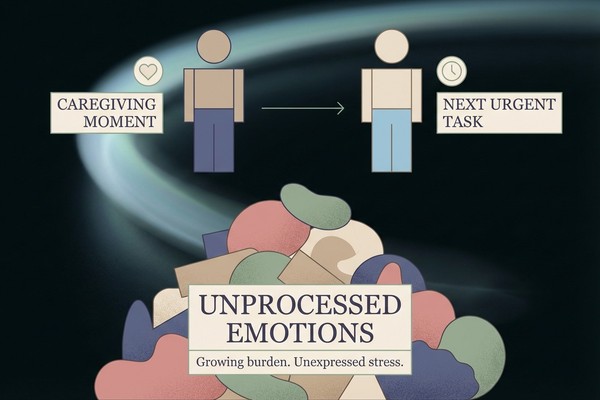
The pediatrician visit where your child melted down. The homework battle that ended in tears (yours or theirs). The moment you snapped when you didn’t mean to. These experiences don’t just disappear when the next task begins—they layer up, creating a backlog of unprocessed emotional data that your brain tries to sort through whenever it gets a quiet moment.
Why Your Brain Won’t Switch Off
There’s a reason you can’t simply decide to stop thinking about the day once the visible work is done. Your nervous system doesn’t distinguish between physical and emotional labor when it comes to recovery. Just as your muscles need time to repair after a workout, your mind needs time to process and integrate emotional experiences.
But here’s the cruel irony: the moments when you finally have space to process are often the moments you most want to escape into mindless scrolling or Netflix. Your brain is trying to do necessary work, but it feels like more work when what you crave is true rest.
The cruelest part isn’t that the work never ends—it’s that even when it does, your mind can’t tell the difference.
This processing load affects everything. It’s why you lie in bed replaying conversations instead of sleeping. It’s why you’re physically present but mentally elsewhere during rare moments of connection with your partner. It’s why “me time” often doesn’t feel restorative—because your mind is still sorting through the accumulated emotional data of caregiving.
The conventional advice to “just be present” or “practice mindfulness” misses the point entirely. Your brain isn’t being difficult; it’s trying to complete necessary cognitive work that got interrupted by the relentless pace of caregiving demands.
The Processing Gap
In most areas of life, we have natural processing rhythms. Work meetings end with action items. Conversations conclude with understanding or resolution. Even physical exercise has clear endpoints—you finish the run, you complete the workout.
But caregiving is different. It’s a series of interrupted interactions and incomplete emotional cycles. You’re mediating a sibling conflict when someone needs help with homework. You’re processing your own frustration when bedtime routines demand patience you don’t have. Each interaction ends not because it’s resolved, but because something else needs attention.
This creates what I think of as a processing gap—accumulated emotional experiences that never get fully integrated. They pile up like unread emails, creating a background hum of cognitive tension that persists even during downtime.
The gap widens because caregiving involves such high emotional stakes. When you’re harsh with your child, it’s not just a mistake you can quickly correct and move on from. It touches your deepest fears about what kind of parent you are. When your child struggles, you don’t just problem-solve—you absorb their distress and carry it forward.
The Ripple Effects
This residual processing load doesn’t stay contained to your “off hours.” It seeps into everything. You’re less present with your partner because part of your mind is still working through the day. You’re less creative at work because your cognitive resources are already allocated to background processing. You’re less patient with your children because you’re operating from a place of depletion rather than abundance.
Sleep becomes elusive not just because you’re tired, but because your brain finally has uninterrupted time to sort through everything it couldn’t process during the day. The moment your head hits the pillow, the replay begins: what you could have done differently, what you need to remember for tomorrow, whether you’re failing at the most important job you’ll ever have.
The exhaustion isn’t just from doing the work—it’s from never fully completing the emotional cycle of processing the work. You’re running on a cognitive deficit, always slightly behind in integrating your experiences.
Creating Space for Integration
Recovery from this kind of load requires more than time—it requires intentional processing space. This isn’t about productivity hacks or optimization strategies. It’s about creating conditions where your mind can complete the emotional work that caregiving generates.
Sometimes this looks like giving yourself permission to replay the difficult moments instead of pushing them away. Your brain is trying to learn and integrate; fighting this process often prolongs it. Other times it means finding small ways to externalize the spinning thoughts—writing them down, talking them through, or even just acknowledging them out loud.
Recovery isn’t about having more time; it’s about having the right kind of space for your mind to finish what it started.
The goal isn’t to eliminate the processing—it’s to create better conditions for it to happen. This might mean protecting transition time between activities, even if it’s just two minutes to breathe between putting kids to bed and starting the next task. It might mean having a regular check-in with yourself about how the day felt, not just what got accomplished.
Beyond Individual Solutions
Here’s what’s particularly insidious about the second shift of the second shift: it’s often invisible even to you. You know you’re tired, but you might not recognize that part of that exhaustion comes from unprocessed emotional labor. You know your mind races at night, but you might not connect it to the accumulated cognitive residue from caregiving.
This is where systems that truly reduce mental load become crucial. It’s not enough to have tools that help you remember what needs to be done—you need systems that can absorb some of the ongoing cognitive work so your brain has space to process what’s already happened.
When a system can anticipate next steps and hold the planning load, your mind is freed up for the integration work that only you can do. Instead of lying in bed thinking about tomorrow’s logistics while also processing today’s emotional experiences, you can focus on one or the other.
The relief isn’t just from having fewer things to remember—it’s from having cognitive space to metabolize the experiences that matter most. Because at the end of the day, the work of caring isn’t just about getting things done. It’s about processing the profound emotional reality of being responsible for another human being. And that work deserves space to be completed, not just endured.
The second shift of the second shift isn’t a problem to be solved—it’s a reality to be acknowledged and supported. Your mind isn’t broken for needing time to process. Your exhaustion isn’t weakness. It’s the natural result of doing work that matters more than anything else, work that deserves to be fully felt and integrated, not just pushed through.
This article was created with collaboration between humans and AI—we hope you ❤️ it.