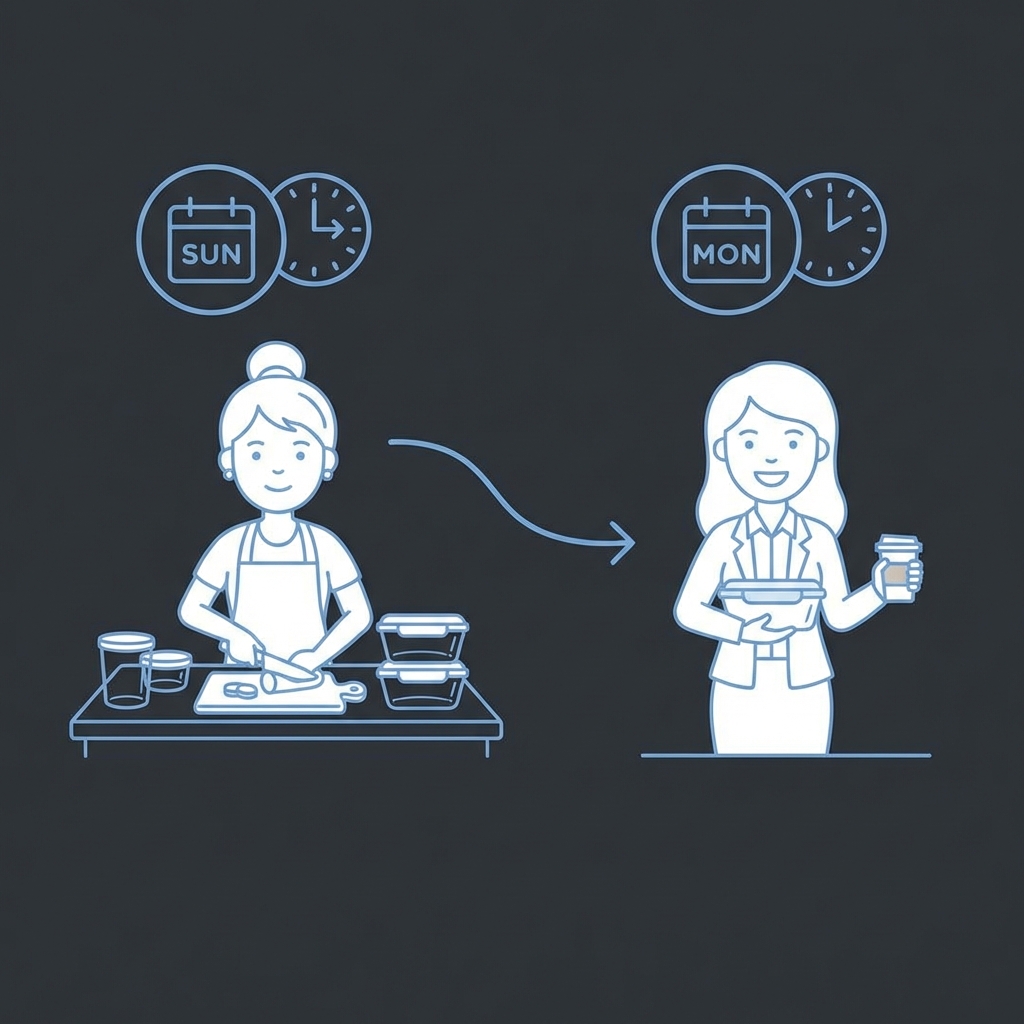
Sunday, 7:17 PM. The house has that particular quiet that comes after dinner dishes are done and before bedtime routines begin. There’s still light coming through the kitchen window, but it’s that golden, slanted kind that whispers the weekend is almost over.
You’re standing at the counter, and without really thinking about it, you reach for the bread. Two sandwiches for tomorrow’s lunch boxes. Turkey and cheese for one kid, peanut butter and jelly for the other—the one who decided last Tuesday that turkey is “too slimy” and has held firm to this position ever since.
This isn’t productivity theater. There are no color-coded charts or optimization hacks here. This is something quieter and more essential: the small, specific work of maintaining a life.
The Architecture of Tomorrow
Your hands move through familiar motions. Sandwiches wrapped and labeled, because there’s nothing quite like the morning panic of two identical lunch bags and no time to investigate which is which. Water bottles filled and placed just so in the fridge. Backpacks checked for forgotten permission slips, library books, that one math worksheet that somehow migrated to the bottom of the bag three days ago.
Each action is small. Unremarkable. The kind of thing that doesn’t make it onto anyone’s highlight reel or productivity blog. But string them together, and something larger emerges—a quiet architecture that holds tomorrow together before tomorrow even arrives.
You’re not just making lunches. You’re protecting something more precious: the possibility of a calm morning. The gift of your eight-year-old walking into school with confidence instead of the low-level anxiety that comes from a rushed, chaotic start. Your own first hour of the day, preserved from the particular kind of stress that comes from playing catch-up before you’ve even had coffee.
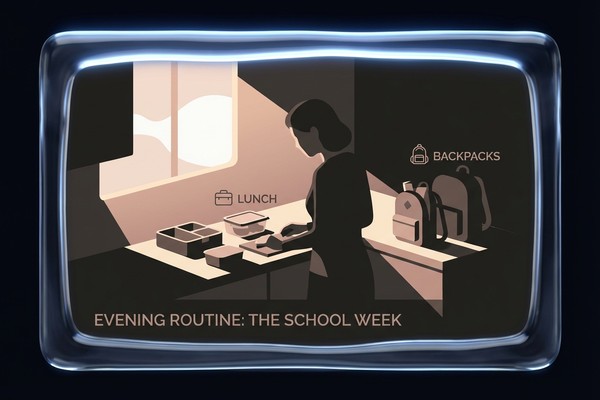
What looks like simple preparation is actually a form of time travel—borrowing calm from tonight to give to tomorrow morning.
The invisible labor here isn’t just in the doing, but in the remembering. Knowing that tomorrow is picture day, so the nice shirt needs to be accessible, not buried in the laundry basket. Remembering that Wednesday is early dismissal, which means adjusting pickup plans. Anticipating that the morning will be rushed, as mornings always are, and building small buffers against that reality.
This is the work that happens in the margins, the cognitive load that doesn’t show up on any job description but shapes the quality of everyone’s day. It’s the difference between a family that moves through their morning with relative ease and one that starts each day feeling like they’re already behind.
When the System Breaks Down
We know this work matters most when it doesn’t happen. When Sunday evening gets swallowed by unexpected plans or exhaustion or the simple human need to sometimes just sit down. When Monday morning arrives and the lunches aren’t made, the permission slip isn’t signed, the soccer cleats are nowhere to be found.
The ripple effects are immediate and surprisingly far-reaching. The morning that should have been smooth becomes a series of small crises. Someone’s running late, which means someone else is running late. The careful timing that usually gets everyone where they need to be starts to collapse.
But it’s not just about logistics. There’s an emotional cost too. The child who feels unprepared, slightly off-kilter as they start their day. The adult who begins Monday feeling reactive instead of intentional, playing defense instead of moving through the day with purpose.
The morning chaos creates a particular kind of stress—not the productive stress that comes from tackling a meaningful challenge, but the depleting stress of constantly putting out small fires. It’s the difference between feeling like you’re directing your day and feeling like your day is directing you.
The Invisible Becomes Visible
Here’s what’s remarkable about this Sunday evening ritual: it’s almost entirely invisible when it works. The smooth morning, the prepared child, the sense of being ahead of the day instead of behind it—none of these things announce themselves. They’re noticeable mainly in their absence.
This is the paradox of so much care work. The proof is in what didn’t happen. The meltdown that didn’t occur. The stress that didn’t accumulate. The morning that felt manageable instead of overwhelming.
The most successful preparation is the kind that makes itself invisible—creating space for life to unfold naturally instead of frantically.
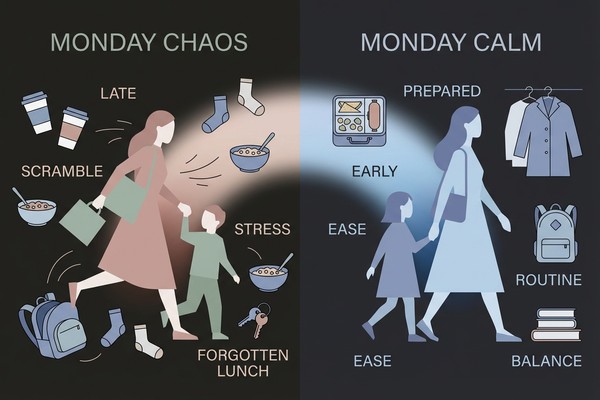
Most productivity advice focuses on optimization—how to do more, faster, better. But this Sunday evening work is different. It’s not about optimization. It’s about creating conditions for life to feel livable. It’s about holding space for the reality that mornings with children are inherently unpredictable, and building small buffers against that unpredictability.
The lunch made tonight means one less decision to make tomorrow. The backpack checked now means one less thing to remember in the morning rush. The outfit chosen tonight means one less negotiation to navigate when everyone’s already running late.
The Emotional Labor of Anticipation
What makes this work particularly complex is how much of it happens in your head. The mental scanning of the week ahead. The anticipation of needs before they become urgent. The quiet calculation of what can be prepared now to make later easier.
This cognitive work is real work, even though it doesn’t produce anything tangible. It’s the work of holding the family’s schedule in your mind, of tracking everyone’s needs and preferences and obligations. Of being the person who remembers that Tuesday is show-and-tell and Friday is pajama day and next week is spirit week with a different theme each day.
The mental load of this anticipation is substantial, but it’s also largely invisible to others. They see the smooth morning, the prepared lunch, the remembered permission slip. They don’t see the cognitive work that made those things possible.
This is why the Sunday evening ritual matters so much. It’s a way of downloading some of that mental load into concrete actions. Of taking the swirling complexity of the week ahead and breaking it down into manageable, specific tasks that can be completed now, while there’s still time and space to think clearly.
Naming This as Care
There’s a tendency to minimize this work, to see it as just part of the basic maintenance of family life. But naming it more precisely matters. This is care work. This is the work of creating conditions for others to thrive. This is the work of holding space for life to unfold with a little more ease and a little less stress.
It’s care for your future self, who will wake up tomorrow to a day that feels more manageable because of the work you did tonight. It’s care for your children, who will start their day feeling prepared and confident instead of scattered and stressed. It’s care for your family’s collective well-being, creating the conditions for everyone to move through their day with more intention and less reactivity.
The Sunday evening reset isn’t about perfection—it’s about creating small pockets of calm in a world that often feels chaotic.
But here’s the question that sits at the heart of this work: who sees it? Who recognizes the cognitive load, the emotional labor, the quiet work of anticipation that makes smooth mornings possible? Who notices when the system works, when the preparation pays off, when the invisible architecture holds?
Often, the answer is no one. This work is most visible when it doesn’t happen, most appreciated in its absence. The person doing it becomes, in some sense, invisible too—the one who makes everything else possible, but whose contribution disappears into the smooth functioning of family life.
Maybe that’s okay. Maybe the reward is in the work itself, in the quiet satisfaction of creating conditions for others to thrive. But maybe it’s also worth pausing, on those Sunday evenings, to recognize this work for what it is: not just preparation, but a profound act of care. Not just getting ready for tomorrow, but creating space for life to unfold with intention instead of chaos.
The bread is wrapped. The bags are packed. Tomorrow is as ready as tonight can make it. And in that small act of preparation lies something larger: the ongoing work of holding a life together, one Sunday evening at a time.
This article was created with collaboration between humans and AI—we hope you ❤️ it.