
When was the last time you called someone just because you were having a hard day? Not because you needed advice or a solution, but because you needed to feel less alone in whatever you were carrying.
If you’re drawing a blank, you’re not unusual. Emotional support—the kind where someone simply witnesses your experience without trying to fix it—might be the most essential form of support and the one we’re most likely to go without. We’ll ask for help moving furniture before we’ll admit we’re struggling with the weight of our own thoughts.
This isn’t about being antisocial or overly independent. It’s about how emotional support works differently than other kinds of help. You can’t just decide you need it and then immediately access it. It requires relationships that have been tended over time, trust that’s been built gradually, and often a vulnerability that feels risky when you’re already overwhelmed.
What Emotional Support Actually Means
Emotional support isn’t just having someone listen to you vent. That’s part of it, but it’s more nuanced than that. Real emotional support is being heard without judgment, having your feelings validated as reasonable responses to your circumstances, and feeling genuinely less alone in whatever you’re experiencing.
It’s the difference between someone saying “that sounds really hard” and someone saying “have you tried making a list?” One acknowledges your reality; the other immediately shifts into problem-solving mode that can leave you feeling more isolated than before.
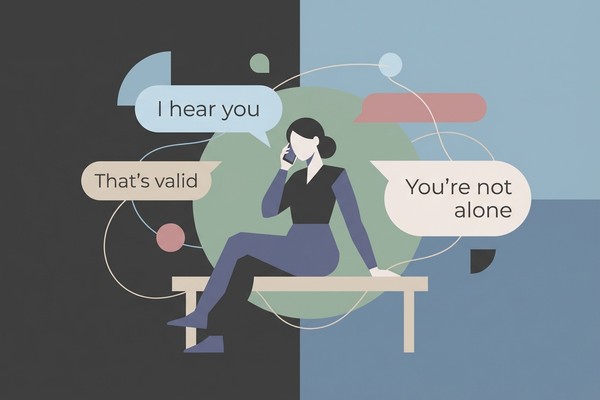
The best emotional support often comes with a specific kind of presence. The person isn’t distracted, isn’t waiting for their turn to talk, isn’t mentally composing advice. They’re genuinely with you in the difficulty of whatever you’re experiencing. This kind of attention is rare and precious, which is exactly why it can’t be taken for granted.
Sometimes emotional support looks like someone saying exactly the right thing. But just as often, it’s someone sitting with you in the wrongness of a situation without trying to make it better. It’s the friend who doesn’t suggest silver linings when you’re grieving, or the partner who doesn’t immediately jump to solutions when you’re overwhelmed.
Taking Inventory: Who Can You Actually Call?
Here’s the uncomfortable exercise: when something genuinely difficult happens in your life, who do you call? Not who could you theoretically reach out to, but who would you actually contact when you’re in the thick of something hard?
For many people, this list is surprisingly short. Maybe it’s one person. Maybe it’s no one. Maybe it depends entirely on what kind of difficulty you’re facing—you have someone for work stress but not relationship problems, or someone for family drama but not health scares.
The inventory gets more complicated when you start considering the unspoken rules around each relationship. There’s the friend you can call about anything except your marriage. The family member who’s great with practical crises but can’t handle emotional ones. The colleague who gets work stress but would be weird about personal stuff.
The people we can call when it gets hard aren’t just the people who care about us—they’re the people who can be present with difficulty without needing to escape from it.
Then there are the relationships that feel one-sided in terms of emotional support. You’re always the one listening, but you’re not sure they could handle being the listener. Or there are people you love who care about you deeply but who get so anxious about your problems that calling them would actually make you feel worse.
The Three Common Gaps
Most people run into one of three obstacles when they need emotional support, and often it’s a combination of all three.
The first gap is simply not having anyone to call. This isn’t necessarily about being lonely or friendless—you might have plenty of social connections that don’t translate into emotional support relationships. You might have moved recently, or your closest relationships might be going through their own difficult periods, or the people you’re closest to might not be emotionally available in the ways you need.
The second gap is having people you could theoretically call but not wanting to burden them. This one’s tricky because sometimes it’s genuine consideration—they really are dealing with a lot right now—and sometimes it’s a story we tell ourselves to avoid the vulnerability of reaching out. The fear of being too much, too needy, or too dramatic can keep us isolated even when support is available.
The third gap might be the most frustrating: having people who would be willing to provide emotional support but not having the words to ask for what you need. You know something’s wrong, but you can’t articulate it. Or you’re afraid that if you start talking about it, you’ll fall apart in a way that feels uncontainable.
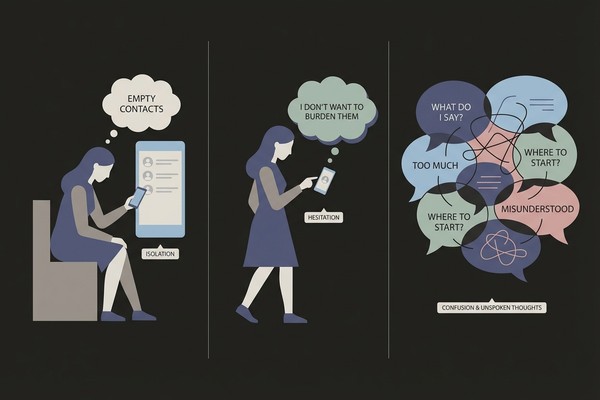
This last gap is particularly common for people who are used to being the strong one, the problem-solver, the person others come to for support. When you’re accustomed to being needed rather than needy, it can be genuinely difficult to find language for your own struggles.
The Investment Problem
Here’s what makes emotional support different from other kinds of help: it requires investment before the crisis. You can’t build the kind of trust and intimacy that real emotional support requires when you’re already in crisis mode. It has to be developed over time, through smaller moments of vulnerability and reciprocal care.
This is why the advice to “reach out when you need help” often falls flat. By the time you desperately need emotional support, it might be too late to create the relationships that could provide it. The groundwork has to be laid during the ordinary moments, through the accumulated experience of showing up for each other in smaller ways.
Think about the people you’d be comfortable calling in a crisis. Chances are, those relationships have been built through countless smaller interactions where emotional honesty was practiced and received well. Maybe it started with admitting you were nervous about a presentation, or sharing frustration about a family situation, or being honest about feeling overwhelmed by everyday responsibilities.
The investment isn’t just about time—it’s about emotional risk. Every time you share something real about your inner experience and it’s received with care rather than judgment, you’re building emotional support capacity in that relationship. But it requires the other person to be willing and able to make that same investment.
The Reciprocity Question
One of the most important questions in evaluating your emotional support network is whether you’re also a source of emotional support for others. Not because relationships need to be perfectly balanced—that’s impossible and unnecessary—but because being able to provide emotional support usually means you understand what it looks like to receive it.
If you find yourself always in the listener role, never the one being heard, that’s information about the relationship dynamics in your life. It might mean you’re drawn to people who need a lot of support but can’t provide it, or it might mean you’ve unconsciously positioned yourself as the strong one who doesn’t need care.
The ability to receive emotional support is actually a skill that requires practice, just like the ability to provide it.
Sometimes people who are natural caregivers struggle to receive emotional support not because it’s unavailable, but because they haven’t developed the capacity to be vulnerable in that way. They know how to listen, how to validate, how to sit with someone else’s difficulty, but they don’t know how to let someone else do those things for them.
This isn’t about keeping score or making sure every relationship is perfectly reciprocal. It’s about recognizing that emotional support flows best in relationships where both people have experience being both the giver and receiver of care.
Building Capacity Without Creating Burden
The challenge is building emotional support capacity without creating one-sided relationships or overwhelming the people in your life. This requires some strategic thinking about how emotional intimacy develops and what different people in your life are actually available for.
Some relationships can handle deep emotional sharing; others work better with lighter check-ins that still create connection. Some people are great at providing support during acute crises; others are better at ongoing emotional maintenance. Some friends can handle work stress but not relationship problems; others are the opposite.
The goal isn’t to turn every relationship into a deep emotional support system. It’s to have enough variety in your support network that you’re not putting all the emotional weight on one person, and you’re not going without support when you need it.
This might mean cultivating different types of emotional connection with different people. The colleague who gets work frustrations. The friend who understands parenting challenges. The family member who’s good in a crisis. The neighbor who’s great for everyday reality checks.
It also means being honest about what you can provide to others. If you’re going through your own difficult period, you might not have capacity to be someone’s primary emotional support right now, and that’s okay. Emotional support works best when it’s sustainable for everyone involved.
The Practice of Reaching Out
If you’ve identified someone you’d like to be able to call when things get hard but you’re not there yet in the relationship, the path forward usually involves smaller steps of emotional honesty. You don’t go from surface-level interactions to crisis-level support overnight.
Maybe it starts with sharing something mildly vulnerable—admitting you’re tired, or that you’re worried about something, or that you’re having a harder time than usual with something that’s normally manageable. The goal is to test the waters and see how that person responds to genuine emotion from you.
Pay attention to whether they can sit with your feelings without immediately trying to fix them or minimize them. Notice whether they seem comfortable with the fact that you’re not always okay. Watch for whether they respond with their own vulnerability or whether they deflect back to safer topics.
The people who can become real sources of emotional support are usually the ones who don’t seem uncomfortable with your humanity. They don’t need you to be fine all the time, and they don’t take your struggles as a personal problem they need to solve.
Building this kind of support takes time, and it requires risk. But the alternative—carrying everything alone—isn’t sustainable. The people who love you want to know when you’re struggling, even if they don’t always know how to help. Sometimes just knowing you’re not alone in whatever you’re carrying is enough to make it bearable.
Think of one person you’d like to be able to call when things get hard. What’s actually in the way of that happening? Is it that the relationship isn’t deep enough yet? That you don’t want to burden them? That you don’t have words for what you’re experiencing? Or is it simply that you’ve never tried?
The answer to that question might be the beginning of building the emotional support you need.
This article was created with collaboration between humans and AI—we hope you ❤️ it.