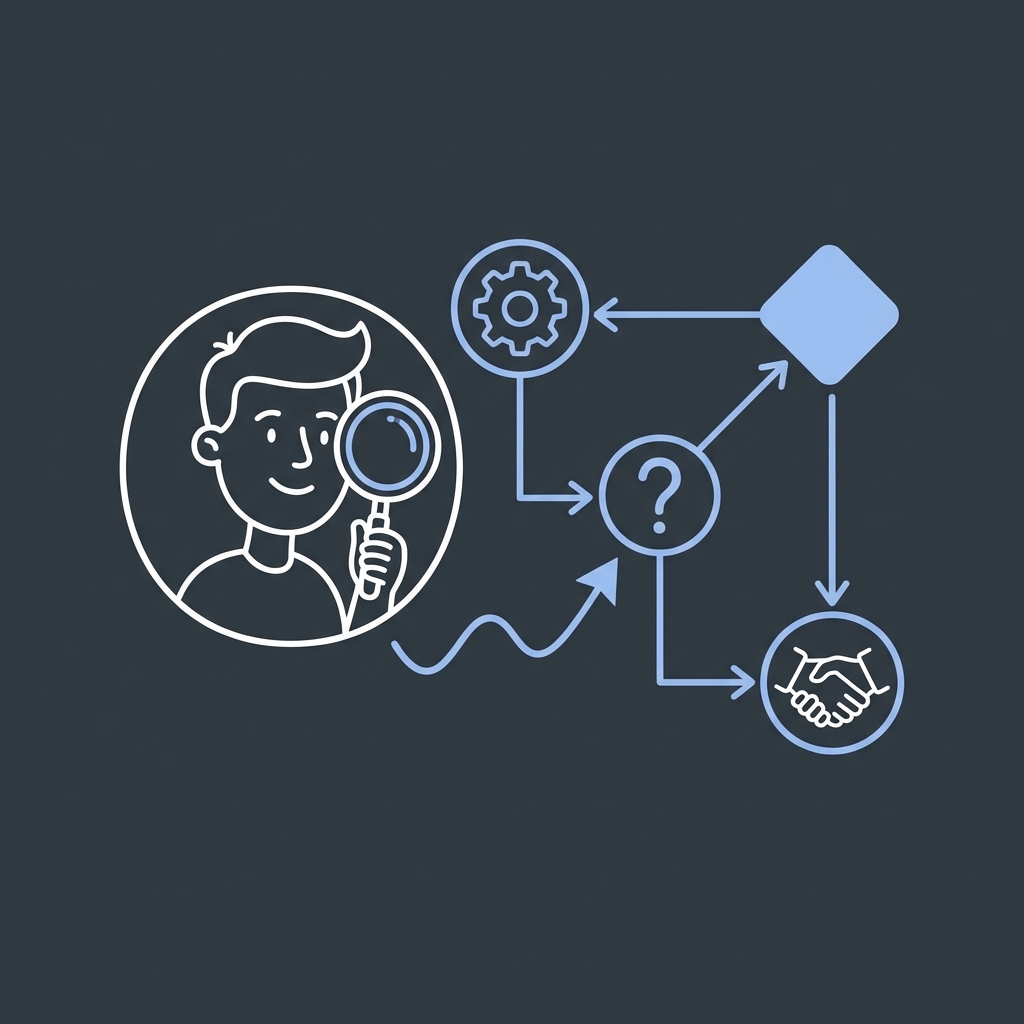
When was the last time you sat down and actually mapped out all the ways you support others versus all the ways you receive support? If you’re like most people, the answer is never. We audit our finances, our health metrics, even our screen time—but we rarely examine the invisible architecture that keeps our lives running: the network of support we give and receive.
Most of us are operating with a massive support deficit without even realizing it. We’ve become so accustomed to being the one who remembers, who anticipates, who follows up, that we’ve forgotten what it feels like to be genuinely supported. We mistake being needed for being nourished.
The truth is, support isn’t just nice to have—it’s infrastructure. Like electricity or running water, you don’t notice it until it’s gone. But unlike utilities, support systems don’t come with monthly statements or usage reports. They exist in the shadows of our daily lives, invisible until they break down completely.
The Four Pillars of Support
Support isn’t a monolith. It shows up in four distinct ways, each serving a different function in keeping your life stable and sustainable.
Practical support is the hands-on help that directly reduces your workload. Someone picks up your kids when you’re stuck in a meeting. A neighbor brings over dinner when you’re overwhelmed. Your partner handles the grocery shopping without being asked. This is support that saves you time and energy by taking tasks completely off your plate.
Emotional support provides the psychological safety net we all need. It’s the friend who listens without trying to fix. The family member who validates your feelings instead of minimizing them. The colleague who acknowledges how hard something is rather than rushing to silver linings. This support doesn’t solve problems—it holds space for your experience of having them.
Logistical support handles the coordination and information management that keeps everything running smoothly. It’s the person who remembers to book the appointment, who keeps track of everyone’s schedules, who researches options and presents solutions. This type of support reduces mental load by taking ownership of the thinking work, not just the doing work.
Social support creates connection and belonging. It’s the friend who includes you in plans without you having to ask. The community that shows up consistently, not just in crises. The network that makes you feel seen and valued for who you are, not just what you provide.
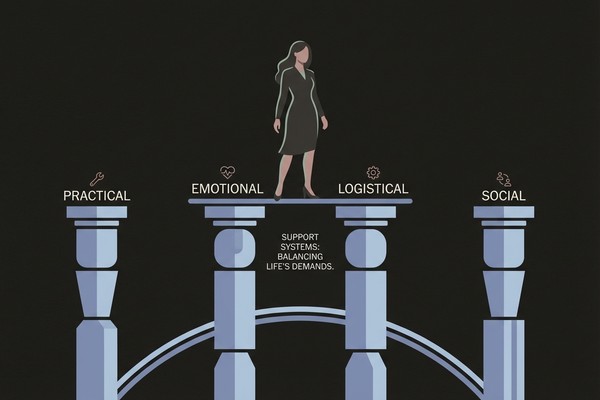
Most people excel at providing one or two types of support while struggling to receive any of them. We become the practical support for everyone else while going without emotional support ourselves. We handle all the logistical coordination while feeling socially isolated. The imbalance compounds over time until we’re running on empty.
The Audit Framework: Give, Receive, Missing
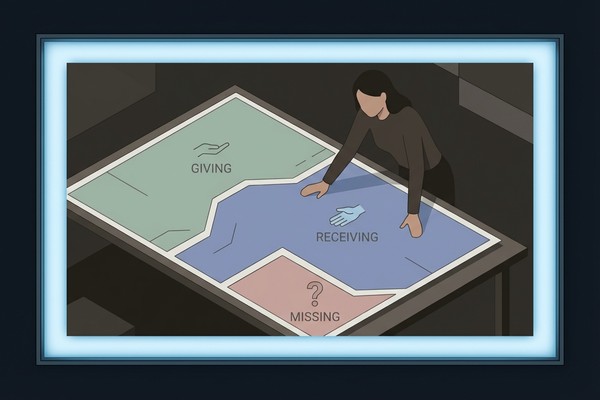
The support audit uses a simple but revealing framework. For each type of support, you’ll examine three dimensions: what you’re giving, what you’re receiving, and what’s missing.
What you’re giving often reveals patterns you’ve never noticed. You might discover you’re the default logistical coordinator for three different groups, or that you’re providing emotional support to people who never reciprocate. Seeing the full scope of what you give can be both validating and overwhelming—finally, acknowledgment of all that invisible work.
What you’re receiving is where most people get surprised. The list is usually much shorter than expected. We’re so conditioned to be self-sufficient that we barely register the support we do get, and we certainly don’t ask for what we need. This isn’t about keeping score—it’s about recognizing whether your support ecosystem is actually sustaining you.
What’s missing is perhaps the most important category. These are the gaps that create chronic stress, the absent support that forces you to carry more than your share. Maybe you have plenty of people willing to help with tasks, but no one who truly listens. Or you’re surrounded by emotional support but drowning in logistics because no one else takes ownership of the coordination work.
The goal isn’t perfect balance—it’s conscious awareness of what’s actually happening in your support ecosystem.
The giving-receiving ratio matters because extreme imbalances are unsustainable. When you’re always the giver, you eventually burn out. When you’re always the receiver, relationships become transactional. But most people don’t even know their ratio because they’ve never looked at it systematically.
Permission to Need Support
Here’s what productivity culture won’t tell you: needing support isn’t a personal failing. It’s not evidence that you’re weak, disorganized, or lacking in some fundamental way. Support is infrastructure—the basic foundation that makes everything else possible.
We’ve been conditioned to see independence as the highest virtue, but true independence is impossible. Even the most self-sufficient person relies on countless systems and people they never think about. The difference is whether that support is conscious and reciprocal or unconscious and one-sided.
The audit isn’t about becoming more efficient at managing everything yourself. It’s about recognizing that “managing everything yourself” was never a reasonable expectation to begin with. It’s about giving yourself permission to need what you actually need, not what you think you should be able to handle alone.
What’s Coming in This Series
Over the next four weeks, we’ll dive deep into each type of support. You’ll learn to identify the subtle ways support shows up (and doesn’t show up) in your life. We’ll explore why certain types of support are harder to ask for, and why others are easier to give than receive.
Each week includes specific exercises to map your current support landscape. Not generic advice about “building your network,” but concrete tools for understanding what you already have and what’s genuinely missing. Because you can’t fix what you can’t see.
We’ll also address the practical question of how to shift these patterns. How do you ask for logistical support when you’ve always been the coordinator? How do you receive emotional support when you’re used to being the listener? How do you stop over-giving without feeling guilty or selfish?
The series assumes that most people are operating with significant support deficits, particularly in the areas that reduce mental load. It’s not about optimizing your productivity—it’s about creating sustainable patterns that don’t require you to carry everything alone.
Starting Your Audit
Before we dive into the specifics next week, spend some time with this question: Where do you feel most unsupported right now?
Not where you think you should feel supported, or where you used to feel supported, but where the absence of support is creating real stress in your current life. Is it the practical realm—too many tasks and not enough hands to help? The emotional realm—carrying everyone else’s feelings with no one to hold yours? The logistical realm—being the default coordinator who never gets coordinated for? The social realm—surrounded by people but feeling fundamentally alone?
Don’t try to solve it yet. Don’t immediately jump to strategies or action plans. Just notice where the gaps are most acute, where you’re most aware of carrying weight that feels too heavy for one person.
The first step isn’t fixing the imbalance—it’s seeing it clearly.
This isn’t about blame or resentment toward the people in your life. Most support imbalances develop gradually, unconsciously, with everyone doing their best within systems that weren’t designed to distribute care equitably. The audit is about awareness first, action second.
Your support ecosystem is probably more complex and more imbalanced than you realize. It’s also more changeable than you might think. But change starts with honest assessment of what’s actually happening right now, not what you wish were happening or what used to work.
The support you need isn’t a luxury—it’s the foundation that makes everything else possible. You deserve to have that foundation examined, understood, and strengthened. That work starts now.
This article was created with collaboration between humans and AI—we hope you ❤️ it.