
You track your spending. You block your calendar. You meal plan and budget your grocery trips. But when was the last time you sat down and honestly assessed how much support you actually need to function well?
Most of us operate with an invisible support deficit, running on fumes while pretending we’re fine. We’ve been conditioned to see needing support as a personal failing rather than a basic human requirement. But here’s the thing: support isn’t a luxury or a sign of weakness. It’s infrastructure. And just like any infrastructure, when it’s inadequate, everything else starts to crumble.
The problem is that we rarely think about support systematically. We notice when it’s missing—when we’re drowning in logistics or emotionally depleted—but we don’t proactively plan for what we need. We budget money because we understand scarcity. We budget time because we understand limits. But we don’t budget support because we’ve been taught to believe we should need less of it, not more.
The Four Types of Support You’re Probably Missing
Support isn’t just having someone to vent to, though that matters too. It’s actually much more varied and specific than most people realize. When you start breaking it down, you can see exactly where your gaps are.
Cognitive support is about sharing the mental load—the invisible work of remembering, planning, and anticipating. This is someone else knowing that the car needs an oil change, that your kid has a field trip next week, or that you’re running low on the medication that keeps you functional. It’s not just having someone do tasks; it’s having someone hold the information so you don’t have to.
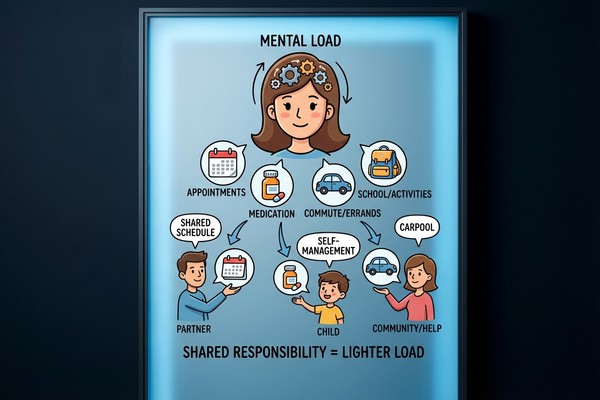
Logistical support is the practical stuff—the rides, the meals, the errands, the physical presence when you need an extra pair of hands. It’s your neighbor picking up your kid when you’re stuck in traffic, or having groceries delivered instead of adding “shop for food” to your weekend to-do list.
Emotional support is what most people think of first: having someone listen, validate your feelings, and help you process difficult experiences. But it’s also about having people who can hold space for your stress without trying to fix it or minimize it.
Relational support is about maintaining your connections and sense of belonging. It’s having people who check in, who remember what’s going on in your life, who invite you to things even when you’ve had to say no the last three times.
The question isn’t whether you need support. The question is whether you’re getting enough of the right kinds.
Most people are running a support deficit in at least two of these areas, often more. And because we don’t think about support systematically, we end up trying to solve cognitive overload with emotional support, or addressing logistical gaps with sheer willpower. It’s like trying to fix a plumbing problem with a screwdriver—the tool doesn’t match the need.
Why This Isn’t About Being Needy
Before we go further, let’s address the elephant in the room. Somewhere along the way, many of us absorbed the message that needing support is a character flaw. That strong, capable people should be able to handle everything themselves. That asking for help is imposing on others or admitting defeat.
This is particularly acute for working parents, especially mothers, who are often expected to seamlessly manage career demands, household logistics, and family needs while maintaining the appearance of having it all together. The cultural narrative suggests that if you need help, you’re either not trying hard enough or not organized enough.
But here’s what that narrative gets wrong: support needs aren’t moral issues. They’re capacity issues. Just like some people need more sleep to function well, or more calories to maintain their energy, some people need more support to manage their responsibilities without burning out.
Your support needs also change based on your circumstances. A single parent needs different support than someone with a partner. Someone caring for aging parents has different needs than someone who doesn’t. Someone starting a business while working full-time needs different support than someone in a stable job. These aren’t personal failings—they’re different life situations requiring different resources.
The productivity culture has made this worse by suggesting that the right system or app or morning routine should eliminate your need for human support. But humans aren’t machines that can be optimized into self-sufficiency. We’re social creatures who function better with appropriate support networks.
Mapping Your Support Budget
Think of support like any other resource you need to allocate thoughtfully. You wouldn’t expect to run a household without budgeting for groceries, and you shouldn’t expect to manage your life without budgeting for support.
Start by taking inventory of what you currently have. In each category—cognitive, logistical, emotional, and relational—who or what is providing support right now? Be specific. “My mom helps with the kids” is less useful than “My mom picks up my daughter from school on Tuesdays and watches both kids one Saturday afternoon per month.”
Then assess what you actually need. This is where most people get stuck because they’ve never given themselves permission to think about it honestly. But try this: imagine you had unlimited resources to design your ideal support system. What would that look like? Don’t worry about whether it’s realistic—just get clear on what would actually make your life feel manageable.
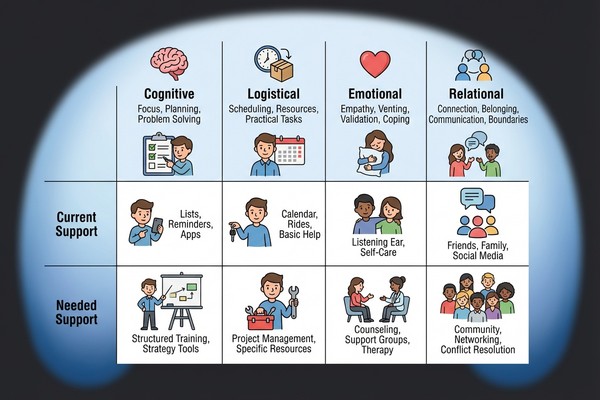
The gap between what you have and what you need is your support deficit. And here’s the important part: that deficit is information, not judgment. It’s not a reflection of your worth or your capability. It’s just data about what resources would help you function better.
Some people discover they’re doing fine on emotional support but drowning in logistics. Others realize they have plenty of help with tasks but nobody who really understands the cognitive load they’re carrying. Some find that they have support in crisis moments but not enough ongoing relational connection to prevent those crises from feeling overwhelming.
Where Support Actually Comes From
Once you know what you need, you can start thinking strategically about where to get it. Support doesn’t only come from people, and it doesn’t have to be reciprocal relationships where you’re constantly worried about owing someone.
People are obviously one source—family, friends, neighbors, colleagues. But paid support counts too. The babysitter who knows your kids’ routines well enough that you don’t have to write detailed instructions every time. The housekeeper who remembers how you like things organized. The therapist who helps you process stress so you don’t dump it all on your partner.
Systems and defaults can provide support too, especially cognitive support. Automatic bill pay eliminates the need to remember due dates. Grocery delivery services remove the logistics of shopping. Meal planning apps reduce the daily “what’s for dinner” decision fatigue.
Sometimes the most effective support comes from changing your environment or expectations rather than adding resources. Maybe you need to lower your standards for how clean the house needs to be, or accept that some weeks everyone’s eating more takeout than you’d prefer.
The key is matching the type of support to the specific need, and being creative about sources. You don’t need one person to provide everything, and you don’t need to feel guilty about paying for help in areas where that makes sense.
The Support You’re Pretending You Don’t Need
Here’s a question worth sitting with: what support are you pretending you don’t need?
Maybe it’s admitting that you can’t actually manage both the mental load of meal planning and the physical work of cooking every night. Maybe it’s acknowledging that you need someone to talk through work stress with besides your partner, who’s already hearing about everything else. Maybe it’s recognizing that you need help with basic logistics during busy seasons, not just in emergencies.
The support you’re most resistant to asking for is usually the support you need most.
Often, the support we’re most reluctant to seek is the kind that feels most fundamental to our identity. The parent who prides themselves on being organized struggles to ask for help with logistics. The person who sees themselves as emotionally strong has trouble admitting they need more than just practical help.
But pretending you don’t need support doesn’t make you stronger. It just makes you more likely to burn out, snap at people you care about, or make mistakes that could have been avoided with appropriate backup systems.
One Small Upgrade This Week
You don’t have to overhaul your entire support system immediately. In fact, trying to do too much at once often leads to overwhelm and giving up entirely.
Instead, pick one small support upgrade for this week. Maybe it’s finally signing up for grocery delivery for those weeks when shopping feels impossible. Maybe it’s asking your partner to take full ownership of one recurring task so it stops living in your head. Maybe it’s texting that friend who always asks how you’re doing and actually telling them instead of just saying “fine.”
The goal isn’t to solve everything at once. It’s to start treating support as something you deserve to plan for and invest in, rather than something you should be able to live without.
When you start thinking about support as infrastructure rather than indulgence, everything shifts. You stop feeling guilty about needing help and start getting strategic about where to find it. You stop trying to be superhuman and start building systems that actually work for your real life, not the life you think you should be able to manage alone.
That’s where tools like Backlit come in—not as another thing for you to manage, but as cognitive support infrastructure that remembers and follows up so you don’t have to. Because the best support systems don’t add to your mental load. They reduce it.
This article was created with collaboration between humans and AI—we hope you ❤️ it.