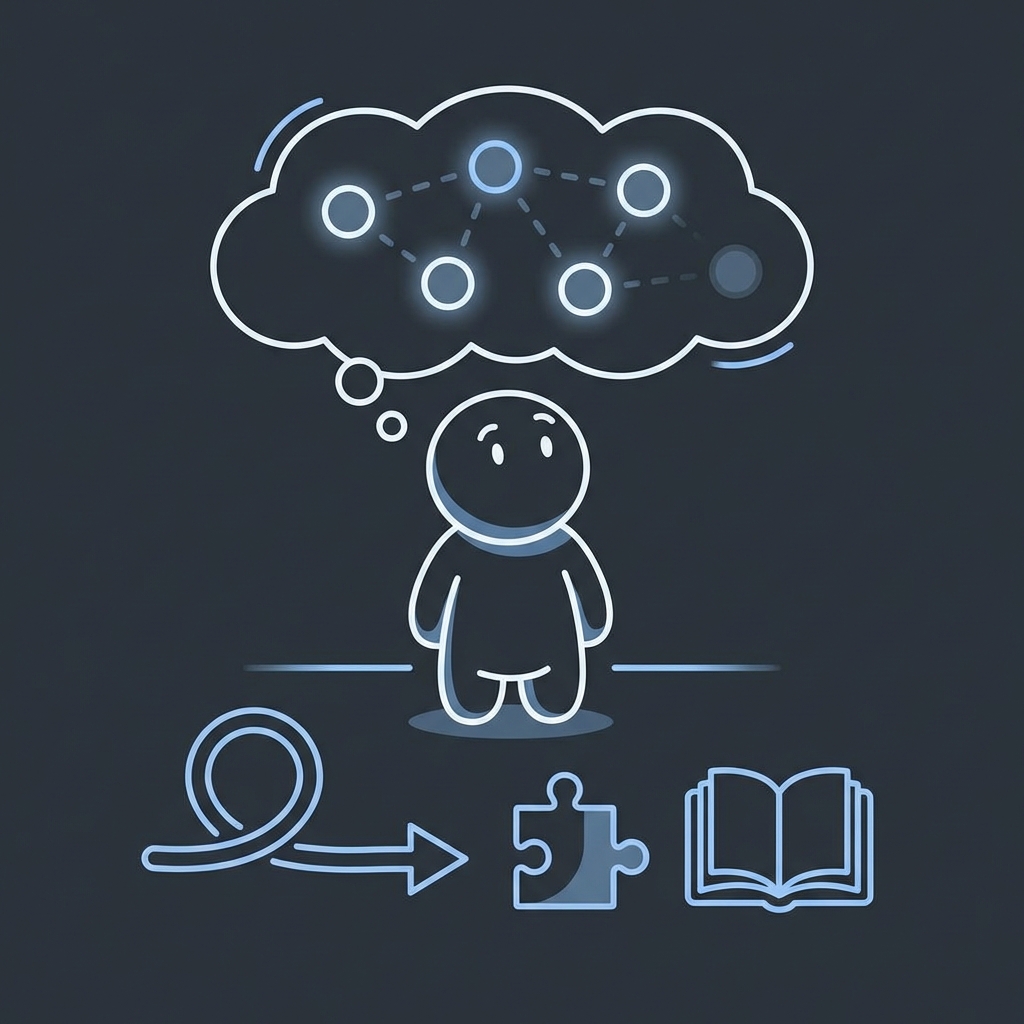
You know that feeling when you’re trying to fall asleep, but your brain keeps cycling through that email you need to send, the appointment you forgot to schedule, and the conversation you left hanging? That’s not a character flaw or a sign you need better time management skills. It’s your brain doing exactly what it evolved to do—and it has a name.
The Zeigarnik Effect, discovered by psychologist Bluma Zeigarnik in the 1920s, describes our tendency to remember interrupted or incomplete tasks better than completed ones. Zeigarnik noticed that waiters could perfectly recall complex orders while serving tables, but once the bill was paid, those same details vanished from memory. The unfinished business stayed mentally active; the completed transactions simply dissolved.
What Zeigarnik discovered in restaurants, we live with every day. Our minds are designed to hold onto loose ends, to keep pinging us about things that need attention. It’s not procrastination or poor focus—it’s cognitive architecture.
The Mental Sticky Note System
Your brain operates like it’s covered in invisible sticky notes. Every unfinished task, unresolved conversation, and unmade decision gets its own mental post-it that keeps waving for attention. “Remember me,” each one whispers. “Don’t forget about me.”
This system worked beautifully when human life was simpler. You needed to remember to check the traps, tend the fire, and prepare for winter. A few dozen open loops were manageable, even helpful. They kept important survival tasks from slipping through the cracks.
But modern life doesn’t deal in dozens of open loops. It deals in hundreds. Maybe thousands.
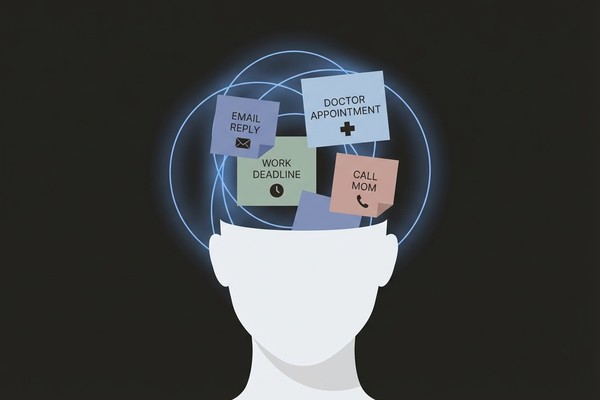
Think about yesterday. You probably started the day with unread emails, unfinished projects, and unresolved decisions from the day before. Then new inputs arrived: text messages requiring responses, calendar invites needing answers, problems demanding solutions. Each one triggered the Zeigarnik Effect, adding another sticky note to your mental collection.
By evening, your brain was running a background process for dozens of incomplete items. No wonder you felt mentally exhausted even on days when you didn’t accomplish much. The cognitive load wasn’t from doing—it was from remembering.
The Modern Multiplication Effect
Digital life has weaponized the Zeigarnik Effect against us. Every notification creates a potential open loop. Every app badge represents unfinished business. Every browser tab is an incomplete thought.
Consider the anatomy of a typical morning. You check your phone and see seventeen unread messages across five different platforms. Three require immediate responses, seven need thoughtful replies, four are informational but make you worry you’re missing something, and three are group conversations you’ve been meaning to catch up on. Before you’ve even gotten out of bed, you’ve activated seventeen different Zeigarnik loops.
Then you open your laptop. Email notifications, Slack messages, calendar reminders, and project updates all compete for mental real estate. Each one whispers the same thing: “Don’t forget about me.”
The cruel irony is that the tools designed to help us stay organized often make the problem worse. Productivity apps that send notifications about overdue tasks aren’t helping you remember—they’re creating additional anxiety about things you were already tracking mentally. They’re adding sticky notes to a system that’s already overloaded.
The problem isn’t that we have too much to do. It’s that we’re trying to hold too much in our heads.
When Open Loops Become Cognitive Noise
Here’s what happens when the Zeigarnik Effect goes into overdrive: the mental sticky notes start overlapping, competing, and creating interference. What should be a helpful reminder system becomes cognitive noise.
You sit down to focus on one task, but your brain keeps interrupting with reminders about the other seventeen things you need to handle. You try to be present in a conversation, but part of your attention is occupied by the mental list of everything you’re supposed to remember later.
This isn’t a failure of discipline or focus. It’s a predictable result of overloading a system that wasn’t designed for modern complexity. Your brain is doing exactly what it’s supposed to do—it’s just doing too much of it.
The exhaustion you feel at the end of many days isn’t from the work you completed. It’s from the cognitive overhead of tracking everything you didn’t complete. It’s the mental energy spent maintaining awareness of dozens of open loops, even when you’re not actively working on them.
The Art of Closing Loops
The solution isn’t to finish everything—that’s impossible in a world that generates new tasks faster than we can complete them. The solution is to close the loops in your mind, even when the tasks themselves remain incomplete.
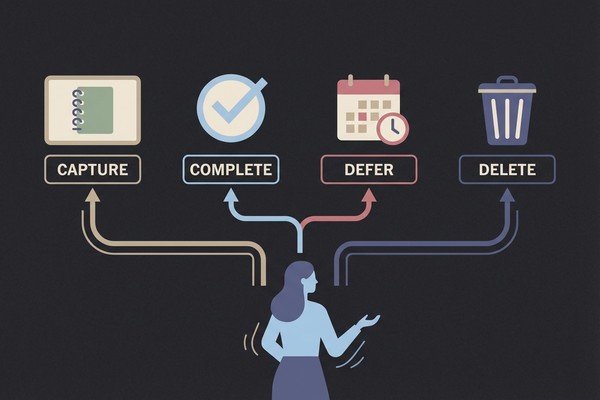
There are four ways to close a mental loop: capture it, complete it, defer it with a plan, or consciously delete it.
Capture means getting the task out of your head and into a system you trust. Not just writing it down, but putting it somewhere you know you’ll encounter it again when appropriate. The act of capture tells your brain it can stop holding onto the information because it’s been safely stored elsewhere.
Complete is the obvious option, but it’s often not the right one. Rushing to finish things just to close loops can lead to poor quality work or misplaced priorities. Sometimes the most important thing is not the most urgent thing demanding mental attention.
Defer with a plan means deciding when you’ll address the task and creating a specific trigger for that future action. “I’ll handle this Friday morning” isn’t enough to close the loop—your brain doesn’t trust vague future intentions. “I’ll review this when my Friday calendar reminder goes off” creates closure because there’s a concrete system in place.
Delete is the option we forget we have. Some open loops don’t deserve mental real estate. That article you bookmarked three months ago? The networking event you thought you might attend? The project idea that seemed important in January? Permission to let these go can free up surprising amounts of mental space.
The Trust Factor
Here’s the crucial insight: your brain will only stop tracking something if it trusts that something else is tracking it reliably. This is why writing tasks on random pieces of paper doesn’t create closure—your brain knows those papers get lost, forgotten, or buried under other things.
The system doesn’t have to be digital or sophisticated. It just has to be consistent and trustworthy. A simple notebook that you check daily can quiet more mental noise than a complex app you forget to use.
A trusted system doesn’t have to be perfect. It just has to be more reliable than your memory.
The key is developing confidence that important things won’t slip through the cracks. When your brain believes the system will surface the right task at the right time, it can finally stop pinging you about it in the meantime.
Beyond Personal Systems
Individual capture systems help, but they only address part of the problem. The deeper issue is that modern life expects us to be the central processing unit for everything in our world. We’re supposed to remember what everyone needs, track what everything requires, and coordinate how it all fits together.
This is where the real opportunity lies—not in better personal organization, but in systems that can hold the complexity so our minds don’t have to. Tools that don’t just capture our tasks but actually own the outcomes, following up when we forget and surfacing what matters when it matters.
The Zeigarnik Effect isn’t a bug in our mental software—it’s a feature that’s being overwhelmed by modern demands. Instead of fighting our brain’s natural tendency to track unfinished business, we need systems sophisticated enough to earn its trust and take over the job.
The goal isn’t to become better at holding everything in our heads. It’s to hold less in our heads while ensuring nothing important falls through the cracks. That’s not just better productivity—it’s a quieter mind and a lighter mental load.
Because the real victory isn’t checking everything off your list. It’s being able to put the list down and trust that it will be there when you need it, freeing your mind for the things that matter most: presence, creativity, and connection with the people and experiences that make life meaningful.
This article was created with collaboration between humans and AI—we hope you ❤️ it.