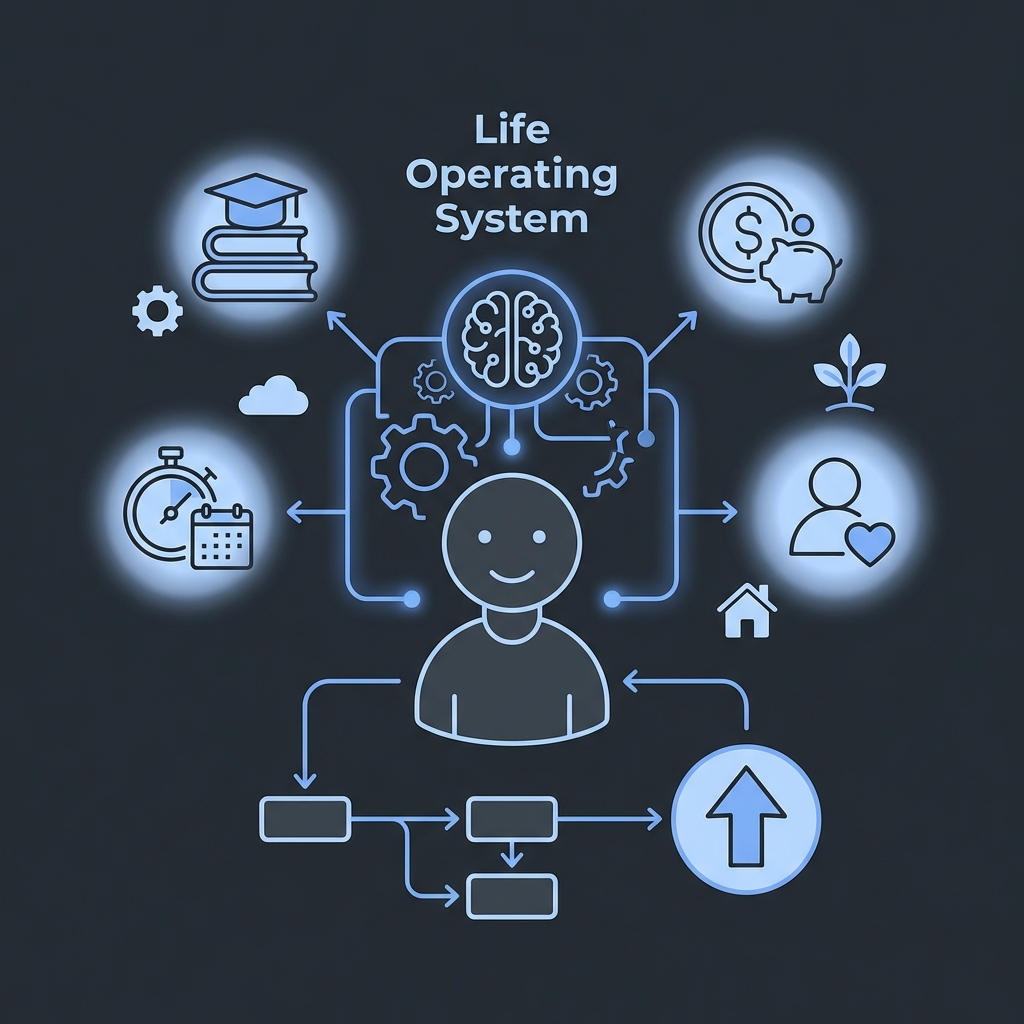
The productivity world loves to throw around the term “life operating system” like it’s some kind of digital holy grail. But strip away the Silicon Valley buzzwords, and what are we really talking about? We’re talking about something much simpler and more human: support that actually connects the dots across your whole life.
Most of us are drowning in disconnected systems. We’ve got a work calendar that doesn’t know about our kid’s doctor appointment. A meal planning app that has no clue we’re traveling next week. A fitness tracker that cheerfully suggests a morning run on the day we’re moving apartments. Each tool works fine in isolation, but together they create more mental overhead, not less.
A real life operating system doesn’t optimize individual tasks—it reduces the coordination burden between them.
What We Actually Need Infrastructure For
Think about your last chaotic week. I’m willing to bet the stress wasn’t from any single task being too hard. It was from the invisible work of juggling everything at once. Remembering that the contractor is coming Tuesday while you have back-to-back meetings. Realizing your partner’s work trip overlaps with your conference, and someone needs to handle school pickup. Trying to schedule a dentist appointment around everything else you’re already tracking.
This coordination work is exhausting because it requires holding your entire life in working memory simultaneously. You’re not just managing tasks—you’re managing the relationships between tasks, the dependencies, the conflicts, the ripple effects.
A genuine life operating system would handle this coordination layer. Not by adding more features to remember, but by remembering for you and connecting information across contexts automatically.
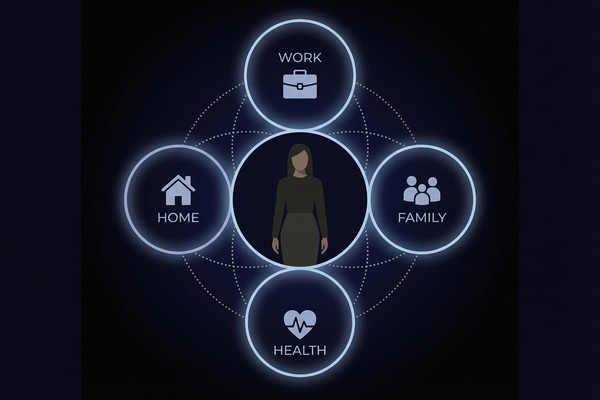
The Five Functions That Actually Matter
Real life support comes down to five core functions, and none of them are about optimization or efficiency. They’re about reducing the cognitive load of coordination.
Capture means being able to dump information anywhere, anytime, without worrying about categorizing it perfectly in the moment. When your doctor mentions you should schedule a follow-up in three months, you shouldn’t have to decide whether that goes in your health app, your calendar, or your notes. You should just be able to say it and trust it’ll land somewhere useful.
Organize happens automatically in the background, not as a task you have to do. Information gets sorted and connected based on context, timing, and relationships you don’t have to manually maintain. That follow-up appointment gets linked to your health records, blocked against your work calendar, and flagged if it conflicts with anything important.
Prioritize means the system understands what matters most to you right now, this week, this season of your life. It’s not about productivity metrics or time management theories. It’s about knowing that your kid’s school play trumps most work meetings, or that you’re in a busy season at work and need household stuff to be as automated as possible.
Coordinate is where the magic happens—where your life operating system earns its name. This is about managing the relationships between different areas of your life. When you add a work trip to your calendar, the system should automatically think about pet care, meal planning, and who’s handling kid logistics. When you commit to a new fitness routine, it should consider your existing schedule and suggest realistic timing.
Follow through means the system doesn’t just capture and organize—it actively helps you complete the loop. It remembers to check back on things that matter. It surfaces the right information at the right time. It reduces the number of things you have to actively remember by taking ownership of outcomes, not just tasks.
Why Integration Beats Features Every Time
The productivity industry has trained us to think in terms of features. Does it have goal tracking? Can it sync with your calendar? Does it integrate with your email? But features without integration just create more silos to manage.
Real integration means information flows seamlessly between contexts without you having to facilitate every connection. When you mention feeling tired during a work call, that context should inform your evening plans without you having to manually update three different apps. When your partner texts that they’ll be late, your dinner planning should automatically adjust.
The goal isn’t to track everything perfectly—it’s to reduce the number of things you have to actively coordinate.
Think about how your phone’s operating system works. You don’t manually manage how apps share information or coordinate with each other. You don’t have to tell your camera app to save photos where your messaging app can find them. The OS handles the plumbing so you can focus on what you actually want to do.
A life operating system should work the same way. The plumbing of coordination should be invisible, leaving you free to focus on living your life instead of managing the systems that support it.
What Ambient Support Feels Like
The best support is the kind you don’t notice until it’s not there. Like how you don’t think about your phone’s battery management until it dies, or how you don’t appreciate good lighting until you’re trying to work in a dim room.
Ambient support for your life feels like having a really good assistant who knows you well—not someone who follows orders, but someone who anticipates needs and handles coordination proactively. They know that when you schedule a morning meeting, you’ll need extra time to get the kids ready. They remember that you’re trying to eat healthier and surface easy meal options when you’re having a busy week. They notice patterns you don’t see and gently adjust recommendations based on what actually works for you.
This isn’t about AI making decisions for you. It’s about reducing the number of decisions you have to make by handling the coordination work that happens between your choices. You still decide what matters. The system just makes sure those decisions don’t fall through the cracks or create unnecessary conflicts.
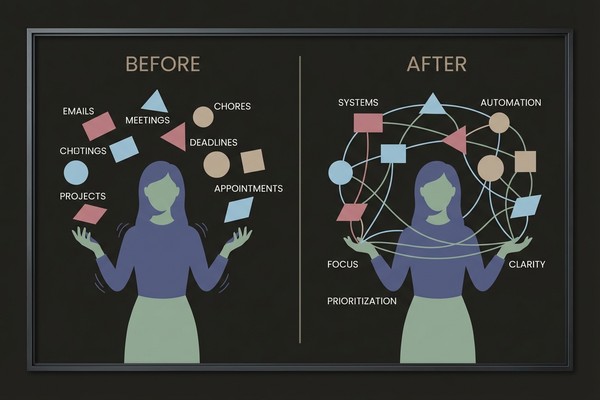
The Integration You’re Missing Right Now
Take a moment to think about where coordination breaks down in your own life. Where do you find yourself manually connecting information that should flow together naturally?
Maybe it’s the way your meal planning exists in complete isolation from your calendar, so you’re always scrambling to figure out dinner on nights when you have evening commitments. Or how your fitness goals don’t talk to your travel schedule, leaving you feeling guilty about missed workouts during busy periods.
Perhaps it’s the way work deadlines and family commitments compete for the same mental space, with no system to help you see conflicts before they become crises. Or how health appointments, home maintenance, and social plans all require separate coordination efforts, even when they affect each other.
The most exhausting part isn’t any individual task—it’s holding all the connections in your head simultaneously. Playing human middleware between systems that should be talking to each other automatically.
Beyond Productivity Theater
Most productivity tools are performing productivity theater—they look like they’re helping while actually shifting more coordination work onto you. They ask you to categorize, prioritize, and maintain relationships between information manually. They give you more dashboards to check, more systems to keep updated, more ways to feel like you’re falling behind.
Real support reduces the amount of active management your life requires.
A true life operating system inverts this relationship. Instead of you serving the system, the system serves you. It takes on the invisible work of coordination so you can focus on the visible work of living.
This isn’t about optimizing your productivity or maximizing your output. It’s about reclaiming mental space for what matters most to you. It’s about having support that connects the dots so you don’t have to hold everything in your head at once.
The question isn’t whether you need better productivity habits. The question is whether you’re ready for infrastructure that actually reduces the coordination burden instead of adding to it.
Where in your life do you most need this kind of integration right now? What connections are you manually maintaining that should flow automatically? Those friction points are exactly where a real life operating system would make the biggest difference—not by doing more, but by helping you hold less.
This article was created with collaboration between humans and AI—we hope you ❤️ it.