You know that feeling when you’re at a restaurant and realize you’ve been unconsciously monitoring the table next to you—tracking their conversation volume, watching for their server, noting when their food arrives? Your nervous system has been running background surveillance on things that aren’t even your responsibility. That’s what it’s like living with mental load. Your attention fractures across a dozen half-open tabs, each one pinging quietly in the background of your consciousness.
The tight chest. The scanning. The perpetual sense that something needs tending.
Most days, you don’t even notice how much energy goes into this constant vigilance until something shifts. Until someone else steps in and says, “I’ve got this. You don’t need to think about it anymore.”
The Architecture of Overwhelm
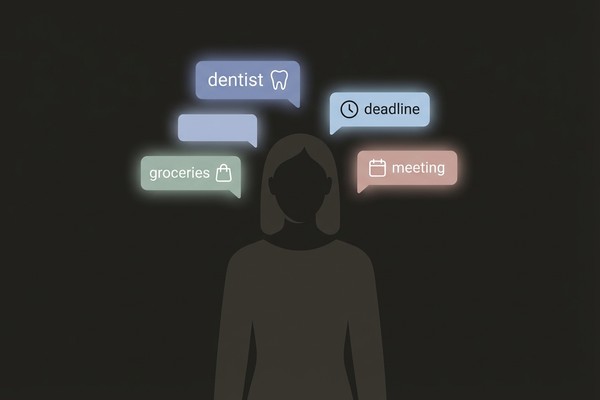
Before support arrives, your nervous system operates like a smoke detector with a dying battery—hypersensitive and prone to false alarms. You’re tracking your teenager’s college application deadlines while mentally rehearsing tomorrow’s client presentation and wondering if you remembered to schedule that dentist appointment. Each item pulses with its own urgency, demanding a piece of your attention even when there’s nothing immediate to be done.
The mental load isn’t just about having things to do. It’s about being the designated rememberer, the one who holds the master list that exists nowhere but in your head. You become a human notification system, pinging yourself about upcoming needs, potential problems, and invisible deadlines that others don’t even know exist.
Your body keeps score of this invisible work. Shoulders that creep toward your ears. A jaw that clenches during supposedly relaxing moments. The way you check your phone compulsively, not because you’re expecting anything specific, but because your nervous system has learned that vigilance is survival.
This isn’t personal weakness or poor boundaries. It’s what happens when you become the default owner of outcomes that affect people you care about. Your nervous system doesn’t distinguish between remembering to buy milk and remembering to file taxes—both register as “things that will cause problems if forgotten,” both demand their slice of your cognitive bandwidth.
When Someone Else Takes the Wheel
Then something remarkable happens. Someone else steps into ownership. Not just helping with tasks, but actually taking responsibility for outcomes. They don’t ask you to remember to remind them. They don’t need you to check if they’ve followed through. They simply say, “This is mine now,” and mean it.
The shift isn’t immediate. Your nervous system has been trained to expect that everything ultimately comes back to you. Even when someone else volunteers to handle something, part of you remains on standby, ready to jump back in when they inevitably need guidance or forget a crucial detail.
But then days pass. Weeks. The thing gets handled without your input. The deadline gets met. The appointment gets scheduled. The follow-up happens. And slowly, tentatively, your nervous system begins to believe that this particular responsibility truly isn’t yours anymore.
The proof is in what didn’t happen—the reminder you didn’t have to send, the deadline you didn’t have to track, the conversation you didn’t have to initiate.
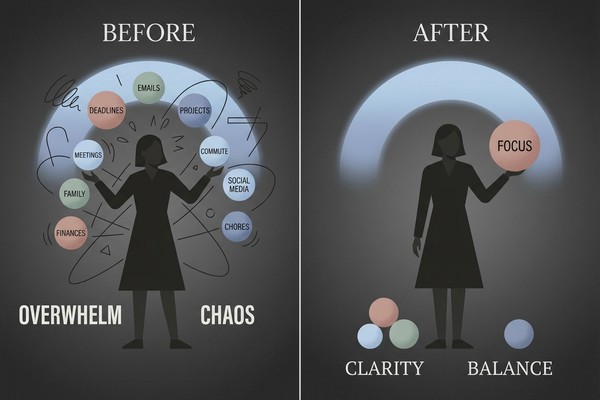
This is when the real transformation begins. It’s not just that one item gets crossed off your list. It’s that your entire system starts to recalibrate. The background hum of anxiety drops a few decibels. Your attention, previously scattered across a dozen different concerns, begins to consolidate.
The Physiology of Relief
When genuine support arrives—when someone else truly owns a piece of your mental load—your body responds before your mind does. Your breathing deepens without you noticing. The tension in your shoulders releases in increments. You find yourself present in conversations instead of mentally cycling through your task list.
Sleep changes too. Instead of lying awake mentally rehearsing tomorrow’s obligations, you sink into rest. Your dreams shift from anxiety spirals about forgotten responsibilities to… well, to whatever dreams are supposed to be about when your nervous system isn’t in constant protection mode.
The most surprising change might be in your patience. When you’re not internally managing fifteen different threads of responsibility, you have more emotional bandwidth for the people in front of you. Your teenager’s request for help with their essay doesn’t feel like one more thing on an impossible pile. Your partner’s story about their day doesn’t compete with your mental to-do list for attention.
This isn’t about becoming lazy or disengaged. It’s about having the cognitive space to be fully present for what actually matters in each moment.
The Myth of Earned Rest
Our culture has a complicated relationship with relief. We’ve been taught that constant busyness signals importance, that mental load is somehow evidence of being needed and valuable. Taking on more responsibility feels virtuous. Letting go of control feels selfish.
This narrative is particularly toxic for people who’ve become the default managers of their households, teams, or communities. When you’re used to being the one who remembers everything, stepping back can trigger guilt. What if things fall through the cracks? What if you’re not pulling your weight?
But here’s what productivity culture gets wrong: relief isn’t laziness. It’s restoration. When your nervous system finally gets permission to stop scanning for problems, you don’t become less capable—you become more present. More creative. More emotionally available.
Support doesn’t make you weak. It makes you whole.
The idea that we should be able to handle everything ourselves isn’t wisdom—it’s a setup for burnout. Human beings aren’t designed to be sole proprietors of complex, ongoing responsibilities. We’re meant to share cognitive load, to trust others with pieces of what matters to us.
Dignity in Delegation
There’s something profound about being trusted with someone else’s mental load. When a friend asks you to remember their important deadline, when a colleague genuinely hands off a project without hovering, when your partner takes full ownership of managing the household calendar—these aren’t just transactions. They’re acts of faith.
Real support requires both parties to embrace a fundamental shift. The person receiving support has to resist the urge to micromanage or maintain backup systems. The person providing support has to accept genuine responsibility, not just task completion.
This kind of delegation isn’t about efficiency—it’s about dignity. It honors the reality that mental load is real work, that remembering is labor, that being the designated keeper of everyone else’s needs is exhausting.
When someone truly takes something off your plate, they’re not just helping with tasks. They’re saying, “I see how much you’re carrying, and I want you to carry less.”
The Ripple Effect of Relief
Think about where relief would change your relationships. What would shift if you weren’t the only one tracking your family’s medical appointments? How would your marriage feel different if someone else owned the mental work of meal planning? What would happen to your friendships if you had the emotional bandwidth to be fully present instead of mentally managing your endless list?
Relief creates space for the relationships you actually want, not just the ones you can manage while overwhelmed. When you’re not constantly scanning for what needs attention next, you can sink into conversations. You can notice things. You can respond to people’s actual needs instead of just managing logistics.
Your children get a parent who’s present during bedtime stories instead of mentally reviewing tomorrow’s schedule. Your partner gets someone who can engage with their ideas instead of someone who’s always half-distracted by household management. Your friends get the version of you that has emotional space for their joys and struggles.
This isn’t about becoming irresponsible or checking out of your commitments. It’s about being intentional with your attention instead of having it constantly fragmented across a dozen different concerns.
Technology That Actually Helps
Most productivity tools miss the point entirely. They’re designed to help you manage more efficiently, not to help you manage less. They optimize your ability to track everything rather than questioning whether you should be tracking everything in the first place.
The promise of real support—whether from technology or people—isn’t better task management. It’s cognitive partnership. It’s having something genuinely taken off your plate, not just organized more efficiently on your plate.
Backlit is designed around this understanding. Instead of giving you better ways to remember everything, it remembers things for you. Instead of optimizing your ability to follow up on commitments, it follows up for you. The goal isn’t to make you a more efficient manager of mental load—it’s to reduce the mental load itself.
True support doesn’t teach you to juggle better. It catches some of the balls.
This distinction matters because your nervous system knows the difference between having help with tasks and having someone else own outcomes. When you’re still the ultimate backstop for everything, your body stays alert. When someone else genuinely takes responsibility, your system can finally exhale.
The technology we need isn’t smarter task management—it’s cognitive partnership that lets us hold less while trusting that important things still get handled. It’s support that recognizes mental load as real work and offers to do some of that work instead of just organizing it better.
Relief isn’t a luxury. It’s what allows us to show up fully for what matters most. And maybe, just maybe, it’s what allows us to remember who we are when we’re not constantly remembering everything else.
This article was created with collaboration between humans and AI—we hope you ❤️ it.