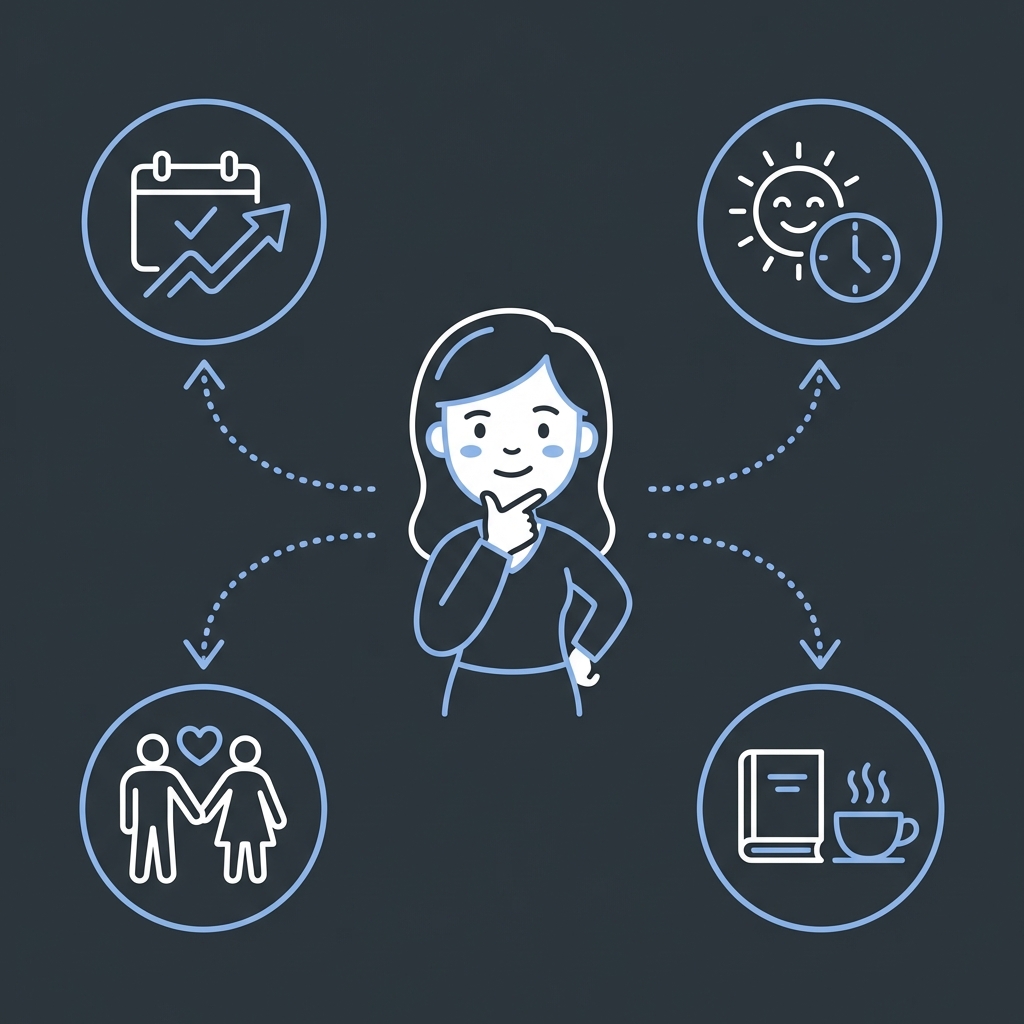
Most reflection practices feel like autopsies. We dissect what went wrong, catalog our failures, and promise to do better next time. It’s all rearview mirror thinking—useful, sure, but incomplete. What if we spent equal time looking forward, not to plan every detail, but to set a gentle intention for what’s coming?
I’ve been experimenting with a different kind of monthly reflection, one that asks a simple question: What would make this month better? Not perfect, not optimized, just better. It’s a question that cuts through the noise of endless to-do lists and gets to the heart of what actually matters.
The Problem with Backward-Only Reflection
Traditional reflection practices love to marinate in what happened. What did I accomplish? Where did I fall short? What patterns do I notice? These questions have their place, but they can trap us in a cycle of self-criticism disguised as self-improvement.
The backward-looking approach often reinforces the very mental load we’re trying to reduce. Instead of releasing the weight of the previous month, we carry it forward, adding analysis and judgment to an already heavy cognitive burden. We become archaeologists of our own stress, carefully cataloging every moment we felt overwhelmed without creating space for something different.
The goal isn’t to fix everything that went wrong—it’s to create conditions where fewer things go wrong in the first place.
Forward-looking reflection shifts the energy entirely. Instead of asking “Why did I feel so scattered last month?” we ask “What would help me feel more grounded this month?” The first question sends us digging through problems; the second opens up possibilities.
The Five Categories That Actually Matter
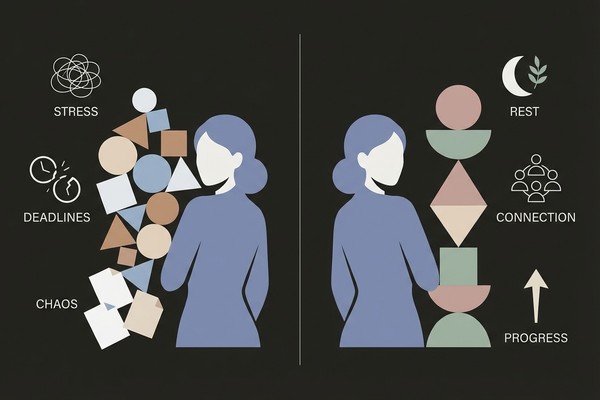
When I ask myself what would make this month better, the answers usually fall into five categories: load, connection, rest, progress, and relief. These aren’t productivity metrics—they’re human needs that, when met, make everything else flow more easily.
Load is about the weight you’re carrying. Maybe this month would be better if you weren’t the only one remembering everyone’s schedules. Maybe it would improve if you stopped trying to manage three major projects simultaneously. Load isn’t just about having less to do; it’s about having less to hold in your mind.
Connection might mean deeper conversations with your partner, regular check-ins with friends, or simply feeling more present with your kids instead of mentally rehearsing tomorrow’s meetings. Connection is the antidote to the isolation that comes from being the person who remembers everything for everyone else.
Rest rarely means more sleep, though that helps. It’s more often about mental rest—periods when you’re not anticipating, planning, or solving. It’s the luxury of being in your own life without managing it.
Progress isn’t about crushing goals. It’s about forward movement on something that matters to you, whether that’s a creative project, a relationship, or simply feeling more like yourself. Progress creates momentum that makes other things easier.
Relief is perhaps the most overlooked category. Sometimes what would make a month better is simply the absence of something difficult—a demanding project ending, a stressful situation resolving, or a mental burden finally lifting.
Finding Your One Thing
Here’s where most reflection practices go wrong: they try to improve everything at once. You end up with a list of seventeen intentions that becomes another source of mental load. The power is in choosing one condition that would meaningfully shift your experience of the month ahead.
Ask yourself: if only one thing could be different this month, what would create the biggest positive ripple effect? This isn’t about the most urgent item on your list or the thing you think you should focus on. It’s about what would actually make you feel more like yourself.
Maybe it’s having Sunday mornings free from errands and obligations—a small pocket of unstructured time that lets you breathe. Maybe it’s having one conversation each week where you’re not managing or coordinating anything, just connecting. Maybe it’s making progress on that project you’ve been thinking about for months but never prioritizing.
The condition you choose should feel both meaningful and achievable—important enough to matter, small enough to happen.
The key is specificity. “Less stress” isn’t a condition; “not checking work email after 7 PM” is. “Better work-life balance” is vague; “protecting Tuesday evenings for myself” creates a boundary you can actually maintain.
The One Obstacle in Your Way
Once you’ve named your condition, identify what’s most likely to prevent it from happening. This isn’t about listing every possible barrier—that’s just anxiety disguised as planning. It’s about naming the one thing that, if addressed, would make your condition much more likely.
Sometimes the obstacle is external: a recurring meeting that eats into your protected time, a family member who doesn’t respect boundaries, or a work commitment that consistently overruns. But often, the biggest obstacle is internal—your own resistance to disappointing others, your tendency to fill every available moment with tasks, or your discomfort with not being constantly productive.
If your condition is having Sunday mornings free, maybe the obstacle is your habit of scheduling errands for the weekend because it feels “efficient.” If it’s having deeper conversations with your partner, maybe the obstacle is your tendency to use every shared moment to coordinate logistics.
The Small, Specific Action
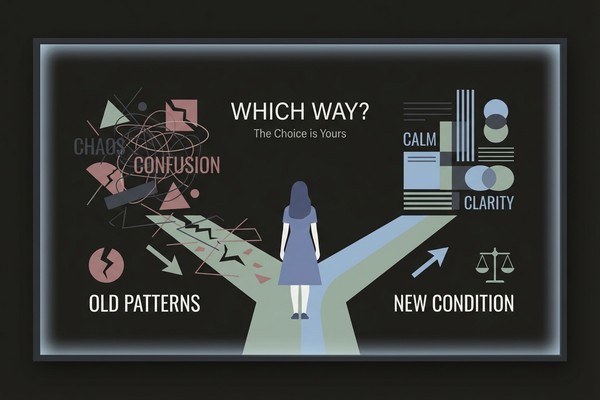
This is where forward-looking reflection gets practical. What’s one small, specific action you can take in the next week that moves you toward your condition and addresses your obstacle?
The action should be concrete enough that you’ll know whether you did it. “Be more intentional about rest” isn’t actionable. “Block out Saturday afternoon on my calendar and tell my family I’m unavailable” is.
The best actions often involve communication or boundary-setting rather than personal optimization. If your condition is having more mental space, maybe your action is asking your partner to take ownership of the kids’ activity schedule for the month. If it’s making progress on a creative project, maybe it’s saying no to one recurring commitment that doesn’t align with your priorities.
Sometimes the action is about changing your environment rather than changing your behavior. Moving your phone charger out of the bedroom. Putting a comfortable chair in a sunny corner where you can sit without immediately seeing tasks that need doing. Setting up your workspace so that your personal project is visible and accessible.
Your One-Sentence Forward Intention
End this reflection with a single sentence that captures your intention for the month ahead. Not a goal, not a commitment, but an intention—something that guides your decisions without adding pressure.
“This month, I’m protecting my energy by saying no to requests that don’t align with my priorities.” “This month, I’m creating space for connection by having one device-free conversation each day.” “This month, I’m making progress on my writing by treating it as important as any other appointment.”
Your intention should feel like permission, not pressure.
The sentence becomes a touchstone you can return to when the month gets complicated—and it will get complicated. Instead of trying to remember a complex system or follow a detailed plan, you have one clear north star that helps you navigate decisions.
This isn’t about perfection. Some weeks you’ll honor your intention beautifully; others you’ll forget it entirely. The value isn’t in flawless execution but in having a clear sense of what would make this month better and taking small, consistent steps toward that condition.
The month ahead is going to happen whether you set an intention or not. The question is whether you want to stumble through it reactively or move through it with gentle purpose. Forward-looking reflection gives you that purpose without adding to your mental load—it’s one clear intention instead of a dozen competing priorities.
What would make this month better for you?
This article was created with collaboration between humans and AI—we hope you ❤️ it.