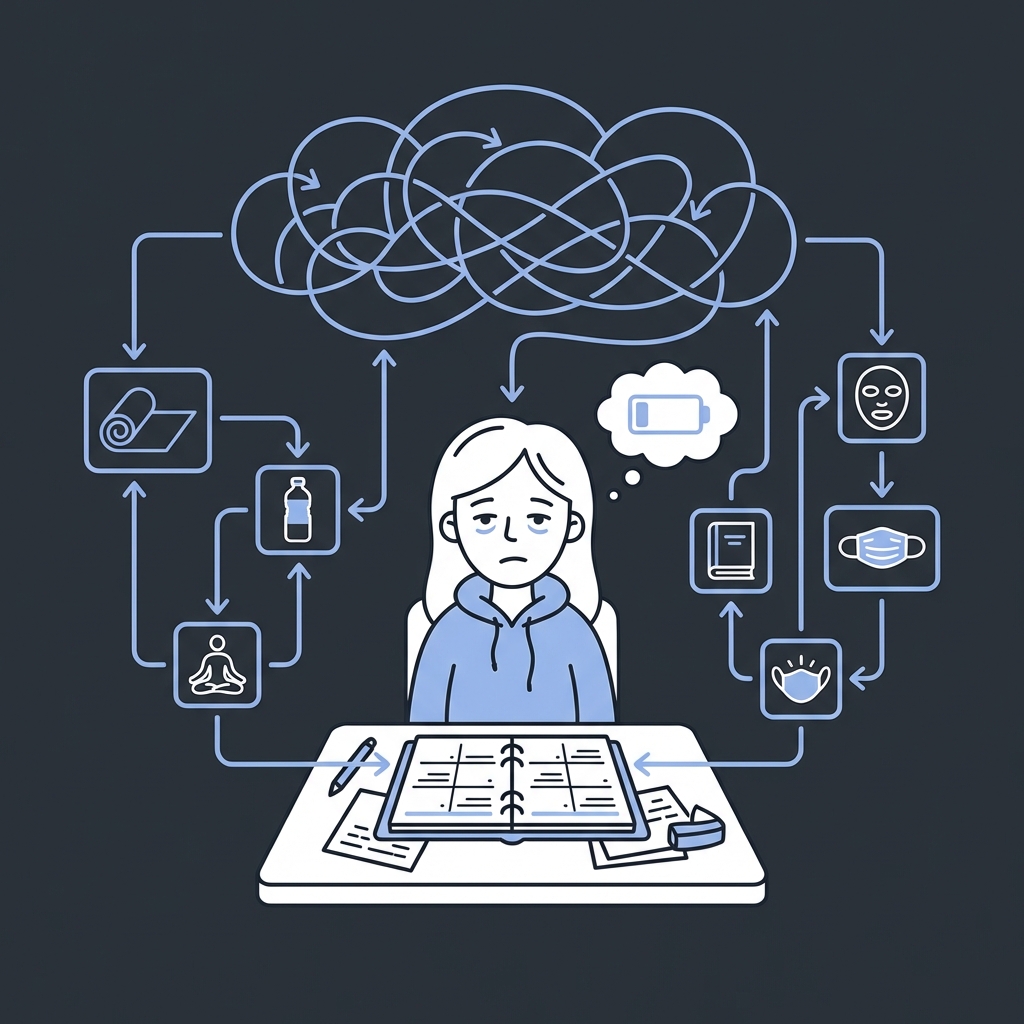
You know that feeling when you finally sit down for your “self-care time” and immediately start thinking about everything else you should be doing instead? When your meditation app becomes another notification demanding attention, or your evening bath feels rushed because you’re mentally reviewing tomorrow’s schedule?
That’s the moment self-care stopped being care and became another task.
Somewhere along the way, rest got rebranded into productivity. What was once about responding to your actual needs became a prescribed routine you’re supposed to follow. The irony is crushing: the thing meant to restore you now exhausts you before you even begin.
When Care Became Performance
Self-care used to be simple. You felt tired, so you rested. You felt overwhelmed, so you stepped back. You felt depleted, so you did something that filled you up. It was responsive, intuitive, and deeply personal.
Then wellness culture happened.
Suddenly, self-care had rules. Morning routines. Evening rituals. Specific products to buy, apps to download, practices to master. What started as “listen to your body” became “follow these seven steps to optimal self-care.” The market turned care into content, and content into obligation.
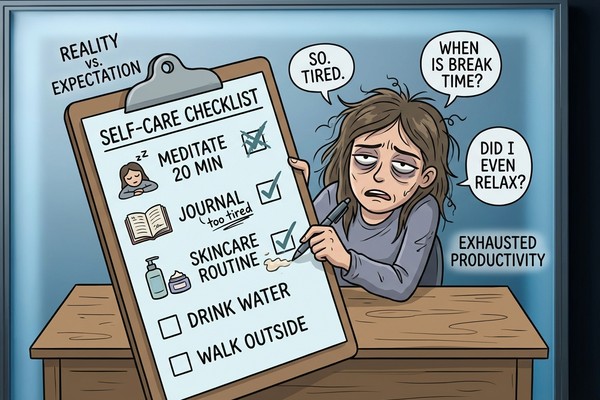
Now we have self-care Sunday, which feels suspiciously like scheduling joy. We have morning routines that require waking up earlier (adding stress to reduce stress). We have elaborate skincare rituals that take longer than our actual downtime. We’ve turned care into another form of optimization, complete with metrics and benchmarks.
The result? That nagging feeling that you’re failing at relaxation. That you’re not self-caring hard enough. That your version of rest doesn’t count because it doesn’t look like what you see online.
The Guilt of “Should Rest”
Here’s what nobody talks about: being told you “should rest” can feel like another demand on your already overloaded system. When rest becomes prescriptive, it stops being restorative.
Think about the last time someone told you to “just relax.” How did that land? For most people, it triggers immediate resistance. Your brain starts cataloging all the reasons why you can’t relax right now, all the things that still need attention, all the ways this advice feels disconnected from your reality.
The moment care becomes a “should,” it stops being care and starts being pressure.
This is especially true for people who carry mental load for others. When you’re the person who remembers everything, who tracks all the moving pieces, who anticipates what needs to happen next—being told to “turn off” feels impossible. Your brain isn’t wired to ignore the things that genuinely need attention.
The wellness industry’s response? More techniques. More apps. More systems to manage your self-care. But adding more to manage isn’t the solution when the problem is that you’re already managing too much.
Care as Responsiveness
Real care isn’t about following someone else’s template. It’s about developing the skill of noticing what you actually need in any given moment and responding to that need without judgment.
Some days, care might look like a long bath with candles and essential oils. Other days, it might look like ordering takeout instead of cooking. Sometimes it’s saying no to plans. Sometimes it’s saying yes to spontaneous connection. Sometimes it’s sitting in your car for five extra minutes before going inside.
The key is responsiveness over routine. Your needs change daily, even hourly. A rigid self-care practice can’t possibly account for that variability. But developing the ability to check in with yourself and respond accordingly? That’s a skill that adapts with you.
This requires unlearning the idea that care has to look a certain way. It means giving yourself permission to need different things at different times. It means trusting that you’re the expert on what feels restorative to your particular nervous system.
The Power of Micro-Rest
While wellness culture obsesses over elaborate rituals and dedicated time blocks, some of the most effective care happens in tiny moments throughout the day. These micro-moments of rest don’t require scheduling, special equipment, or even much time.
A few conscious breaths before opening your laptop. Stepping outside for thirty seconds to feel the air. Stretching your shoulders while waiting for coffee to brew. Letting yourself stare out the window without immediately redirecting your attention to something “productive.”
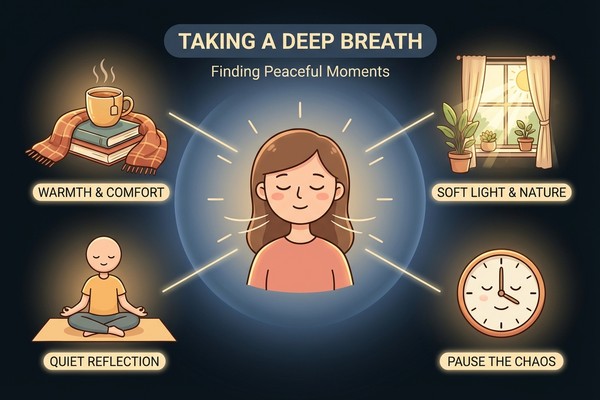
These moments matter because they interrupt the constant forward momentum that keeps your nervous system activated. They’re like tiny pressure release valves throughout your day. And unlike scheduled self-care time, they don’t create additional mental load—they reduce it.
The beauty of micro-rest is that it doesn’t require you to carve out time you don’t have. It works with the rhythm of your actual life instead of demanding you create a different rhythm. It’s care that fits into the spaces between tasks rather than competing with them for attention.
Identifying What Actually Feels Like Relief
Here’s a simple but powerful exercise: think about the last time you felt genuine relief. Not the kind of relief that comes from checking something off your list, but the kind that comes from your nervous system actually downshifting.
What were you doing? Where were you? What made that moment different from your usual attempts at self-care?
For many people, the answer surprises them. It might be washing dishes with warm water and no distractions. It might be driving alone with music. It might be lying on the floor with their legs up the wall. It’s rarely the thing they think they “should” be doing for self-care.
This is your North Star for real care: the activities that create genuine relief in your body and mind. These are often simple, accessible things that don’t require much setup or special circumstances. They’re the opposite of performative—they’re purely functional.
Real self-care feels like coming home to yourself, not performing wellness for an invisible audience.
Pay attention to what your body gravitates toward when you’re truly tired, not when you think you should be practicing self-care. Notice what activities make you lose track of time in a good way, not because you’re dissociating but because you’re fully present.
Removing Friction from Care
Once you identify what actually feels like care to you, the next step is making it as easy as possible to access. This isn’t about optimization—it’s about removing the barriers that prevent you from responding to your needs when they arise.
If reading restores you, keep a book in multiple locations so you don’t have to hunt for one. If movement helps, keep comfortable clothes easily accessible. If you need quiet, identify the spaces in your environment where you can find it quickly.
The goal is to reduce the gap between recognizing a need and meeting it. When care requires too much setup, planning, or decision-making, it becomes another task instead of a response to depletion.
This also means giving yourself permission to prioritize care without justification. You don’t need to earn rest by completing everything else first. You don’t need to explain why you need a moment to yourself. Care isn’t a reward for productivity—it’s a basic requirement for sustainable functioning.
Systems That Protect Care Time
While individual moments of care matter enormously, sustainable well-being also requires systems that protect your capacity for rest. This means creating boundaries around your time and energy that prevent care from being constantly pushed aside by other demands.
This might look like blocking time in your calendar for nothing—not self-care activities, just unscheduled space. It might mean establishing communication boundaries that prevent work from bleeding into every moment. It might mean asking for help with tasks that drain you so you have more energy for things that restore you.
The most effective systems for protecting care time are often invisible. They’re the decisions you make about what not to take on, the boundaries you set about availability, the ways you structure your environment to support rest rather than constant activation.
These systems work because they reduce the mental load of constantly having to choose care over other demands. When care is protected by structure rather than willpower, it becomes sustainable.
Real self-care isn’t about adding more to your life—it’s about creating space for what you actually need. It’s about unlearning the idea that care has to be earned, scheduled, or performed. It’s about remembering that you’re allowed to need things, and that meeting those needs isn’t selfish—it’s essential.
The next time someone tells you to practice self-care, ask yourself: what would actually feel like care right now? Trust that answer, even if it doesn’t look like what you think it should. Your version of care is the only one that matters.
This article was created with collaboration between humans and AI—we hope you ❤️ it.