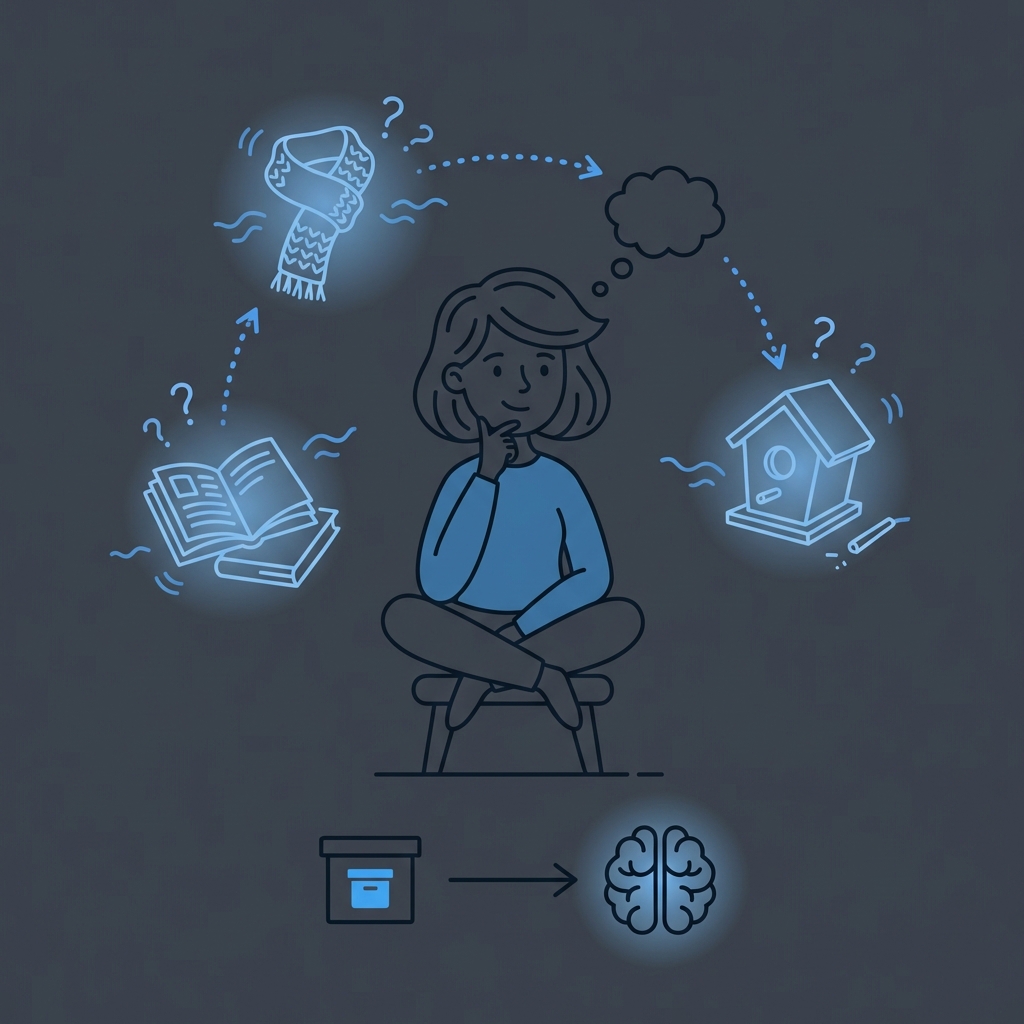
It’s 2:47 AM and your brain won’t stop. You’re lying there thinking about the email you need to send, the appointment you meant to schedule, the thing your partner mentioned three days ago that you promised to look into. None of these are urgent. None are particularly difficult. But they’re all sitting there in your mind like browser tabs you forgot to close, quietly consuming mental bandwidth even when you’re not looking at them.
This is what psychologists call the “open loop” phenomenon, though you don’t need a PhD to recognize the feeling. It’s that persistent mental hum of unfinished business—not the big, obvious tasks that make it onto your to-do list, but the smaller, fuzzier commitments that hover at the edges of your consciousness. They’re the mental equivalent of leaving your car running in the driveway: not catastrophic, but wasteful and oddly stressful.
The Weight of Unfinished Business
An open loop is any commitment, idea, or task that your mind considers unfinished. It could be as simple as “I should call Mom” or as complex as “I need to figure out our family’s financial planning.” The key isn’t the size or importance—it’s that your brain has flagged it as something that needs resolution but hasn’t been given clear instructions on when or how that will happen.
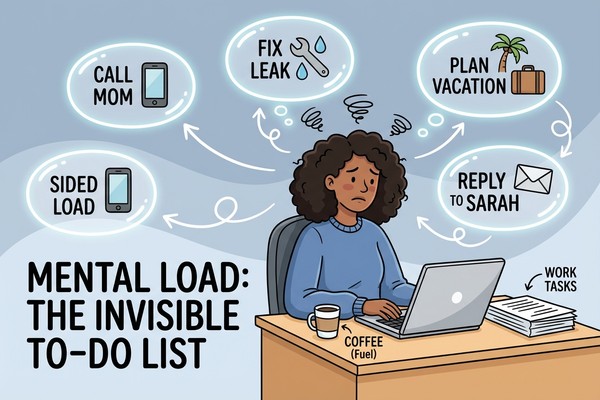
What makes open loops particularly exhausting is that they don’t follow normal rules of attention. You can’t simply decide not to think about them. They operate more like background processes on your computer—using up mental resources even when you’re focused on something else entirely. This is why you can be fully engaged in a work meeting and still feel that nagging sense that you’re forgetting something important.
The research on this goes back decades. In the 1920s, psychologist Bluma Zeigarnik noticed that waiters could remember complex orders perfectly until the moment they delivered them, at which point the information vanished from their minds. She discovered what’s now called the Zeigarnik Effect: our brains are wired to maintain heightened attention for unfinished tasks. It’s an evolutionary feature that probably kept our ancestors alive, but in our current world of infinite micro-commitments, it can feel like a bug rather than a feature.
The mind treats unfinished business like a debt that compounds interest.
Here’s what’s particularly cruel about open loops: ambiguity makes them heavier, not lighter. A vague commitment like “I should do something about the basement” weighs more on your mind than a specific task like “Call three contractors for basement quotes on Tuesday.” Your brain expends more energy trying to define unclear problems than it does executing clear ones.
How Open Loops Show Up in Daily Life
Open loops don’t always announce themselves as anxiety. Sometimes they’re more subtle—a general sense of being behind, a difficulty focusing, or that feeling of mental fatigue that doesn’t match your actual workload. They show up in the bedtime spiral, when your mind starts cataloging everything you didn’t address today. They manifest as “doom tabs”—those browser bookmarks you saved with good intentions but never quite get around to reading.
They’re in the screenshots on your phone of things you meant to buy, the voice memos you recorded to yourself while driving, the mental notes you made during conversations that never made it anywhere more permanent. Each one represents a small commitment your mind is tracking, a tiny weight in your mental backpack.
The most insidious open loops are the ones that masquerade as productivity. You bookmark an article about meal planning, telling yourself you’ll read it later and implement the system. But “later” never comes with enough specificity, so the bookmark becomes another thing your mind has to remember to remember. The intention to be more organized becomes its own form of mental clutter.
Working parents know this feeling intimately. There’s the permission slip that needs to be signed (but where did you put it?), the playdates that need to be scheduled (but when are you both free?), the teacher gift you meant to organize (but what do other parents usually do?). Each item seems manageable in isolation, but together they create a constant low-level hum of mental activity.
Three Ways to Close the Loop
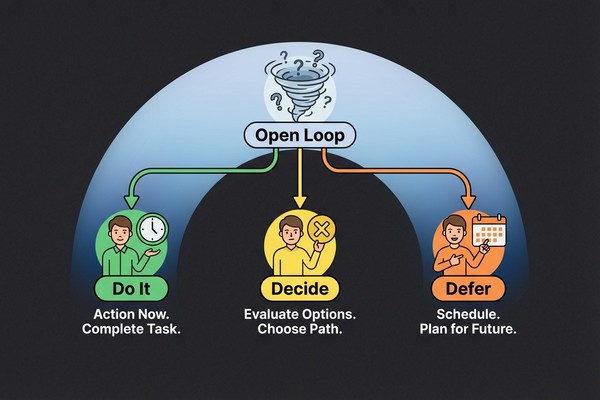
The good news is that open loops follow predictable patterns, which means they respond to predictable solutions. Every open loop can be resolved in one of three ways: do it, decide about it, or defer it with a clear capture system. The key is choosing consciously rather than letting your mind keep all options open indefinitely.
Do it works best for tasks that take less mental energy to complete than to continue tracking. This isn’t about the famous “two-minute rule” from productivity culture—it’s about recognizing when the cognitive load of remembering exceeds the effort of acting. Sometimes spending five minutes to handle something now saves hours of mental background processing.
Decide about it means making a clear choice to not do something, or to do it differently than originally imagined. This is often the hardest option because it requires letting go of the version of yourself who would have handled things perfectly. Maybe you decide you’re not going to organize that closet this month, or you’re going to hire someone instead of DIYing the project. The relief comes not from the decision itself, but from the clarity.
Defer it with capture means moving the commitment from your mental RAM to a trusted external system with specific parameters for when you’ll revisit it. This isn’t just writing it down—it’s creating a clear agreement with yourself about when and how you’ll address it. “Look into summer camps” becomes “Research three summer camps during lunch break on Friday.”
Here’s a practical exercise: right now, identify five open loops that are currently running in your mental background. They might be:
- The book your friend recommended that you keep meaning to order
- The weird noise your car has been making
- The conversation you need to have with your manager about workload
- The family photos you’ve been meaning to organize
- The subscription you’re not sure you’re still using
For each one, choose one of the three resolution paths. Notice how even the act of categorizing them reduces their mental weight. You’re not solving everything—you’re just giving your brain clear instructions about what comes next.
Building a System You Actually Trust
The defer option only works if you have a capture system you actually trust to surface things at the right time. This is where most productivity systems fail people. They’re designed by people who enjoy managing systems, for people who want to become the kind of person who enjoys managing systems. But most of us just want the mental noise to stop.
A trusted capture system has three essential qualities: it’s frictionless to add to, it surfaces things at relevant moments, and it doesn’t require constant maintenance to stay functional. This might be a simple note-taking app that syncs across devices, a physical notebook you always carry, or even a voice memo system. The tool matters less than your confidence that things won’t disappear into it.
The key insight is that your capture system needs to be smarter about timing than you are. It’s not enough to write things down—they need to resurface when you can actually do something about them. This might mean setting location-based reminders, time-based alerts, or simply having a weekly review process where you reconnect with deferred items.
The goal isn’t to remember everything perfectly—it’s to trust something else to remember so your mind can focus on what’s actually in front of you.
The Gentle Art of Loop Management
What’s emerging in the best AI-powered tools isn’t just better task management—it’s systems that understand the emotional weight of open loops and handle them more gently than traditional productivity approaches. Instead of demanding that you become more disciplined about managing your commitments, these tools recognize that the real problem is the mental load of tracking everything in the first place.
The future of mental load reduction isn’t about optimizing your personal productivity system. It’s about building tools that can hold the complexity of modern life without requiring you to become a project manager for your own existence. Tools that understand the difference between a hard deadline and a soft intention, that can surface the right information at the right moment without creating more noise.
Until we have those tools, the most radical thing you can do is give yourself permission to close loops imperfectly. Not every commitment needs to be honored exactly as originally conceived. Not every good idea needs to be pursued. Sometimes the most productive thing you can do is consciously decide that something doesn’t need to be done at all.
Your mind is not a computer, and open loops aren’t bugs to be fixed—they’re a sign that you care about multiple things and want to do right by the people and commitments in your life. The goal isn’t to eliminate them entirely, but to reduce them to a manageable level where they inform your choices rather than overwhelming your mental capacity.
The relief you feel when you finally handle that thing you’ve been putting off? That’s not just task completion—it’s the restoration of mental bandwidth you didn’t even realize you were missing. It’s your mind’s way of saying thank you for closing the loop.
This article was created with collaboration between humans and AI—we hope you ❤️ it.