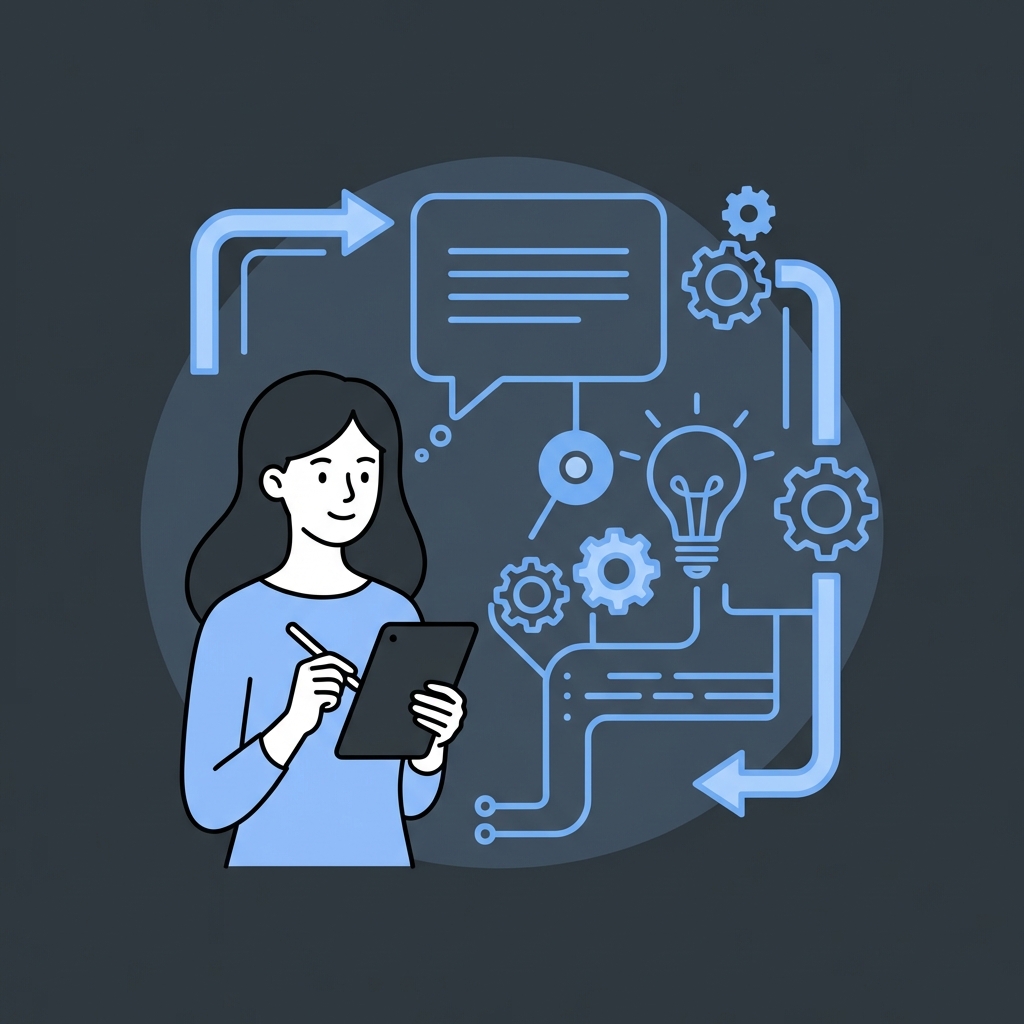
There’s a particular kind of exhaustion that comes from wanting to create but spending your day managing the endless details that make creation possible. You sit down to write, paint, or brainstorm, only to realize you need to update your invoicing software first. Or respond to that client email. Or figure out why your creative workspace looks like a hurricane hit it.
This isn’t writer’s block or creative drought—it’s administrative suffocation. Your creative self is gasping for air under a pile of logistics that someone has to handle, and that someone is usually you.
The Admin Avalanche
Most conversations about creativity focus on inspiration, motivation, or skill development. But here’s what they miss: creativity requires infrastructure. It needs clean runways, not just fuel in the tank.
Think about what happens in your typical “creative session.” You carve out two precious hours on a Saturday morning. You’re excited, energized, ready to dive into that project you’ve been thinking about all week. But first, you need to clear the kitchen table. Then you remember you need those supplies you ordered—where did you put that package? Oh right, you need to return that other thing first. And didn’t you promise to send that portfolio piece to someone by today?
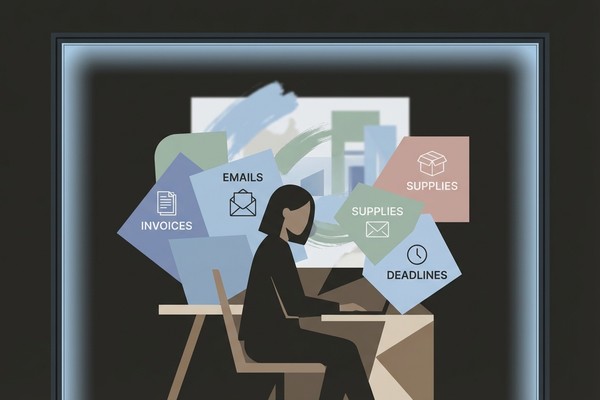
Thirty minutes later, you’re still not creating. You’re managing. And the creative energy that felt so abundant when you woke up? It’s leaking out through a thousand tiny administrative cuts.
The cruel irony is that the more creative work you do—especially if you’re trying to make money from it—the more admin you generate. Every project creates invoices, contracts, follow-ups, file organization, tax considerations. Every opportunity requires proposals, scheduling, communication. Success in creative work often means drowning in the business of creativity.
The Activation Energy Problem
Physicists talk about activation energy—the initial energy required to start a chemical reaction. Creative work has massive activation energy requirements, and admin makes them worse.
Starting a creative project isn’t just about having an idea. It’s about having the right tools accessible, a clear workspace, uninterrupted time, and most importantly, mental bandwidth. When your brain is cluttered with reminders about things you need to do, track, or remember, there’s no space for the kind of open, exploratory thinking that creativity requires.
Creativity needs empty space in your mind, not just empty time on your calendar.
This is why “just make time for creativity” advice falls flat. Time without mental space is just scheduled anxiety. You can block out four hours for your novel, but if you spend those four hours thinking about the client presentation due Monday, the unpaid invoice from last month, and whether you remembered to buy groceries, you haven’t actually created space for creativity—you’ve just created space for creative frustration.
The traditional productivity response is to “batch your admin” or “time-block your tasks.” But this misses the deeper issue: it’s not just about when you do admin work, it’s about when you think about it. And for most people, especially those carrying heavy mental loads, admin thoughts don’t conveniently stay in their designated time slots.
When Systems Become Barriers
Here’s where most productivity advice goes wrong: it assumes that having a system automatically reduces mental load. But poorly designed systems can actually increase it.
Take the common advice to “capture everything in a task management app.” Sounds reasonable, right? But now you’ve created a new job: task management. You spend time categorizing, prioritizing, reviewing, and updating your system. The system meant to free your mind becomes another thing your mind has to manage.
Or consider the advice to “batch similar tasks.” Great in theory, but what happens when your “admin batch” keeps growing? Now you have this looming block of administrative work that feels overwhelming before you even start. Instead of reducing activation energy, you’ve created a bigger energy barrier.
The problem isn’t systems themselves—it’s systems that still require you to be the manager. They organize your work, but they don’t reduce the cognitive load of remembering, tracking, and following up. They’re filing cabinets when what you need is an assistant.
Protecting Creative Windows
Real creative infrastructure isn’t about optimizing your admin—it’s about designing your life so admin doesn’t colonize your creative space.
This starts with recognizing that creative work and administrative work require fundamentally different mental states. Admin work thrives on completion, closure, and checking things off. Creative work thrives on openness, possibility, and leaving things unfinished. Trying to do both in the same mental session is like trying to drive forward and backward simultaneously.
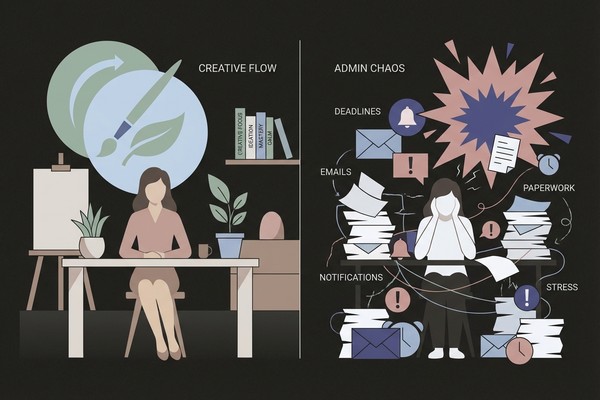
The most successful creative people I know don’t just schedule creative time—they create creative sanctuaries. These are spaces and times that are genuinely protected from administrative intrusion. Not because they’ve eliminated admin from their lives, but because they’ve built walls around their creative practice.
This might mean having a separate email address for creative projects that you only check at designated times. Or keeping creative supplies in a space that’s always ready to use, never borrowed for other purposes. Or establishing a rule that the first hour of your day is admin-free, no matter what’s in your inbox.
But here’s the key: these boundaries only work if the admin is actually handled somewhere else, by someone else, or at some other time. You can’t just ignore logistics and hope they disappear. You need infrastructure that catches them before they reach your creative consciousness.
The Real Solution: Moving Friction Outside
The most powerful creative infrastructure works like a good assistant: it handles things without bothering you about them. It doesn’t just organize your tasks—it completes them. It doesn’t just remind you about deadlines—it ensures they’re met before you have to think about them.
This is fundamentally different from productivity tools that help you manage better. This is about tools and systems that manage for you. The difference is crucial. One still requires your attention and decision-making. The other actually removes things from your mental load.
The best creative infrastructure is invisible—you only notice it by what doesn’t interrupt you.
Think about what this could look like in practice. Instead of a task list you have to review, imagine a system that automatically follows up on overdue invoices, schedules social media posts, and handles routine client communications. Instead of a calendar you have to manage, imagine one that protects your creative time by automatically declining certain types of meetings during designated hours.
This isn’t about becoming disconnected from your business or your responsibilities. It’s about being strategic about which decisions require your creative brain and which can be handled by systems, templates, or other people.
A Different Kind of Creative Practice
What if your creative practice included designing systems that protect your creativity? What if part of being a serious creative person meant getting serious about infrastructure?
This reframes creative blocks in a useful way. Instead of asking “Why can’t I just sit down and create?” you might ask “What administrative friction is making creation harder than it needs to be?” Instead of pushing through creative resistance, you might investigate whether that resistance is actually administrative overwhelm in disguise.
Start by making a list—not of creative projects, but of all the logistics that surround your creative work. The invoicing, the file management, the email responses, the supply organization, the social media posting, the client communication. All of it.
Now ask: which of these truly require your creative brain, and which could be systematized, automated, or delegated? You might be surprised how much of what feels essential to your creative practice is actually administrative work that’s been dressed up as creative work.
The goal isn’t to eliminate all administrative work from your life—that’s neither possible nor necessary. The goal is to create clear separation between administrative work and creative work, so each can happen in its proper context without contaminating the other.
Your creative self deserves infrastructure that works as hard as you do. Not systems that help you work harder, but systems that let you create freely. The difference between the two might just be the difference between creative survival and creative flourishing.
This article was created with collaboration between humans and AI—we hope you ❤️ it.